

Why Strong Systems Are Essential For Multi-Practice Growth
Summary:
Successful dental practice ownership requires more than strong clinical skills. It takes communication, leadership, financial discipline, and systems that create accountability.
In this episode of the Secure Dental Podcast, Dr. Anushka Gaglani, Co-Founder and Co-CEO of Areo Dental Group, discusses what it takes to build and lead a successful multi-practice dental organization. She explains why dentists should focus on strengthening their clinical expertise and patient communication skills before pursuing practice ownership, and how personal debt can influence financing opportunities. Dr. Gaglani also compares the benefits of acquiring an existing practice versus starting one from scratch. She shares practical insights on hiring the right team, implementing EOS, tracking key performance metrics, and creating systems that allow a practice to thrive without relying entirely on its owner.
Tune in and learn how strong leadership, financial preparation, and accountable systems can help you build a scalable and valuable dental practice.
Things You'll Learn:
Patient communication, treatment acceptance, and leadership skills are essential foundations for successful practice ownership.
Dentists planning to buy a practice should manage their personal debt carefully because it can affect their borrowing capacity.
The selling dentist’s role during an acquisition should depend on the practice’s value, the desired patient transition, and the seller’s ability to let go.
Multi-practice growth requires clear accountability, documented processes, and systems that do not depend entirely on the owner.
Internal motivation and a willingness to solve problems can be more valuable in team members than years of dental experience.
Production and collections are important performance measures, but owners should also monitor leading indicators such as phone conversion and treatment acceptance.
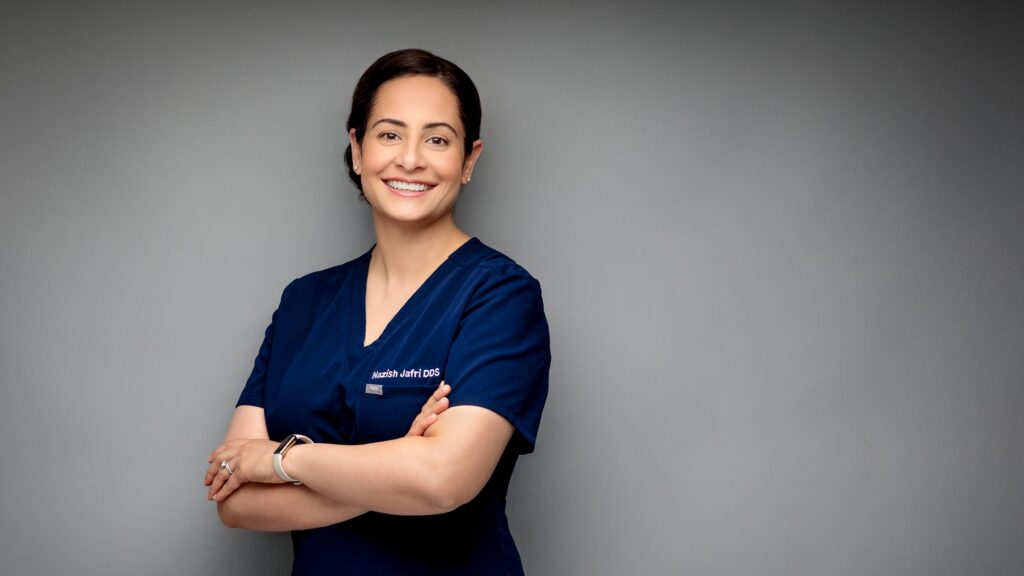
About Nazish Jafri:
Dr. Nazish Jafri, DDS, is a highly accomplished dentist, mentor, and business owner. Graduating from NYUCD in 2011, she quickly established herself as a respected leader in the dental industry. As the owner, CEO, and operator of Secure Dental, a leading dental service provider with 10 offices across state lines, Dr. Jafri has over a decade of experience in successfully managing and growing businesses. Her commitment to top-quality dental care and passion for mentoring the next generation of dental professionals have made a significant impact on the industry and inspired many. With a strong reputation for exceptional dental services, she is widely recognized and trusted by her patients across different states. Learn more about her and her dental services at www.secure-dental.com.
Social Media Handles:
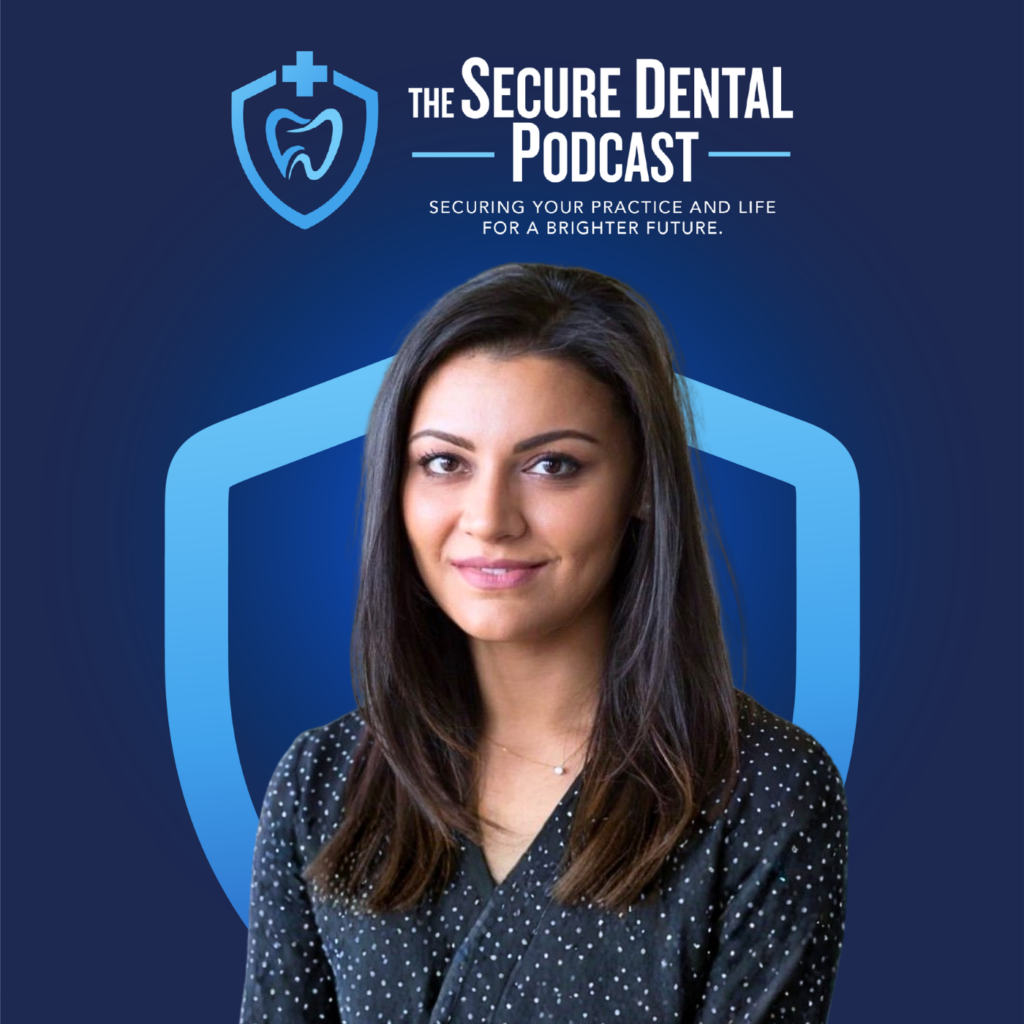
About Dr. Anushka Gaglani:
Dr. Anushka Gaglani is the Co-Founder and Co-CEO of Areo Dental Group, a multi-practice Dentist Partnership Group headquartered in Chicago and serving communities throughout the Midwest. She is a practicing dentist, multi-practice operator, and advocate for helping women in dentistry become more confident clinicians and business owners.
Dr. Gaglani earned her Doctor of Dental Surgery degree from the University of Illinois Chicago and is currently pursuing an Executive MBA at the University of Chicago Booth School of Business. Through her leadership at Areo Dental Group, she focuses on developing accountable teams, implementing scalable systems, and supporting sustainable growth in practice while preserving clinical autonomy and patient care.
Resources:
Secure Dental-Anushka Gaglani: Audio automatically transcribed by Sonix
Secure Dental-Anushka Gaglani: this mp3 audio file was automatically transcribed by Sonix with the best speech-to-text algorithms. This transcript may contain errors.
Dr. Nazish Jafri:
All right. Welcome back to our Secure Dental podcast. My name is Nazish Jafri. I am the CEO of Secure Dental and a practicing clinician and a mom. Today I want to talk to somebody who actually is in the grind of owning practices, actually multi-state partnership practices that she and her husband have built throughout Illinois. And she's the co-founder and CEO of Areo Dental Group, Dr. Anushka Gaglani. And the best part, experiences that we would like her to share with us are, you know, within the first year, they bought a practice and quadrupled its revenue. So, we want to know how this happens, because we all know that it's not an easy task to do. So, what are the mindset and belief systems that they follow that made them successful? And she is a practicing dentist herself in the Chicago area. She knows tons because she has built systems, so she knows tons of building systems that let clinicians like me and you perform at their highest level while keeping patient care, which is really important. That's the revenue generator and clinical autonomy at the front and center. Her passion is helping other dentists, especially female dentists, and very proud of that. And you know, how to help female dentists grow confident owners and clinicians. Dr. Gaglani, thank you so much for your time today.
Dr. Anushka Gaglani:
Thank you for having me. I really appreciate it. Please call me Anushka.
Dr. Nazish Jafri:
All right. Let's go, Anushka. So, you and Dr. Raj opened up your first practice. What thought made you want to own at that time?
Dr. Anushka Gaglani:
Great question. You know, I had been an associate for about four years at that point, and I personally think that was super important for me to wait that amount of time, because what I realized is it's not as easy as just opening a practice and, you know, money is flowing in. There is a lot to it. And number one is being able to communicate with patients. And really, my honest opinion, being able to communicate with patients, diagnose, and get treatment acceptance, and being very fully understanding of clinical skills to me doesn't come till about year seven. So, when we opened it to, I personally think we kind of like dove into the deep end, and there was a lot of learning. But for me, after four years, I felt like, okay, I'm kind of ready. And yeah, that's kind of my husband, Abhishek; he graduated from NYU, and he moved to Chicago and just kind of decided we wanted to go out on our own and do our own thing at that point.
Dr. Nazish Jafri:
Yeah, I think you're right. Even us, when we graduated out of dental school at NYU. We practiced for around like 5 to 6 years, and we kind of were trying to hold on to the clinical dentistry. And I think the best one was communication, because we didn't have to worry about any payroll, and loans, and things like that. It was just our student loan, a car loan, maybe renting an apartment, and just focused on patient care. So, you can build that rapport up. And I feel like nowadays when kids are coming out, they do have this question, and they do have a very ambitious goal. Hey, I want to open up my practice at one time. What do you think that when you did open up the practice, what were the initial struggles that you had to go through that somebody hearing can take some feedback out of it?
Dr. Anushka Gaglani:
Yeah, I think, you know, there's a lot to it. I know it seems it's Instagram culture now to say go and, you know, be an entrepreneur, open your own business. But what they don't tell you is how many businesses actually fail. The vast majority fail because people aren't prepared. And, you know, very honestly, we also weren't prepared. There was a lot of learning for us. What we took from it is, number one, my patient communication still wasn't where it should be at that point because now every bill is on me. It's not just my personal, like I'm taking in, you know, managing my personal finances; every single bill, it's all the staffing costs, the business insurance over there, are things that people wouldn't even think about, that the bills just come out of nowhere. So, we have to be able to communicate with the patients and get them to accept treatment. And I know the word selling, we hate that word in dentistry.
Dr. Nazish Jafri:
Yeah.
Dr. Anushka Gaglani:
Whatever you want to call it, educating the patient. We have to get that treatment acceptance. So, I think that was the first thing is, I really had not gotten to the point where I had those skills yet. And I think the second thing is leadership. That's a huge one. A lot of dentists I meet these days, I think they don't necessarily realize that leadership doesn't mean it's not extremes. That's not letting people do whatever they want and saying, I'm the nice guy, and I'm gonna, you know, help them out with their bills and things and give them their paycheck three weeks ahead of time, right? That's a terrible way to run a business. But on the other extreme, kind of like a dictator, that's also a terrible way. And leadership. I'm still learning leadership ten years into ownership. Those are probably the two biggest pieces. I would say.
Dr. Nazish Jafri:
You're right. Communication and selling treatment is the only driving force for clinicians like me and you to generate revenue. And if the patient says no because of communication, or the way, or maybe the leadership is, or the team is, and they don't like it, they'll just never come back. And you don't have the revenue-generating. You're right. Even till now, with so much people, I'm still learning with every personality, the leadership, how to talk to somebody. You don't have to be nice. You can be kind, but you have to make sure you know you're just not giving in to everything. Because once you start doing that, the staff or the team member just go haywire. And I think another part that I feel like that hit us was refunds. You know, when patients are not happy, and they come back, and they don't like anything, and you have to do a refund, and you're like, we just saw like six patients, and now this one wants a refund. That's another ownership responsibility that you have to take.
Dr. Anushka Gaglani:
Yes. Yeah.
Dr. Nazish Jafri:
Right. And that comes with communication as well.
Dr. Anushka Gaglani:
Yeah, absolutely. You know, there's again, you know, as well as me, there's so many pieces to it that people don't see. It's all glorified online. Yeah.
Dr. Nazish Jafri:
It is so much social media modified. Goal-oriented kids nowadays, they're like, oh, we can do this. And it looks beautiful. And you know, you just have to have the patience, say yes, but there is no patient that's going to come and say, I need a $10,000 treatment of veneers today.
Dr. Anushka Gaglani:
Yes,
Dr. Nazish Jafri:
It takes time. It takes a lot of patience, a lot of communication, a lot of trust building.
Dr. Anushka Gaglani:
Yeah. I was going to say I completely agree with you. And I know, you know, I hear a lot of new dentists now. They'll say things like, I want to do implants, and I want to do cosmetic dentistry. And my favorite is, are there veneer patients here? And the answer to that is they're everywhere. They're everywhere, but they don't know what they need it. Sometimes they don't know that they want it. It is up to you as the dentist to create that perceived value for them, because they're probably not walking into your office. Very few patients are walking into your office saying, I want veneers. And if they are, the patients that have been looking into it and researching it are probably not coming to you. They're probably going to someone who has been doing it for years and years and years and years and has a name in the industry. So, that's a great, great point. I think just honing your skills and then kind of knowing, you know? Let's walk. Before we run, let's learn how to do fillings efficiently. Let's learn how to do crowns. Let's learn how to do just the bread-and-butter dentistry. And absolutely, after that, we can start running.
Dr. Nazish Jafri:
Yeah, you're absolutely right. Nobody comes in. You have to diagnose it and then make sure that you instill that trust in them so they can say yes to the treatment. Sometimes they don't trust you right away. They might need multiple visits. I feel like even for SRP, when you tell them that, you know, it's not a normal cleaning and it's an SRP, they think you're mocking them. Oh, you're making money off me. You could have done a simple filling, but it's the way you present them with value and knowledge. And I feel like when you're an associate, even when you're a dental school grad, or indeed three and four, that option that you have, I think that's your property.
Dr. Anushka Gaglani:
Yeah.
Dr. Nazish Jafri:
I feel like you should have honed in on to these skills, right? They're starting from they're not thinking, when I do open up my practice, then I'm going to become better. Start becoming better from the dental school up, room time. That's an opportunity. How you're talking to people, how you're talking to the managers, the lab people. But sometimes they forget. They're like, when it is my own, then I will do it. But then you're juggling like a clown, everything.
Dr. Anushka Gaglani:
Exactly. And not just that, like you're. And that's the thing I think people don't understand when you are the dentist, because your first practice, you are going to be the dentist. You're not going to be able to just hire associates and start, like that's all going to happen. You are going to be the dentist; you are juggling everything. You're trying to produce the revenue while making sure your staff's doing what they're supposed to be doing, while making sure supplies are there, while managing patient expectations. It is a lot.
Dr. Nazish Jafri:
Yeah. So, might as well start now, wherever you are, even if you're in an associate position, start in the two Ops or the three Ops that you work with.
Dr. Anushka Gaglani:
Yes.
Dr. Nazish Jafri:
You can Repetition. Repetition makes you better. Sometimes you have these disgruntled patients, and this is the time that you have a manager who already knows things and starts talking and communicating with the patients of how you can settle them down. And then when you do open up a practice, I think then you have some communication skills in the back to deal with these disgruntled patients.
Dr. Anushka Gaglani:
Yes, absolutely.
Dr. Nazish Jafri:
Tell me how you guys chose to open up a practice as an acquisition or a de novo. I know you guys took it from a practicing owner. What was your thought process, and how did you choose that part?
Dr. Anushka Gaglani:
So the first practice, you know, what really happened is we were looking for something with at least a little bit of cash flow. That was very low cash flow. The practice, I think it was doing about 200,000 to 50,000 that year. But the dentist was older. He was kind of on his way out. He was about to retire. And really, you know, we got in touch with a broker. We were looking for different locations, and we wanted to keep our costs low. That's number one. The last thing we wanted was to buy something and then suddenly have $10,000 in rent payments and another 10,000. And, you know, the build-out, the million-dollar build-out we did. Yes, it looks beautiful, but without the cash flow, what are we going to do? So, that's kind of how we decided to do that in the first place. And, you know, it wasn't very sophisticated how we did it back then. We drove into the parking lot. We said, "This looks nice. Let's buy it". Very different than how we do things today.
Dr. Nazish Jafri:
Yeah, that's absolutely correct. Because at that time, you're like, oh, we just want to get something up and running. And we spent a lot on marketing. And before we actually got the furniture in, we spent tons on the marketing first, before we even broke a wall to make up our office. We got an office, which was an old Hollywood video store back then, and it was like all different angles, but it was cheap, and we didn't do our due diligence with the landlord. They sold the plaza to somebody else, and then we had to deal with other people. We didn't realize that these are the things that actually go in. Just like you said, you went to the parking lot. It was a big space. We got it. But we got into a lot of crazy stuff later down the road that took a lot of clinical hours away. So, sometimes you don't think because you're like.
Dr. Anushka Gaglani:
Yeah, and then you don't sleep at night, and you're stressed. It's the first time you're dealing with. Yeah, absolutely.
Dr. Nazish Jafri:
Yeah.
Dr. Anushka Gaglani:
I'm sure we could share the hundreds of stories we have about things that we're like, we're still going to continue to learn.
Dr. Nazish Jafri:
That is right. And I think one of the scariest parts was when we had to generate payroll.
Dr. Anushka Gaglani:
Yes, I agree with you. That's the hardest part is knowing that you have these employees, these team members, and you're responsible not just for them, but for their families. I think that's the heart. Like, it's a lot of weight on your shoulders.
Dr. Nazish Jafri:
Yeah. I think that's the most toughest and the scariest part. You can cut down on everything. You can cut down on your inventory. Maybe just do three days, Amazon, whatever. But payroll is something that is very highly responsible for it.
Dr. Anushka Gaglani:
Yes, 110%.
Dr. Nazish Jafri:
So you and your husband both are licensed dentists, and you had backing of each other. So, when you went into the practice, did you go both together or when associated still? How did you divide that?
Dr. Anushka Gaglani:
Yeah. So, we both started where we would do a couple of days each in our practice while we kept the associate ships. I left my associate ship first, though to kind of go in full-time. And then he did as well. And then about six months later, we got tired of looking at each other. So, we bought another practice.
Dr. Nazish Jafri:
I can relate to that.
Dr. Anushka Gaglani:
But yeah, but that worked well for us.
Dr. Nazish Jafri:
Okay. Yeah. So, if it is a solo dentist, should they think of when they're actually doing an acquisition like this, should they have the dentist help them out a little bit? Do you think it helps to build the practice rapport with them?
Dr. Anushka Gaglani:
So, I'm of two minds on this. You know, I think if it's a more expensive practice, I would figure out a way to keep the selling dentist for quite a while. I would say at least 12 months; 24 months is even better because of that, right? Transition to patients, and patients get very scared when they see a new dentist. But if it's a lower-cost practice for me, I prefer to have the dentist generally leave only because what I find is when you buy the practice, even though they've sold it, it's their baby. So, sometimes they want to hold on to it, and they want to hold on to the process. Even though they say, I understand, I'm selling it, and everything's going to be yours. You change a little bit of the process, and suddenly, not everybody, but some dentists do get very possessive about it. So, I would say it just kind of depends on, number one, what kind of selling dentist it is. If they are able to have a good working relationship with you, if they truly are able to understand that, they now hold the practice to you, and now you make the decisions because now you're paying all the bills.
Dr. Nazish Jafri:
Yeah, I think you're right. And I feel like when we have done acquisitions like this, those dentists were older, like the one you had, and they were already checked out. They're either not healthy. They have already made a decision. Nobody is buying their practice. So, they're already burnt out, checked out. It's very unfair for me to ask them to stay. I would rather relieve them of the burden. And that happened with us. We had one dentist. He wanted to stay for six months, but just like because it was his baby, he just couldn't say, I'm retired or "This is not my practice". But he started coming in a week's time. And when he saw us working, and his patients were happy, he just said in the next email that he sent. He's like, I'm done. I'm not coming back.
Dr. Anushka Gaglani:
Wow.
Dr. Nazish Jafri:
Okay. Because he just wanted to, I think, see how we were working with the patients, if we were taking care of them or we were just mocking them or something, I don't know what. And then he just said otherwise. He was so adamant: I want to stay six months. I want to help you guys. But he was so old; he was almost like 78.
Dr. Anushka Gaglani:
Oh my gosh.
Dr. Nazish Jafri:
And he was totally checked out, tired. And I was thinking, why even six months? You can go. It's okay. You know, we gave him a fair value for the practice. He really liked it. Actually. We did sell his finance with him.
Dr. Anushka Gaglani:
Okay.
Dr. Nazish Jafri:
Yeah, so when you are doing acquisitions, and you're picking up these practices, are there different modules that you use to pick up these practices? Like, how we did a seller's finance, you can. Do you have any insight on those?
Dr. Anushka Gaglani:
Yeah. So, we own all the practices 100%. And for that reason, I'm in business school right now, and we kind of do, believe it or not, we do without knowing what most of the corporations do. And that's number one: first, you finance within your own company. The second is debt finance. And the last option is equity. So, for us, when possible, when we have good cash flow, we're not like in super growth mode. Because, as you know, when you're in super growth mode, cash flow is low. Then we'll kind of bootstrap, but we also use bank debt as well.
Dr. Nazish Jafri:
So, a new associate coming out usually has a W-2 job. And whatever they're making, that's what it is. So, when they're looking to apply for these things, what are a few key points that you think they should already start thinking about in the first few years of their thought process?
Dr. Anushka Gaglani:
Yeah. As far as being able to get the bank loan.
Dr. Nazish Jafri:
Yeah. Getting approved for it.
Dr. Anushka Gaglani:
Yes. So, a few things. Number one is what student debt, like, right? Because banks, they will give you the money. The question is, are you going to be able to pay it back? How stretched thin are you going to be? Because at the end of the day, I've talked to more than one dentist who buys a practice, and they're like, I pay myself less than I made as an associate. So, again, number one, I'm trying to get the bank loan. Just make sure that you are financially set. And again, that's why I do believe personally being an associate for a few years, but that's just my opinion. Not trying to think like everyone. The second thing I think is a lot of dentists might go out and buy a house first. I would say you have to really show, because your interest rate is also going to depend on how much money they give you, is going to depend on what your debt-to-income ratio is. So, keep your personal debt low if you want practice ownership. What I would say is, depending on how far out of school you are, buy the practice first, and then the house, is how I do it.
Dr. Nazish Jafri:
No, what you're saying is actually it's coming from your own experience. Correct. And that is what I want the listeners to understand: it's not social media-generated. This is not 4K. This is actually life experiences that somebody has gone through those trenches to understand which decision to take. And you're so right. If your personal debt is low, banks will give it to you because they want to make sure that if something happens, they are covered.
Dr. Anushka Gaglani:
Exactly.
Dr. Nazish Jafri:
They're just not going to give it. And then sometimes you're asking for a huge practice or $1 million or a million and a half, whatever the thought process is. But it's very hard. And even in our story, we wanted to make up an office which was 12 ok rooms because we were young, we could work like workhorses, and we knew how to work in the corporate world. So, we were like 12. We have to have 12. And that's why we got that video store. Nobody wanted to give us a loan because we were right on W-2s, and we had a house. And when you said that, it flashed in my head. I was like, yes, that actually happens. We went to tons of bigger banks. No, they said, you have to get this co-signer and then collateral, and my life on collateral, whatever. And we're like, okay, how much would you give? Okay, $250,000. Okay. Let's go. 250. We started with two chairs.
Dr. Anushka Gaglani:
That's reality. Exactly.
Dr. Nazish Jafri:
That is a reality. It's not. If somebody's going to feel bad, nobody's going to give you a million. Nobody's going to give you a $500,000 loan right now if you haven't. Yeah.
Dr. Anushka Gaglani:
You better have rich parents.
Dr. Nazish Jafri:
Yeah. But nowadays parents are like, okay, they've already paid for dental school.
Dr. Anushka Gaglani:
That's exactly it. Yeah.
Dr. Nazish Jafri:
Right. Yeah. And my parents, they were back in Pakistan. They didn't even know what we were doing. We just did it on our own.
Dr. Anushka Gaglani:
Yeah,
Dr. Nazish Jafri:
But most of the time you're on your own.
Dr. Anushka Gaglani:
That's exactly it. It's easy to, again, have the expectation of what's going to happen, but people just don't. They don't talk about the failures. They don't talk about what went wrong. Yes. So.
Dr. Nazish Jafri:
Yeah. And there are tons of things that go wrong, tons of things. And if we start voicing the issues out, like, hey, you know, this happened to us, and then we navigated it this way. A lot of people can get the firsthand knowledge.
Dr. Anushka Gaglani:
Yes.
Dr. Nazish Jafri:
And maybe, you know, miss those steps and get better or make better decisions. And I think that's where sometimes burnout comes in. Because if the first part is not set financially, now you have to deal with the team. So, I was going to come and talk to you about the team. How do you deal with so many employees, associates? Like, what's your thought process? And I'm sure initially you probably struggled with that. So, let's start from there.
Dr. Anushka Gaglani:
Yes, absolutely. You know, I go back to even the first team member we ever hired. If I went back, knowing what I know now, I would not hire that person. You know, I think initially it's what do they call it? Bright-eyed and bushy-tailed, right? This is going to work out, and I'm going to keep my first employee, and they're going to retire.
Dr. Nazish Jafri:
Yeah.
Dr. Anushka Gaglani:
Then you quickly find out, right? It's again, it's all leadership. And when I say leadership, I know that word gets thrown around a lot. What does it actually mean? Yeah. What it means is, number one, you had mentioned it earlier, being kind, not nice. Telling people what they want to hear. Kind is telling them what they need to hear. In a respectful manner. So, being able to hold people accountable, that's the second piece. But when you hire, having structure around hiring, knowing what your core values are, you have to have a process around hiring. And then another phrase that gets thrown around a lot is higher, slow, fire fast. Completely agree with that. And that's a lesson I keep learning again and again and again. It's believed people show you the first time they show you who they are. And a rock star will probably be a rock star day one. And I think sometimes what we do as dentists is we're conditioned to say, well, we care about people, we're healers, right? So, let's give them a chance. Let's coach them more. And two years in, nothing's improved, and you're burned out because where you imagined your life to be and where it is are not lining up because you don't have the right team, right? So, I think that step one is work on our own leadership. And as you said, you can start on that as an associate, lead the person on the op, lead your patient, lead your team. When I say lead your team, I don't mean tell them, you know, if the practice is open until six, I'm leaving at four today. Yeah, right? That's not what I'm saying. Leading the team means show up as a leader, right? Leaders don't get to have bad days. So, I think that's the first thing: leadership. And then the second thing is for us, how we've learned to manage is obviously, we're big enough now that we cannot talk to every single one of our employees every day. So, we've had to hire help. We've had to give ops and operations manager roles, but they have to be an extension of us, and that's hard to find. They really have to eat, sleep, and breathe our core values and our mission. And that's the only way that it'll work. And they have to be able to hold others accountable the way that we would.
Dr. Nazish Jafri:
You won't have like, an operations manager day one. Obviously, sometimes a dentist won't even hire like a manager for the next 2 to 3 years, and they're just doing things by themselves. I have a lot of new business owners who are in their first practice, and they don't have a manager. They might have just one girl who is their front desk taking calls, and maybe the associate dentist themselves is putting their eobs out doing eligibilities, and sometimes they kind of get stuck in that little area that they have to do everything by themselves, and they don't hire the key people because they think, oh, the payroll is going out or their production power is not that fast, or they're not smart enough in the production power that they can generate the payroll. So, they're getting stressed out because now they're doing all these roles that somebody else could have done.
Dr. Anushka Gaglani:
Yeah, I completely agree. Wearing every hat.
Dr. Nazish Jafri:
Yeah. They're wearing every hat. And that burns out.
Dr. Anushka Gaglani:
Yeah.
Dr. Nazish Jafri:
Because they don't have a structure. Usually, with newer graduates, I usually tell them communication is really important. With your dental assistant, it starts if you start it with a team member: start with the dental assistant, make sure she trusts you, and your communication is very clean with them. You know how you like the tray setup. You talk to her. They're not just magicians, you know that. They're going to think what me and you are thinking in our head.
Dr. Anushka Gaglani:
Exactly.
Dr. Nazish Jafri:
So, prove with them, talk to them, talk to your manager, and then you start building that relationship.
Dr. Anushka Gaglani:
Completely agree. And if I can add one more thing as an associate, it's to be friendly with the team. I would strongly recommend not being friends with the team. And what I mean by that too is there are always things that are going to be wrong in a dental practice, always. In any business, there are things that could always improve. That's just part of it. And anyone who's listening to this, who wants to own their own business, is an associate right now. Just know that if you are complaining with your team, it's going to happen to you too. When you own yours, you're going to be the big evil boss all of a sudden, and everyone's going to complain about you, and these words will come back. So, vocal playing with the team, if there's anything you need to vent, vent up, I think is a big piece. And then again, show up. Well, right? It's going out to; I've known associates who've gone out to drink with the team until 3 a.m.
Dr. Nazish Jafri:
Yes,
Dr. Anushka Gaglani:
My honest opinion is, don't do that.
Dr. Nazish Jafri:
Don't do that. Yeah, it's very tough because they're telling you what they did last night, and now you're telling them what had happened. And the relationship's gone crazy. And then they have a problem with them. I usually tell them I'm like, I can fix everything. I cannot fix your respect if you've lost it.
Dr. Anushka Gaglani:
Yeah, that's up to them. And when you start making new friends, the respect is gone. That's the main reason why we're saying.
Dr. Nazish Jafri:
Yeah, and both ways. Dental assistant manager or the associate. If you've lost it, you've lost it. And if you've lost it as a boss, then good luck; that's gone.
Dr. Anushka Gaglani:
Yeah,
Dr. Nazish Jafri:
Yeah. Because in the community it goes out that this doctor is like this. The hiring is very hard, and you won't get quality people who are going to listen to you.
Dr. Anushka Gaglani:
Absolutely agree.
Dr. Nazish Jafri:
Yeah, yeah. Very important. You have to wear a lot of careful hats and be responsible. So, when you're an associate, I would say practice at that time.
Dr. Anushka Gaglani:
Exactly.
Dr. Nazish Jafri:
It's such a free ground for you to practice everything right there and make your personality right there, so you can bring it into your own practice.
Dr. Anushka Gaglani:
100% completely agree.
Dr. Nazish Jafri:
Yeah. Are there any particular systems you guys follow now that you're a bigger company? And obviously, the word comes out from you to your operations manager; how do you take control of that? Do you follow any built-in policies?
Dr. Anushka Gaglani:
Yeah. So, we are an entrepreneur operating system that's been very, very helpful for us because the way that it works is one person, one seat. So, what that means is multiple people can work on a project or work in a department, but one person is ultimately responsible for the result of that department.
Dr. Nazish Jafri:
So, when you're talking to somebody, you're just talking to that one person, and they know that they're answerable to all those team members.
Dr. Anushka Gaglani:
Exactly right.
Dr. Nazish Jafri:
So, when you were in the first and the second practice that you opened up in six months, did you have some kind of system at that time or.
Dr. Anushka Gaglani:
Zero system at that time? We were kind of winging it, right? And here's the thing. The first practice, you might be able to wing it. The second practice, maybe it's the third, where it starts to kind of get really iffy, I feel like. So, you really have to have a strong system in place to even get to the third. And I know plenty of dentists who maybe they made their first practice work. In fact, we acquired a practice. He had gotten to three. He had to shut down two because he just couldn't do it. He couldn't figure this out. And that's more common than you would think.
Dr. Nazish Jafri:
You're right. The third one was where we struggled because my dental assistants were talking north and south. The managers were talking east and west. Nobody was coherent. I was like, But I'm still here working. Why aren't you asking me? No, because, you know, they're not asking me because I'm in the office. I'm dealing with patients. So, they started their own systems, and the three offices were not talking to each other at all. And that's where I kind of stepped back. I was like, okay, this is not happening. If I have to be training them and making a coherent system, I've got to be involved in it. I couldn't just be seeing patients. And then that's how I think how we started, because we were getting burnt out like crazy. Inventory was hair wires. People were ordering whatever they wanted. Instruments were somewhere else. There was no HR. The compliance was an issue. Somebody was sterilizing one way. Somebody was sterilizing another way.
Dr. Anushka Gaglani:
It was so much. Yeah.
Dr. Nazish Jafri:
Yeah, it was. And we didn't realize that this was so important in the first practice, or I didn't realize that I should have learned that in my associate job as well. I should have poked my nose a little bit into what happens in the sterilization room. I would have learned a little bit better.
Dr. Anushka Gaglani:
Yeah, absolutely. If there are any details. So, yeah, whatever.
Dr. Nazish Jafri:
Whatever you can learn.
Dr. Anushka Gaglani:
Yeah.
Dr. Nazish Jafri:
And you're passionate about helping female dentists grow into confident, skilled clinician. Tell me a little bit about that part. What do you see in the female dentist?
Dr. Anushka Gaglani:
Yeah. You know, I think that dentistry has obviously changed a lot. And now the new graduating class is 60% women, 40% men. Yes, it's crazy to me. But you know, what I see is a lot of the women, they tend to be more. And I'm broad generalization. You're timid.
Dr. Nazish Jafri:
Yes.
Dr. Anushka Gaglani:
Learn more. Not confident. And meanwhile, the men come out, and they're sometimes very overconfident. And I'm like, we need to rein it back a bit, right? So, I'm passionate about helping these women kind of find their footing and understand that things have changed a lot. And when I graduated, it wasn't like years and years and years ago, but it was still at a time where sometimes I would walk in the room, and they would think I was the hygienist. I don't think that really happens probably as much anymore, but it's just, again, making our female dentists feel more confident and knowing that they have the same, if not more, skills and how to communicate with patients. Because sometimes when you're a young woman, the patient will still think, what do you know?
Dr. Nazish Jafri:
And it is still a very male-dominant style persona for dentistry, even though there is a little feminine side, but cosmetic. So, it feels like females can only do cosmetics and only do Botox and probably fillings and pediatric dentistry, whereas implants and surgery is, you know, the male-dominant part, whereas there are like tons and tons of females who are oral surgeons and they're doing all on fours and zygotes and all kind of stuff. So, it takes a little while for you to push through the crowd and then, you know, make your name. So, it's very nice for you to know that you're helping them. Maybe it's not the clinical dentistry part; it's just mostly coming out of your own comfort zone and saying, no, you can do this.
Dr. Anushka Gaglani:
It's mindset and confidence.
Dr. Nazish Jafri:
It's just mindset and confidence. We have female associates with us who do like, amazing all-in four cases, and they're like up and running. It's just because, you know, you're pushing them to do it, that it's okay. Otherwise, sometimes these implant reps can come in, and they're all male-dominant figures, and they can just sell you everything in the world, and you'll just be like, quiet, and yeah, I buy it, and you're not even negotiating.
Dr. Anushka Gaglani:
Yeah. No, absolutely.
Dr. Nazish Jafri:
You're right. That's where sometimes they get like sucker punched with a lot of things because they just keep quiet.
Dr. Anushka Gaglani:
That's right. Yeah. No, you're absolutely right. We have to when I say learn to speak up, and when I say speak up, I mean, you know, in a respectful manner, just hold your ground.
Dr. Nazish Jafri:
Yeah, absolutely. You're right. When you chose your operations manager to be the operations manager, what qualities were you looking for? The person, I'm sure, they were with you for a time.
Dr. Anushka Gaglani:
Yes.
Dr. Nazish Jafri:
Before you chose them.
Dr. Anushka Gaglani:
Yeah. So, she was a she actually came to us as a receptionist from a big DSO. And we took her on a wing. We made her a practice manager at our practice. And very honestly, it took a lot of time, you know, and that's one of the things where today I probably would not have the same patience that I had six years ago. I mean, she's wonderful, but what we noticed in her that was maybe different than the other practice managers is that she would kind of just fix things without being asked to. And I mean, it was something small. I think the scanner was working one day, and she called the company and had them remote in and got it fixed. Whereas the people we'd hire in the past would come to us and say, the scanner's not working, what do I do? Which is actually super, super common. I feel like, again, going back to wanting to own a practice. Most people I find are like that, and you have to build that culture over time of we don't do that here. We come with solutions. So, I think it was just her being proactive was the biggest thing. And then as she became more proactive and she really started to learn our processes and became good at our processes, that's when we said, okay, we need more help. We've expanded more. We're going to elevate you into an operations manager.
Dr. Nazish Jafri:
Right, because she probably saw what your vision was. She was kind of clear on where you're heading, where your vision is, how you like things. Because maybe she was very, like, what would you say, focused on where your growth is? And sometimes those employees can see the growth. Even though we're talking, we can see it because we're visionaries and integrators or things like that. But it's very hard for us to sometimes translate it to the team because they've never seen it. And they don't understand that all companies have visions. Tesla has a vision. Everybody has a vision, whatever. Right, right. But they come with this different mentality, these particular people. And if you can hold on to them at the right time and give them autonomy, I think some of them really show that they can be an asset.
Dr. Anushka Gaglani:
I completely agree with that. And, you know, they have the internal motivation, intrinsic motivation.
Dr. Nazish Jafri:
Yeah.
Dr. Anushka Gaglani:
I've realized one thing. I cannot teach motivation. It's impossible. So, skill versus will. I think a lot of people will hire someone with the skill they have. Like 26 years as an office manager at XYZ place means nothing to me. Do they have the will to learn, and do they have the will, internal intrinsic motivation, to do the job?
Dr. Nazish Jafri:
Yeah, you're right. I think a lot of office managers that we've hired with more than ten, seven years of experience, we've had really bad issues with them because they come in with somebody else's vision, or they might have lost the vision, and they're trained that way, and they can't really see what we're telling them. They bring in that old thought process again and again and again and again. But people that we've hired with no knowledge of dentistry, but just willing to learn and grow, we've had really success with them.
Dr. Anushka Gaglani:
Yeah. That's absolutely. Again, it's the will, right? Do they want?
Dr. Nazish Jafri:
Yeah. They just come out.
Dr. Anushka Gaglani:
Yeah.
Dr. Nazish Jafri:
And they're the ones who are fixing the sterilizer and being with the scanner people for like three hours and trying to troubleshoot things, and they're learning things. I think it's the willpower and the attitude that we hire for.
Dr. Anushka Gaglani:
Absolutely. And, you know, I think for what it's worth, this is just, again, my personal opinion. A lot of people who have been in the dental field for many, many, many, many years have been spoiled by having zero accountability. Whereas in other industries, there's definitely accountability. You don't do your job, you don't have a job. But with us, it's, you didn't do your job, and you want to raise here's another $3, right? It's very different. Yeah.
Dr. Nazish Jafri:
Coming to accountability, I think that would be the last portion because obviously KPIs, goals, and accountability is very important. What systems did you initially incorporate in your offices for managers and dental assistants?
Dr. Anushka Gaglani:
Yeah. So, initially again, I don't think we even had systems, very honestly. We were just winging everything. It was I don't know how we didn't go bankrupt. It's, I think it's just the nature of dentistry, right? People need some dentistry. I will not say all dentistry, but if a patient's in pain and you can help them get out of pain, you will just make money. But yeah, we honestly did not have systems in the beginning. It's over time that we've created the systems.
Dr. Nazish Jafri:
And the system that you have is the EOS system. It is still across your organization, and it works really well.
Dr. Anushka Gaglani:
Absolutely. It works. It does work very well for us again, because for us, the way we look at it is we have our meeting once a week with our leadership team, and we kind of go through our metrics. We want to know that data without action is useless, right?
Dr. Nazish Jafri:
Very true.
Dr. Anushka Gaglani:
So we first have to measure because we can't manage it unless we measure it. Then we take action on it. And that's what our meetings are for, is how do we take action on this? It's not just to complain and vent. And from there, you know, our practice managers also have a weekly meeting with their manager. And every week they're supposed to come prepared with this is what we have. This is what we did last week. This is what we're doing this week. And this is our plan, right? Because we always have to have a plan about how to move forward.
Dr. Nazish Jafri:
And then don't forget to solve the plan and come back next week and talk about it: how you fixed it. Because as dentists, sometimes we say a lot of things and then we forget to ask, and they're thinking, okay, this got shoved under the rug. That's okay. We don't have to worry about it.
Dr. Anushka Gaglani:
You will never, I mean, I will tell you, we've hired so many people. It takes so long to build the culture where people will do it without you reminding them a thousand times. It takes so long.
Dr. Nazish Jafri:
It does. And I think your own personal strength really matters because you have to show up. I'm sure you showed up for the first meetings for implementation. You're very approachable to them, so if they have any questions, they can come to you or at least your leadership team, and they can take that knowledge and then put it back. But I think as a leader, as a business owner, while you're doing clinical dentistry, why are you generating payroll and all that? You have to show up with the leadership attitude. You have to show up on time.
Dr. Anushka Gaglani:
It absolutely. You have to show up as a leader that you want to be for the group that you want to have.
Dr. Nazish Jafri:
Yeah, absolutely. It's a lot of hard work that is required. It's just not one clinic that you open, and you're done.
Dr. Anushka Gaglani:
It is.
Dr. Nazish Jafri:
So, at this time, I'm sure you look at a lot of KPIs because there are different offices initially. What would you suggest there is, with all the knowledge that you have now, what are the 1 or 2 main KPIs the dentist should be looking at at least every day and weekly?
Dr. Anushka Gaglani:
So there are leading indicators and lagging indicators, right? So, a lagging indicator is production. What's our production? I think that's obviously a very important KPI to look at. But production only tells you the result of what your actions were. So, right?
Dr. Nazish Jafri:
So, you put it very correctly.
Dr. Anushka Gaglani:
It's hard for me. That's a hard question to answer because we have probably ten KPIs we look at. But I think production is a huge one. And collections, because collections is, you know, production is a fake number. You can produce $100,000, but if you're collecting 80,000, what's the point of that, right?
Dr. Nazish Jafri:
Yeah.
Dr. Anushka Gaglani:
You're working for $0.80 on the dollar if I had to just pick two. But again, those are lagging indicators; if you look at leading indicators is what led to that. You know, what was your phone answer rate? What was your conversion rate on the phones? What was your treatment acceptance rate? So, there's a lot that goes into that. But again, if you have to pick two, it would be those two.
Dr. Nazish Jafri:
Yeah, you're so right. If you can produce all this. But what if nobody is there to collect it? What happened? You know, the front desk didn't collect the payment today. What happened? How long is it lingering on for? And patients will have like tons of excuses. Insurances will have tons of excuses for not paying. Yeah. So, how are you doing those appeal letters? And also, I also think sometimes it's garbage in, garbage out if you're billing correctly.
Dr. Anushka Gaglani:
Yes.
Dr. Nazish Jafri:
To the insurance, according to what they want. So, it doesn't show inflated production all the time. Are you adjusting initially or not? I think these things are very, very important things that are shown by your collections.
Dr. Anushka Gaglani:
Yes, 100%.
Dr. Nazish Jafri:
And nowadays, I think PMS systems, all of them show these, like at the dashboard really well. We used to use, like, Dentrix in the earlier ages, and it was like really primitive. I think we had to run these reports on DOS and stuff, and couldn't understand. But now when you open it up, everything's like on the dashboard right away. And even if you're not looking at it, then there's something wrong.
Dr. Anushka Gaglani:
Yeah.
Dr. Nazish Jafri:
Absolutely right. Don't ignore it. So, you're doing your executive MBA right now. What made you join that?
Dr. Anushka Gaglani:
You know, I've been thinking about doing an MBA for a few years. It's been quite a while because I really enjoy the business side of dentistry, and I know a lot of people talk about they want to do the business against you, I get that, but the difference is I think I put a lot of time I put many, many years into understanding the clinical side of dentistry, and then I've gone to business because I really think that's what can make you a much stronger practice or group owner. But I've been thinking about it for a few years, and where we want to go and what we want to do with this group. I think it was important for us to really understand how other businesses, how other industries work again. Dentistry. I think to some extent we are broken. And, you know, even just being in class with other students who are all executives, they are in industries where it's very like KPI driven, lots of measurements, lots of accountability. And I wanted to learn how they operate within their industries. And that's why I'm learning, like we have a long way to go in our industry.
Dr. Nazish Jafri:
I think you hit it really well because we don't learn all this in dental school. Dental school doesn't teach you at my time, your time, even right now, I go to school for lecturing. And the lecture that I give is actually leadership and a little bit of the business side. I don't want to scare them, but everything is honed on to the teeth and oral cavity. And you come out, and you don't know; you're told that you come out of this prestigious school, that somebody is going to just give you $5,000 just like that. But you don't know where that first, how that $5,000 is going to be coming to you. And then what? Where is it going to get divided into so many different areas? Going to go payroll, going to go inventory, going to go water bill, yada, yada, yada, all of that. And then you think you made that 5000, but actually you didn't. And you need to understand that gap from the time the money hits your bank, and what happens to it by the time you can take it home. Even so, that is a big lack of understanding among clinicians. I feel like some of the acquisitions that I did, Noel and I did, were very it hit me and him very hard is because these doctors had no business sense. They had really good practices, very good patient base, but because their KPIs were not in the right place, they sold their practices for very cheap because the systems weren't in place, because they didn't have the business sense of it. So, people like us, or maybe another DSO, goes in and they really low-blow them off their baby that they've built throughout the 50 years. And now you're selling your practice, which is not even you're like, I had my life in it, but because we didn't have the business sense for it, they're just selling it for so much less. I feel so, so bad. And I want to make sure that clinicians who are going to do it now be very mindful of the business part of it, right?
Dr. Anushka Gaglani:
Yes, completely agree. I think it's important, you know, when you get more money is when you have systems where the business can run without you. And that's where a lot of dentists do struggle. You're absolutely right.
Dr. Nazish Jafri:
Yeah, when the business can run without you. Yep. That is so key. But I think this also comes with now that me and you set a different positions. We've been through it. So, I hope with our talk, what you've said so easily and understandably, there's, you know, like, understand your KPIs and your business just from the start, from the beginning; don't think that you will do it one day, right? Yeah. Beginning from the beginning. Understand all this from the beginning, and stay away from the hype of social media for a little while, and put your energy into being an associate for a little bit, and learn from that experience.
Dr. Anushka Gaglani:
I would. That's how I did it, and I wouldn't do it any other way.
Dr. Nazish Jafri:
Yeah. Me too, me too. And still we make mistakes. And still we're learning every day.
Dr. Anushka Gaglani:
Continuously.
Dr. Nazish Jafri:
Continuously.
Dr. Anushka Gaglani:
It'll never end.
Dr. Nazish Jafri:
Yeah. So, thank you, Anushka, for being so generous and talking to us about some of the experiences that you had in your journey. And for any young dentist who's listening, thinking about ownership or already in it, and they can feel like they can figure it out alone, I hope this conversation helps you to think a little bit outside the box of social media, and see what's possible with the right partner, with the right mentorship, right systems. If you have the right systems from the beginning, it's going to be easier for you to do the clinical, beautiful dentistry that you can do with the right mindset. You can find Dr. Gaglani and Aero Dental Group work at aerodental.com. We will have a LinkedIn after this podcast, so you can reach out if there are any questions that you might have. And she is on different podcasts. So, check out her podcast. I think it is filling you in.
Dr. Anushka Gaglani:
It was a limited series.
Dr. Nazish Jafri:
Yeah, it was a limited series. Okay. But hey, in that limited series, I'm sure there's a lot of ton of everyday experiences that you're saying. Sometimes we don't know; we're just saying things, and somebody can resonate with it right away.
Dr. Anushka Gaglani:
Completely. Yeah.
Dr. Nazish Jafri:
Thanks again for listening. We will see you next time on our podcast at Secure Dental. Thank you so much. Bye.
About this transcript
This transcript was generated by Sonix in just a few minutes using English transcription software and converting mp3 files to text. Want to see how it works? Start with automated transcription.
Working across languages? Learn about translating video to text, explore automated translation, or go straight to the automated translation feature to reach a global audience.
Try Sonix free — 30 minutes of free transcription, no credit card required. Or review what transcription costs first.