

Smart Ways To Use AI Without Losing The Human Touch In Dentistry
Summary:
Dental practices do not always have a lead problem. Many have a leakage problem.
In this episode of the Secure Dental Podcast, Hassan Hamid, Co-Founder and CEO of Dentra, discusses how dental practices can recover missed revenue by improving patient follow-up after consultations. He explains why patients often leave without scheduling treatment and how overwhelmed front desk teams and treatment coordinators struggle to maintain consistent follow-up. Hassan shares how Dentra uses AI-powered patient engagement to personalize outreach, capture consultation context, and help practices reconnect with patients when they’re ready to move forward. The conversation also explores why AI should enhance the human relationships that drive exceptional patient care.
Tune in and learn how intelligent automation can help dental practices reduce treatment leakage, improve follow-up, and create a more efficient patient journey.
Things You'll Learn:
- Many dental practices lose revenue not because they lack leads, but because patients are not consistently followed up with after consultations.
- Unscheduled treatment can represent a major revenue opportunity, especially when patients leave needing time to think, discuss financing, or speak with family.
- AI-powered follow-up works best when it uses real consultation context rather than generic reminders or scripted messages.
- SMS can create a lower-pressure, more empathetic way to reconnect with patients compared to phone calls.
- Automation should support the front desk, treatment coordinators, and managers by helping them stay organized and follow through on patient needs.
- AI in dentistry should help teams move faster and improve the patient experience without replacing the human connection that makes dentistry personal.
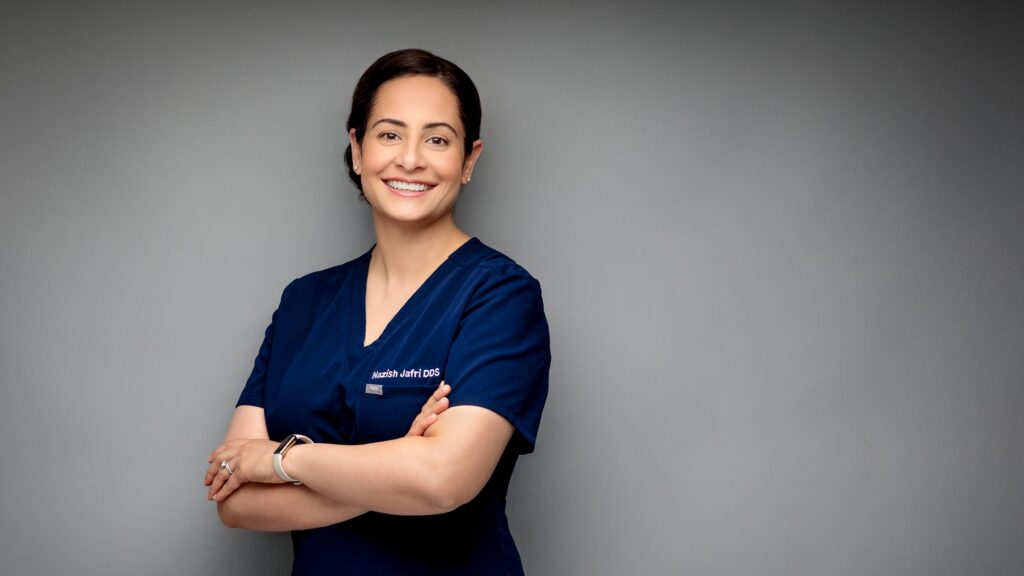
About Nazish Jafri:
Dr. Nazish Jafri, DDS, is a highly accomplished dentist, mentor, and business owner. Graduating from NYUCD in 2011, she quickly established herself as a respected leader in the dental industry. As the owner, CEO, and operator of Secure Dental, a leading dental service provider with 10 offices across state lines, Dr. Jafri has over a decade of experience in successfully managing and growing businesses. Her commitment to top-quality dental care and passion for mentoring the next generation of dental professionals have made a significant impact on the industry and inspired many. With a strong reputation for exceptional dental services, she is widely recognized and trusted by her patients across different states. Learn more about her and her dental services at www.secure-dental.com.
Social Media Handles:
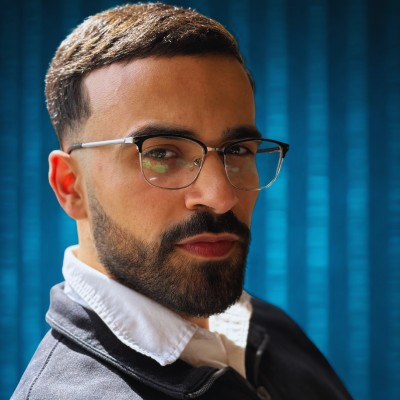
About Hassan Hamid:
Hassan Hamid is the Co-Founder and CEO of Dentra-AI, an autonomous patient engagement platform built for dental groups and DSOs. He is passionate about transforming dental practices through intelligent automation and leads Dentra’s vision of making every practice more efficient and patient-focused.
With experience across dental clinic operations, marketing, strategy, and patient acquisition, Hassan has worked in roles ranging from front desk and treatment coordination to executive leadership. Before Dentra, he served as Chief Strategy Officer at New York Dental Implants, where he helped drive major revenue growth, improve operational systems, and build data-driven processes. His work focuses on helping dental practices recover unscheduled treatment, reactivate dormant patients, and support teams with tools that reduce administrative burden.
Resources:
Secure Dental_Hassan Hamid: Video automatically transcribed by Sonix
Secure Dental_Hassan Hamid: this mp4 video file was automatically transcribed by Sonix with the best speech-to-text algorithms. This transcript may contain errors.
Nazish Jafri:
Hello! Welcome to the Secure Dental podcast one more time. I am your host, Nazish Jafri from Secure Dental. I am a full-time clinician and the CEO of the office. The reason for the podcast is to bring in real-life experiences from people across who are working in the dental industry, bringing in a lot of innovations, and us in our organization, trying to see how it can help us become better and more efficient. Every single day dental practices just like me across the country watch patients walk out the door after the consultations, right? This happens. The patient has gauze in their mouth, and they walk out because they don't want to make an appointment and never come back. Not because they didn't want the treatment. I think what happens is that because nobody followed up with them that day, they probably had the gauze in their mouth. They didn't want to talk. They were numb. They'd go out. But sometimes what happens is life happens in the dental office, with the front desk, with the manager, and we never follow up. Today's guest is on a mission to fix that. Hassan Hamid is a co-founder of Dentra AI, and he is also the guy behind the scenes helping us run a smarter practice right here in our own offices. If you are a young dentist or a dentist who owns an office and you want to grow without burning out your front desk and making sure that patient who walked out is followed back, this podcast might give you a lot of tips. So, Hassan, welcome to the podcast today.
Hassan Hamid:
Thank you so much, doctor.
Nazish Jafri:
Yeah. So, let's start with the real numbers. How much revenue do you think an average dental practice loses every month because the patient walks out and we fail to call them back?
Hassan Hamid:
Yeah, that's quite a contested number. If you were to look at different sources, even yesterday, Henry Schein came up with a report of 7000 locations and unscheduled treatments and stuff like that. But I think at any given moment, what we've seen is there's about $2 million in unscheduled treatments, and that, within any practice as far as revenue, it just depends on multiple time frames. One being what financial capabilities and like if the patient has the means or as far as insurance or also the type of treatment, if it's a routine treatment, then it's a much easier purchase where, sometimes, we can just forget to book them in, and, they just need a simple phone call to get them booked in, which kind of slips through the cracks. If it's much of these larger cases, whether it's a big cosmetic, you know, veneers, or all on X case, then it takes a lot of deliberation between the patient and the bank or the financing partner, but also socially as well. You know, I may have to go back to my wife and ask her, hey, I'm about to make a $50,000 investment in my teeth, what do you think? And there are different objections that can come up in that sense. But to answer your question,if it's a general practice from the data that we've seen, every practice can generate an extra about $12,000 to $20,000, depending on how busy every single month. Because consistently from just unbooked appointments or unscheduled treatments. Of course, if it's a specialty practice, like an all-on-X case, all-cases practice, then you would measure it bi-quarterly, and you can get about $120 to $200,000 quarterly because of just how the cell cycle is just much more prolonged for these larger cases.
Nazish Jafri:
Yeah. No, you're right. Finance is an issue. 100%. Obviously, nobody carries that much cash around to give it to the dentist right away. They would rather, I hear all this, they would rather give it to their college student fund, kids fund, or maybe buy a house, buy a car. I've heard all of them. But I have also seen another flip side of it, which works when you're very diligent in your follow-up. I've seen patients come back because they trusted you. There might be shopping around for the same thing. They might find a few hundred thousand dollars off from ours to somebody else, but they end up sometimes coming back and doing the treatment with us or with a provider. I think because at that particular time, we had connected with the patient in a very local, empathetic way. And then we listen to it, and I'm sure each dentist listening right now has experienced this because there are patients who sometimes were so in a hurry, we do the treatment plan real fast. Those patients might not come back. But some days we have this time that we sit down and connect with the patient, really, like at an emotional, empathetic level. We're listening to them, and we just connect with them, and they want to spend money with us. I think that's where the trust comes in. And if this can happen throughout the office, not only the provider, if this can happen, the same connection can happen with the treatment manager, the treatment coordinator, the front desk, the follow-up. All these spots are connected together. Then, definitely, we can bank on those patients to come back and see us and spend money with us. And I think that's where Dentra AI, when we had started working with you, Hassan, I started feeling that those points are getting connected much better. I want you to tell us how Dentra AI actually works in a dental office.
Hassan Hamid:
Yeah. So, we might need to go back because, I mean, we've been in this for so long, and, you know, Dentra just didn't come out randomly because the AI game kind of the AI and AI agents came about in the industry. We've been trying to develop software to solve that exact problem since 2019. And that came about when we realized that a lot of the patients that do come in for a consultation, in an all-on-X practice, but also from my experience running a marketing agency, they would never be followed up with. And in other industries, you would usually nurture that conversation even if someone doesn't buy immediately. So, if you go to get a new car, you know, the sales rep would constantly send you a text message. Hey, just checking in. How's things, right? But we never really saw that happen in dentistry, and for a very long time, you know, working as a chief strategy officer in New York dental implants, my aim was like, "Okay, how do I reduce that leakage? But also make sure we do it consistently". We try to do it through, you know, this like Asana and monday.com, but they just collapsed. We went back to spreadsheets, and it just never happened. And it's not because nobody wanted to do the work. It's just in practice things can be very fast. And so, you can clock in at 7 a.m., and then you look at your time, and you're like, "Oh, 6 or 6 p.m.", right? Like, and I don't know what's happened. And so, that's when we, spent a ton of, you know, we've invested tremendously in an early version of Dentra, which was like a process management tool for dental clinics. So, we realized that every single procedure went through a particular workflow. And we treated this workflow as like blocks. So, you would have a block where the patient came in, and then a block where the patient accepted this treatment. And each treatment was a block itself. And we realized it was like a whole connected ecosystem that we had to create in order for everything to kind of fit and be sequential, but also sometimes when things don't fit, it needs to be agile enough where we can move around it and still not lose it, right? And so, we spent four years trying to build something like that, that does it. And we've successfully deployed it across pilots. And then at that time, it wasn't a much AI. It was just internal to manage the actual practice. But then, even so, we realized that was not sufficient. And we were actually working on the problem on the wrong end of it. Instead of trying to do it internally, we had to figure out that it needed to be external from within the practice because the practice has limited resources. And as you know, as far as employees and what they can do in one single day. And that's when we ended up shutting down the projects four years later. And it was quite a difficult time. I'm like, "Okay, like I've worked on this for four years". You know, we've invested, you know, drastically into this. And I'm now, in December 2024, I need to think about, "Okay, what are we solving here? Like, what am I doing, right?" Okay, cool. We'll go back and just manage the practice as it needs to be managed. And we will stop treating the practice like a lab for our tech products. And from there on, we ended up from there on, you know, this is where we heard the whole hype of AI agents was coming about and it just never made sense in my head. Like, what is an agent, right? Like, how does this I know it's an LLM and it can just spit out a text in a format but how could it do work for me? And so, the first thing I did is I just said, hey guys, I'm out for three months. Nobody contact me. I'm about to learn this stuff. And I just treated it like I was at university. So, me being very obsessive, I just sat down and said, "Okay, cool. Like, I'm gonna learn the basics. What's an AI agent?" Then I realized, "Okay, so it's a large language model, but if you give it tools, it can actually get you closer to where you want to be". So, then I took it. I took the example of, let's say, mining for gold or mining for diamonds. So, I can give a human, which is like an AI, a large language model, which is our brain, way better than that, of course. And if I was just to tell, a human randomly in the streets of London, "Hey, come mine some gold for me". Well, they can't do it. They need to have some sort of tools. They need to know where, they need to know how. And so, I treated it like that. So, I said, "Okay, cool". Now, if I were to bring it back to a clinical format, how do we do this? So, then this is where I sat down with a whole mind map, and I'm like, "Okay, clinically, here's how we can use AI agents in surgery". Here's how we use AI agents in marketing; here's how we use AI agents in just the day-to-day management between the lab and the managers, and also the patients. And financing companies. And there were so many use cases across like eight different departments internally, which we never looked at like that. And once I looked at it, I said, "Okay, cool". Like, well, in the last startup, we tried to build everything at once. So, then let's learn our lesson and just build one big problem. That's a major leak. And what would it be? And so, from my work with consulting and speaking to other friends who run successful practices across the US, I just knew that they had an issue with. They spend a lot in marketing, but their conversion rate is not the highest, even though they have great treatment coordinators. And from my experience, I realized it's because the portion of patients that can move forward with treatment but are not ready right now, it's larger than the portions that are already immediate. And so, that's when I realized, okay, if we plug this leak, then it means that, if we actually plug this leak, then we approach the marketing issue from the end where it should end, and then later on move up to it where everyone knows leads and follow-up is a big problem as well when it comes to the leads and inquiries that come in. And that's exactly how we came up with the intro is to solve this one specific issue. And that is, patients come in, we've spent money, or they were referred, and they just said, "Oh, let me think about it". And they just go with the wind. And the way that we were able to solve it is, alongside AI, having the right tools. AI also needed to have the right context. And if you don't give AI the right information, it would just give you a mediocre output, which doesn't make sense. And so, from there on, we were like, okay, if I myself as someone who could do sales, and I'm, let's say you're quite good at sales. I'm quite good at sales. Why are we good at it? It's because we remember the conversation, and there are certain areas that we pinpoint and realize, okay, I can use that as ammunition, or I can use that to start a conversation with the doctor or with the patient and actually build rapport. Not because I'm being fake about it, but it's because we may have similar interests that we can talk more about. And then suddenly it just doesn't become a transactional relationship, but more of me being hurt or you feeling like you are heard. And so, with the patient, we realized that's a major thing, especially now with everyone not trusting dentists as much because they feel like, oh, they're overdiagnosed and whatnot. And so, we came up with just recording the consultation, and we realized if we record the consultation, we would know the full context, and we could just give it to the AI and then get the AI to actually understand and then usee this incredible capabilities of processing to know, okay, this is what I should focus on. This is the type of patients that they are, and actually, you know, generate messages after, you know, the AI listens to them, which automatically gets sent to those patients without the practice having to review or input anything as well.
Nazish Jafri:
This is huge. This is really huge because you said it right. Why are we able to sell some cases is because there is certain terminology sometimes we use that connects with the patient. And if you're recording the whole conversation and feeding it into the AI, it is going to be smart enough to pick it up from all the conversations we had, let's say ten in the day, 20 or how many, and it can become more and more smarter and maybe more empathetic because some of the text messages that it sends is a very condensed to the conversation I actually had with a patient. And that was amazing to hear that it doesn't feel like you're talking to a new front desk who has no clue what we talked about in the treatment room. It's like, it knows exactly what I talked to the patient about, and it's very relevant to.
Hassan Hamid:
Exactly.
Nazish Jafri:
So the patient doesn't feel that they have to repeat themselves. That was something very profound that I think I liked when I was reading those text messages going out. And the other one part that you said was about how you are holding on to one problem, and you are taking the end part of the problem, which is the leaky part of the problem, but it is the biggest hole in marketing. We spend tons and tons of money. We expect our phones to ring. Sometimes they do ring, but then what happens after? And then how are we closing the case? Once the patient comes in, how is the patient being followed up? I think that's the part you are backtracking on. And that's huge because that is going to show some patients come back, and your ROI is going to be a little different.
Hassan Hamid:
Yeah. And it's a problem that you have to be in it to know it.
Nazish Jafri:
Correct.
Hassan Hamid:
You know, you cannot just, come up and randomly be like, all right, follow-up is very important in dentistry. If you've not actually lived dentistry. I've virtually done everything in dentistry except surgeries. So, I could just design the teeth for you guys. And, you know, we get full prosthesis and maybe not maybe an hour or so, but, you know, not very fast, but you have to look at it, from not just one lens, but, Steve Jobs, you know, gives an example of the difference between consultants and actually like. real founders. And I don't know if you've seen the lecture where he talks about a banana, and he goes like, they just see it one way. But if you just turn it, it's actually, you know, round, and do you see every aspect of it? But then everything just interconnects, and that was one of the edges that we thought, okay, in a competitive market where there's just going to be so much noise, like what's going to sell us differently? It's much harder to educate the doctors as well on it, because sometimes a lot of them, when I get on calls with them, they're like, "Oh, well, I have a lead problem". And I'm like, "No, you don't have a lead problem." Like, I assure, you have a leakage? So, yeah.
Nazish Jafri:
Yeah, sometimes you're like blaming, like I was like that too. I used to blame the marketing company all the time. My phones are not ringing. Your marketing's not working. I'm paying $10,000. This is just not working. You know, do something else, or I would end up paying more. And the answer that I would get from the marketing company was all these graphs and pie charts and all these numbers that I really didn't understand. Those numbers look good, but my phone's not ringing. That's one. Second, if the phone's ringing, where's the patient? I can't see it. And there were times that I actually had to hire one extra person to get the calls, to be on the calls, but that person I'm paying for, the person I'm paying for one full payroll, but I don't see the ROI. I don't see my chairs busy. What happened? So, what you're doing is different because you're taking that end part where we lose the patience the most. We don't lose the patient on the top part. Because right now, with so much digital marketing and amazing social media, they do get attracted. But what happens when they do come in at that point? So, I think we're at a very different thought process now. The way you're working is pretty buttoned up.
Hassan Hamid:
Yeah.
Nazish Jafri:
The whole cycle.
Hassan Hamid:
Yeah, exactly. And it was also looking at AI and realizing, like, what's the true value of AI in dentistry? And the true value of AI in dentistry is not just giving you an extra dashboard or a new feature that tells you, hey, you're doing great, right? The actual value of AI in dentistry, and really tapping into AI at the highest level in dentistry, would be just getting the team to move faster. And I've seen it in the technology world, where when it comes to coding. So, when I, before AI, I had to hire a bunch of coders, and it was just very slow, you know, and they just had to do everything manually. But then, when AI agents came about, AI actually first solved it, like how to build software, which helped, you know, software companies build software faster. And it's the same concept that I had. "Like, how do we translate that directly into dentistry", where we don't just get AI to tell us what to do and where things we should do, and like, just see it in a nice, really good dashboard. But how can it get to us? Or how can it give us outcomes? Like, you know, the promise is not just to sell you an AI tool. It's to really tell you, hey, when you buy our service, you're actually getting an outcome, you know, checked off your list, which nobody else has to do. No more, you know, within the practice. And that was one of the things like, what can we control? And then we can control it end-to-end as a company instead of just telling, you know, the practice managers, like, "Hey, you have a whole list that you need to follow up with, and that's it."
Nazish Jafri:
Yeah, yeah. No, true, true. When you're saying that now, I wanted to come to the point where it is integrated into the PMS systems. Do you have to pull reports out to give it for it to read it? Can you integrate? How does that work? Because dentists, as a clinician, I don't want to do extra work. The manager doesn't want to do extra work, right? A pull and pull, whatever. So, tell me about that process.
Hassan Hamid:
Yeah. So, with that process is very simple. I mean, what we do in our team is we have individuals who are well-versed in dentistry. And so, what we tend to do is, if you give us access directly, if you're using a cloud-based software, you give us access to a user account, and then we get individuals on the ground that actually do that for you. And we do all the work for you. And that's really part of our job is, you know, we're not just technology providers, just selling you this and saying, "Hey, you need to figure it out internally"; we want to make sure when we integrate, it's just like as simple as a one-click or two-click or just one access. So, nobody has to do anything. There's no complexity, especially across a larger organization like yourself. You know, we don't want to kind of shuffle it by just adding a new software vendor. And suddenly now, you know, David has to do a thousand extra things, and then, you know, you have to do a thousand extra things just to integrate it, and it builds frustration before it even starts. And so, for us, it's usually, usually it depends on the practice management software, the ones that we integrate with. It's one click, and you know, you just give it to your IT team, and they install the bridge. If it's on-prem and if it's cloud-based, then it's simply done through, you know, you give us access to an account. And also we are establishing a connection now with the major cloud providers like Henry Schein as well, you know, to.
Nazish Jafri:
So it's HIPAA compliant.
Hassan Hamid:
Yeah, it's completely HIPAA compliant. We're currently under observation as well for enterprise grading, which is like a SOC 2 audit that we have an external auditor reviewing all of our servers and everything to do with that. So, we can, you know, ensure that we provide you guys with the best security, not just like HIPAA, but for security and whatnot.
Nazish Jafri:
Yeah, that's a big concern for dentists, obviously, because we see big organizations getting hacked and all those kinds of things, and the whole year is passing by. So, yeah, this is a big concern that you're having other API agents come in, and AI can, I don't know, look into everything, but I think being HIPAA compliant and following all the rules and regulations would keep things under control. And then it can serve us at the end because obviously there's only so much human capital you can do when that front desk is doing that many things; she forgets to do follow-up, they forget the patient was supposed to be called. So, at least this is...
Hassan Hamid:
What's interesting that I've seen, because we have our internal dashboard that we see everything, you know, all conversations across different locations, and something that we never thought we would kind of see is that there are small promises that we make at a practice level to the patient that we forget to follow through entirely. And that is like, "Oh, We'll send the prescription" or, "Oh, we'll send the records to you". And sometimes it builds up on the patient's end because they call the one front desk, and then the front desk says, I'll do it, and then they'll forget. And then the next front desk, and it gets to a point where action only happens when you get a very frustrated patient, and it's slightly too late, right? And so, one thing we realized from these conversations that the AI is having is that it's able to also eke out these things. And then it would tell the team, hey, you need to send this patient what they've asked you to do.
Nazish Jafri:
So yeah, it's keeping you on your toes because the conversation happened. Usually, the conversation would happen between the patient and me, and maybe the dental assistant. She's doing like 10,000 different things. She doesn't remember what I said. Sometimes I don't remember what I said. I'm seeing the next patient, but I like the fact that it's recorded and it's taking data from our conversation, and it's helping my team to be on top of it, to not forget what we had promised in the room, because you are so right. We forget. I said, we're going to send the prescription right now. And I go see the next patient. And I totally forget. It's like 4:00, and the patient's mad; they've had an extraction in the morning. So, at least the AI keeps us as a reminder, "Hey, you know, you promised something. You got to send it in".
Hassan Hamid:
Yeah, I think obviously there's something like I read it was like 30% of payroll is due to admin, and so.
Nazish Jafri:
Yes.
Hassan Hamid:
But even that, you know, a lot of my clients are like messaging, and they're like, "Hey, guys, you know, do you have some new stuff just for admin, right?" Not because they feel like, hey, like I'm gonna kind of fire my team or whatnot, but more like my team, I cannot push them even more. And, you know, how do we build something for that? And also brings me to a point where a lot of the time, what I've seen is that AI is being built for monitoring, like in dentistry or something like, or just like scribe, which is just purely for clinicians.
Nazish Jafri:
Yeah.
Hassan Hamid:
Whereas there are actually other stakeholders in dentistry, and these stakeholders, you know, we love the doctors; they're amazing. But what makes the actual dental practice is the managers. It's the front desk. And so, they're really being forgotten when it comes to building tools for them.
Nazish Jafri:
And yeah, they need help.
Hassan Hamid:
Exactly. And that's one thing we, because, you know, as a doctor, they would just be like to the TC like, "Hey, you're not following up enough". Well, as someone that leads the practice, you should actually give tools to your TCs or, you know, the right tools to make sure that they have all the means and ability to follow up effectively on top of their existing responsibilities, which is seen in many patients as well.
Nazish Jafri:
You're right. Our TCs, like our treatment coordinators, are mostly our managers because they're, like, done with dentistry. They've been dental assistants; they've been in the field. So, those are our managers. And I would see like 10,000 different Post-its everywhere. Call this patient for a pre-op, call this patient for a prescription, call this patient because he's mad. Call this patient because he has a balance and he's mad. This patient's upset. There are like tons of it. I think they really need help to organize it and reminders. So, if something is giving them reminders, or if these mundane things are being done through our conversation that already happened, like prescription sending, things like that, it can be off their plate, and they can be more efficient in doing what they do. The human connection.
Hassan Hamid:
Yeah.
Nazish Jafri:
Yeah.
Hassan Hamid:
And it was all about empathy when we started this. And that's why we opted in to just do the SMS rather than, like, AI voice. I mean, I like the idea of AI voice, but I think once anyone realizes it's an AI, immediately.
Nazish Jafri:
You're so right. You are so right. That was my next question coming up. Because younger dentists, they don't want that AI voice, or they don't want an outside style voice. If we're in the United States, we want the voice that comes from here. And it shouldn't feel like you're calling a hospital or a bank, which has these particular words to say, and then it just doesn't know what to say anymore. And I do think that text messaging is much better nowadays. Even if you're at work and your phone is on silent, you still get the text message on your app or watch and things like that, and you have seen it, so you are more apt to reply to it. So, tell me, how do you see that? Yeah. First place.
Hassan Hamid:
Yeah, I think obviously, like AI voice, there are different use cases that are incredible. I think the guys at Mango Voice, they're doing an amazing job when it comes to AI voice, specifically one because they actually own the phone systems. So, you've heard of Mango Voice. And so, they're huge. They see the data and whatnot. And then after that, because they own the infrastructure, they could just put the voice on it. And then from all that data that's flowing through, like 15,000 practices that they have, they can learn a lot and iterate very quickly. So, they're doing an incredible job as far as that. But what they're not trying to do is replace some sort of function like, lead qualifying or treatment coordinator style questions on a phone call, which you're kind of having a mini consultation, right? I think what they're doing is purely overflow and really helping the practice move faster. So, that's one thing about AI voice that's really good, it's just kind of managing overflow in the after-hours and times where I think everyone's just way too busy. But then at the same time, I do believe that we've had AI voice for a very long time, and that's called an IVR. So, because, as soon as the patient, I mean, when I call my telecom company, it's an IVR, and I'm like, speak to a human, right? So, humans are just programmed like that, right? They want to speak to a human. But as far as SMS, one thing we realized is if you, if we backtrack the process that we had for post-consultations or after appointment calls, especially for patients that haven't accepted treatment. If we try to give them a call during work hours, they're more likely not going to pick up. Especially for higher treatment cases. You know why? Because they're probably employed in meetings, and they're not going to pick up. Yeah. But also, even if they're just retired or they, you know, can pick up, they may not because they just think, "Oh, it's a dental practice calling me", or "They're just trying to sell me some business right now. And I'm really not interested. I need to speak to someone or my baby's crying right now". And, you know, I need to tend to her, right? And so, we realized that, "Okay, that's a flawed way because it works when you're just doing sales", and there's no empathy, and dentistry is all about empathy as well. But with SMS, we realized that everyone opens their SMS regardless if you're busy or not. I could be in between calls or between meetings speaking to my team, and I'm on my phone quickly, just looking at my text messages. If I get a new text message, I can guarantee you, I read every single SMS that comes to my phone, but I won't reply to every single one. Sometimes I'm like, just promotion. I don't want it. Oh, Domino's Pizza sending me a message like, you know, not interested, you know, too much carbs, right? And so, that's where the idea came about. It's that everyone can read their messages. And so, if we just tap into that channel, that's one way. But also, even if anyone can read the messages, it cannot be generic because that's something that we've been trying to do for a very long time, saying, "Hey, you have a pending treatment". That kind of doesn't make much sense, right? You know, you're actually killing off the patient, if anything, because they'll just reply with stop. And then legally, you're gonna have to stop, right? Until they opt in again. So, yeah, that's really the reason why, because we have the entire consultation, we have the context. We can send personalized messages. And then we just solely focused on text messages. And even now, like within our company, in any meeting that we have, we say, well, let's not mention voice whatsoever. Text message is the way for us. And that's how it's going to remain the way that we are kind of thinking about using voice. You know, as far as AI in dentistry is to coordinate teams instead. So, that's an internal thing because it's just like having a manager, you know, sending you, you know, giving you a call, say, hey, you need to do this. You remember, right? Yeah. Cool. Sounds good. And that's about it.
Nazish Jafri:
Yeah. I think text messages also don't feel like pressure sales. So, we don't believe in pressure sales in our organization at all. We are more like value-based. We give them the option. We give them options of financing, however they would like to go for the treatment, and we give them the time to think about it. We're not on their head saying close today. So, that's not the way, at least our organization works. And I think text messages give those people the empathy that it says, time to think about it, because nobody's on the phone call on their head waiting for an answer. So, sometimes people don't pick up the phone. Me too. So, there were some consultant companies that we were with initially in the first 2 or 3 years, and I just didn't want to pick up the phone because they just don't get off the phone. They have these scripted messages, and they keep pressuring you to say something to make a decision. In text messages, you have this time to formulate your thoughts and maybe reply back after proper thinking. It gives you priority. It gives you a reminder that it's there. It's in the text message.
Hassan Hamid:
Yeah.
Nazish Jafri:
And you can look at it again. Think about the answer. Think about your stuff and then say, and I do. And I want to give patients this autonomy because, if you don't give them this, it's not, and you pressure them for a sale. Sometimes they just don't want to come back. They're like, okay.
Hassan Hamid:
Exactly.
Hassan Hamid:
Yeah. Especially if you're on the general side, like where it's an ongoing thing. It's not like a one-time payment. And, you know, you're just trying to get that, you know, you need to cultivate. There was a great individual. Terry Strain, he's trained at SDM, Strain Dental Management. Early on, we had a call, I think a few years back. And then we're big in the space, and we're like, "Oh, we're going to we should open up clinics". And it was one of his doctors that introduced us and thought it would be a great thing. It didn't end up going through. But one thing that he kind of explained general dentistry and flush in the perfect way, he said. He said, well, you guys are like hunters. You just going to go out and kill and then get it. Whereas what I'm looking for is just I want farmers, I want people that will cultivate the land for me, and then just continue cultivating it. And so, with general dentistry, you don't want to burn those patients. You don't want a lot of the time, they'll just be like, hey, you're annoying. Just like, I'm going to go to another dentist. You know, you guys, you guys don't appreciate this, right?
Nazish Jafri:
So yeah, so I really, genuinely, and with text messages.
Hassan Hamid:
We've seen that happen tremendously as well from just the data that we see every day. You have the patient, we send them a text message, and they don't reply. And it's like, "okay, cool". Like, and a week later, they just don't reply again. And then like, randomly, like two months later, after like the third or fourth touchpoint, they would wait three days or so and then reply and be like, "Hey, I was thinking about this. This is amazing. Yeah. Thank you so much for reaching out. I forgot about it. But yeah, I'm ready to do this". Or "I was speaking to my wife, and then she asked this question like, what's the financing? Like, can you remind me?" And the good thing where you place AI there as well is that a lot of the time, like dentists want the patient to accept and move forward with treatment when they want them to accept. And that's not the reality. The reality is that we just have to be there whenever they're ready, and we have to be there as quickly as possible and in the least chaotic environment. And so, whenever the patient messages the TC and the TC is busy, the TC will probably message six or seven hours later. We don't know what happens six or seven hours later.
Nazish Jafri:
They might have found somebody else.
Hassan Hamid:
Yeah, exactly. And so, one thing we also realized is that, like, from just looking at the enormous amount of data. It's like, okay, cool. Like this is interesting because whenever the patient is ready, we reply in two minutes, and it's like suddenly we're starting a conversation again, even though they weren't called for like six months.
Nazish Jafri:
Yeah. Because this text message is like top-of-mind awareness. It's there in their text messages, and they can see it. So, Hassan, you've been working with a few of our offices because obviously it's a big undertaking, and we wanted to start very slow. So, we started off with 1 or 2. And then now we're in four offices. And you've had beta testing on others. What did you find out when you started off with us in our initial phases? What were the issues?
Hassan Hamid:
Yeah. The thing is, there weren't many issues with you guys. I think you guys have really had your internals, your SOPs, very clear. And so, the integration was very smooth. In fact, with the early offices, we've only had like three calls, and we've seen them record 400 appointments in the space for each office in the space of every month. And that continues to grow. And that's purely because everything was very clear with you guys. And you guys had the structure. In a lot of office, and the problem that we see every day is the reason why they do not record is that there's already chaos internally. And so, I always go back to the managers and also the doctors and have a conversation with them and say, "Hey, guys, based on my experience, I think we need to clarify things there so they can use it much easier and much more freely and without any confusion". And so, that was one of the nice things with working in your offices is just, it was like an immediate thing. And it's like, okay, cool. Like, you know, we just do the check-in on emails, and if there's anything, you guys call me, so.
Nazish Jafri:
Okay. Well, that's good to know. We try our best to have like similar procedures throughout the organization. But I think another positive was, like you said, the front desk and the manager were always wanting some help. And they saw that they saw the opportunity as efficiency and help rather than me firing somebody. So, it was very clear that, hey, you know, we're not firing anyone. This is not replacing any one of you. This is making your job easier, giving you reminders to make you more efficient. So, I think that kind of settled down in them, and they were like, "Okay, this is our help. This is our right hand. We need it".
Hassan Hamid:
Yeah. And dentistry is a people's industry. There's never going to be a case where way, you know, at least I may not be alive if it happens, right? There's not going to be a case where I'm going to get a robot dentist that's just going to do everything and whatnot. It's a people's industry. And I think with like seeing AI and how because we've tried to test AI to its limit internally. Every day, we come up with a random experiment. There are only so many things you can use in dentistry, but when you use them, you can really do very well as far as moving fast and creating momentum for the team, but also, you know, getting those revenues and plugging these leaks in the business.
Nazish Jafri:
Yeah, making it more efficient. These mundane tasks, if they are automated and done when you're sleeping, are way better because that takes a lot of time. Non-productive, non-clinical time, doesn't it? It turns into an ROI if the patient shows up. But if a human doesn't contact that patient, you've lost it. So, it's a good way to keep them connected. So, we got a lot of information from you, Hassan. If you can summarize. Let's say if somebody wants to get in, get your services, what are they? What is that clinician expecting? If you can give us some of the steps, so they know that it's not that hard. It's very, very easy. But I'm with you. So, you tell them the steps.
Hassan Hamid:
Yeah. No, the steps are very simple. I mean, once we have all of the security and stuff checked in, as far as like agreements signed, all we do is we'll send you the access; we'll create your account and send you the access. If you're on an on-prem server, you just send it to your team, your IT team, to connect you, and then that way our servers will speak to your server. And then if not, you give us access to your login, and then we will handle everything ourselves from there. And then all that's ever required is one hour with the team. So, we will schedule a call. One hour. It takes two clicks to start recording at any given moment from anywhere in the application. And we solely want the practice to just do one thing: record those consultations. And the good thing about it is you don't just get the AI text messaging back and forth. You also get your scribe tool if you are already using a scribe tool. And that's the early, early use cases in dentistry are using AI for scribe. But we're like, okay, we can just give that away, you know, as part of the value for our product.
Nazish Jafri:
Yeah. When it is recording it. And I think our associates really like it because it makes it so easy. Like I said, sometimes you forget after 4:00 when you're writing, or you're like, what did we talk about our 10:00 patient? You totally forget. And sometimes we promise things at the goal. And as a clinician, we forget. So, I think it's really, they really like it. I didn't get any opposition or any hesitation from the doctors when they saw how it was coming up, and it was going to help them improve their clinical notes. And those clinical notes were also an added benefit for the treatment plan coordinator, because they know exactly what the conversation happened. So, it becomes very smooth. It's not redundant. You're not asking the patient again and again. So, yeah, Dentra gave us like almost three, three things to be more efficient in which are very critical.
Hassan Hamid:
Yeah. Very much. And then finally, obviously, it's insights about the practice. Even, there are new experiences you have with, like, different managers, and the way that they use it. There was a very frustrated patient that one of our partners in practices had. And then she said, well, I went and listened to the actual consultation and the conversation with the patient and see what happened, and then she was able to actually address rather than just have this whole usual, Oh, there's. Yes, there's an apology, but do you know why that happened? So, we can mitigate it in the future. And because there are usually patterns and behaviors that, if we simply plug them in, we would have a very smooth experience internally as a team and with the patients as well.
Nazish Jafri:
Yeah, no, very true. So, Hassan was really, really amazing talking to you. And it's like a real talk because you developed something, you had a vision, you scratched it, you still stuck with it, and you found where to start from instead of the beginning. You started from the end. See how you can plug those holes. So, that resilience is amazing. For me, one of the biggest headaches as a practice owner, whether it's one office or ten offices, isn't the clinical stuff. It's everything that happens after the patient leaves, and we sometimes hire more people to pick up the calls, to do something, but that increases payroll. But there's no revenue. So, the follow-ups, the no-shows, you know, I'll think about it. People disappear. I think you are taking that away. Your system, your Dentra, is really honing in to it once it learns our system in our ways. So, it's really actually solving problems, which I can feel in our organization as well. And my managers like it. My associates are starting to like it. And the message that I want to give across today to people, to the associates who are listening or to the practitioners who are listening, is we're in this together. We're doing it. It's real life, and it's still learning. It's not perfect. It can never be perfect because in dentistry, you still need that human connection. You still need that empathy; you still need it. But this is going to help your front desk, your team, especially your team, to be more efficient, to be more present for the actual patient when they're in the office. So, we will have Hassan and Dentra AI and my links after the conversation. And there would be 2 or 3 ways that we can that you guys can connect to him. And please, if anything was valuable, I'm sure it was, give him a call. And he has tons of information and a really humble company to work with. Thank you! Again, this is the Secure Dental Podcast. I am your host, Nazish Jafri. See you with another real experience in a week. Bye.
About this transcript
The transcript on this page was created automatically with Sonix, which combines automated English transcription with fast the best mp4-to-text converter. Learn more about AI audio and video translation.
One recording, many languages — translating video to German makes multilingual publishing practical. See the automated translation feature for how it works.
Create a free Sonix account to transcribe your own recordings in minutes — and check what transcription costs before you commit.