How Better Technology Can Help Dentists Focus More On Patient Care
Summary:
AI and automation are changing what it means to run an efficient dental practice, giving clinicians new ways to reduce administrative work, improve collections, and focus more attention on patients.
In this episode of the Secure Dental Podcast, Dr. Ryan Hungate, Chief Clinical and Strategy Officer at Henry Schein One, joins Dr. Nazish Jafri to discuss how lessons from Apple, dentistry, and dental technology have shaped his approach to practice workflows. Ryan explains why practices lose revenue even after treatment is accepted, how better transparency can improve chairside conversations, and why dentists need a stronger understanding of the business processes happening behind the scenes. The conversation also explores vibe coding, AI-powered revenue cycle management, eligibility automation, ambient voice technology, claims submission, and the growing connection between medical and dental billing.
Tune in to learn how technology can reduce administrative burden, improve financial performance, and help dentists spend more time doing the work they actually trained to do.
Things You'll Learn:
Lessons from Apple’s retail workflow can help dental practices improve patient routing, communication, trust, and treatment conversion.
Many dentists leave school without understanding insurance verification, claims, collections, and other business processes that directly affect practice revenue.
Treatment acceptance does not automatically translate into completed treatment, making affordability, transparency, and patient understanding critical parts of case presentation.
Vibe coding and generative AI are making it easier for dental professionals to create customized tools and workflows without traditional software development resources.
AI-powered eligibility verification, ambient documentation, and claims automation can dramatically reduce repetitive administrative work for dental teams.
Better integration between dental and medical billing could create new reimbursement opportunities while helping practices navigate increasingly complex claims processes.
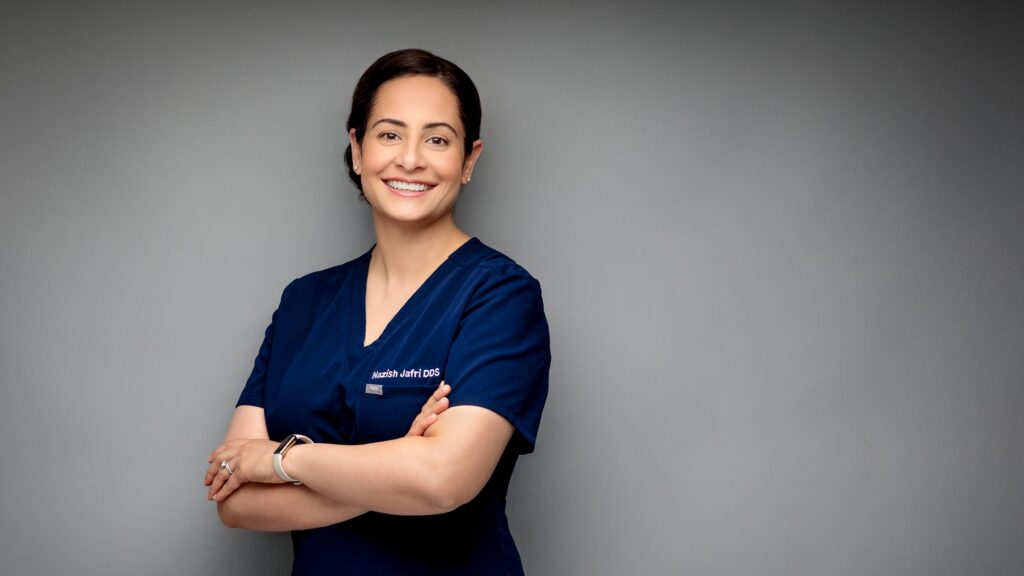
About Nazish Jafri:
Dr. Nazish Jafri, DDS, is a highly accomplished dentist, mentor, and business owner. Graduating from NYUCD in 2011, she quickly established herself as a respected leader in the dental industry. As the owner, CEO, and operator of Secure Dental, a leading dental service provider with 10 offices across state lines, Dr. Jafri has over a decade of experience in successfully managing and growing businesses. Her commitment to top-quality dental care and passion for mentoring the next generation of dental professionals have made a significant impact on the industry and inspired many. With a strong reputation for exceptional dental services, she is widely recognized and trusted by her patients across different states. Learn more about her and her dental services at www.secure-dental.com.
Social Media Handles:
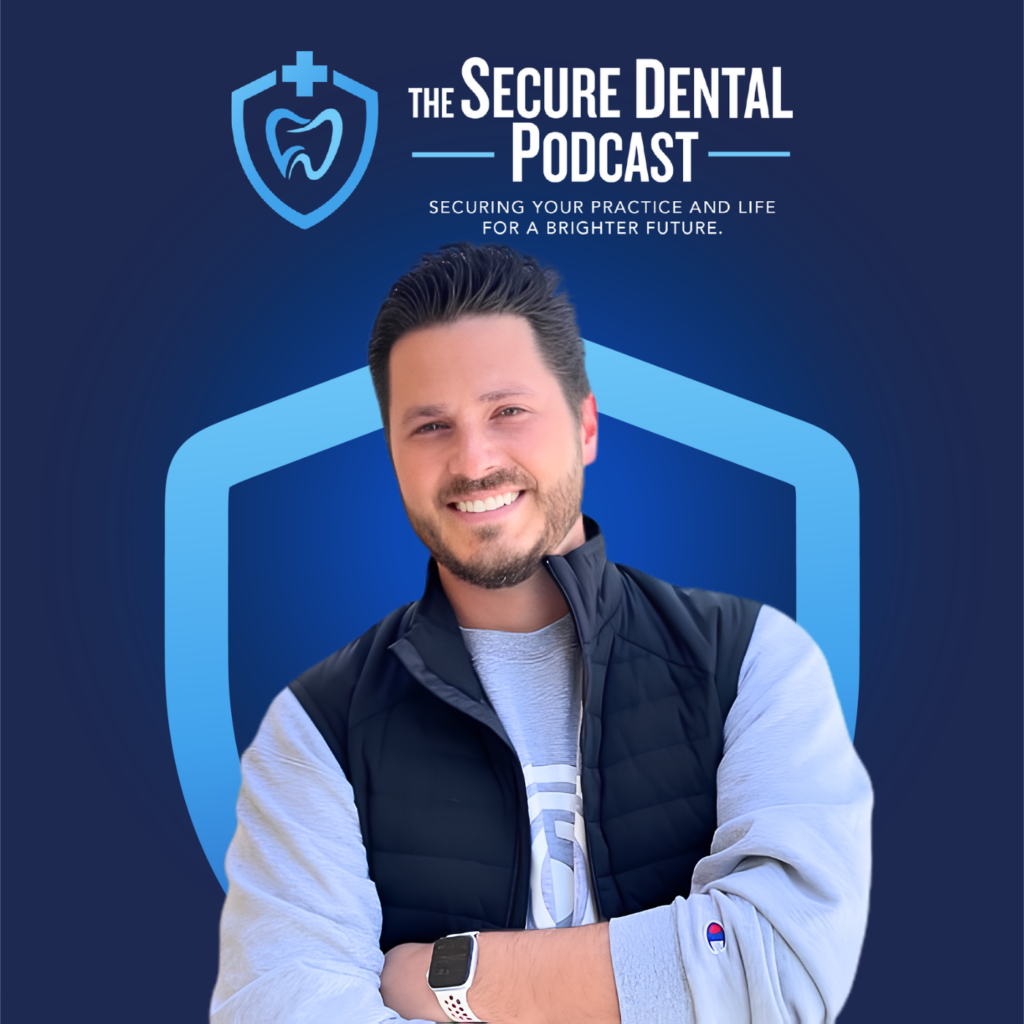
About Dr. Ryan Hungate:
Dr. Ryan Hungate is the Chief Clinical and Strategy Officer at Henry Schein One, an orthodontist, and the Founder of Simplifeye, Inc. Before entering dentistry, he worked at Apple and contributed to the design of its retail workflow, an experience that shaped his interest in improving customer journeys and operational efficiency. He later brought that same thinking into dentistry, building technology designed to automate practice workflows and improve patient engagement.
At Henry Schein One, Ryan focuses on next-generation revenue cycle management automation, connected dental technology, and reducing the administrative burden placed on dental teams. His work centers on using AI and automation to help practices operate more efficiently while allowing clinicians and staff to focus more on patient care.
Resources:
- Follow and connect with Dr. Ryan Hungate on LinkedIn.
- Visit Dentrix Ascend to explore the practice management and automation technology Ryan discusses in the episode. He specifically directs listeners to DentrixAscend.com at the end of the conversation.
Secure Dental_Dr. Ryan Hungate: Audio automatically transcribed by Sonix
Secure Dental_Dr. Ryan Hungate: this mp3 audio file was automatically transcribed by Sonix with the best speech-to-text algorithms. This transcript may contain errors.
Dr. Nazish Jafri:
Hey, good morning and good evening, everyone. This is again Nazish Jafri from Secure Dental podcast. I am a clinician and CEO of Secure Dental and also a mom of three kids. And I do this podcasting is because I love bringing people who are in the everyday grind of dentistry, and they have their own unique experiences that I love sharing because this is not social media; this is actually we're talking to actual people who have gone through these hurdles and experiences in their life, and they have made something out of it, and they have their own tips and tricks that I want to share with people, because it gives us that motivation to keep on going forward in this day and age. If you're an associate or you're a business owner, today's guest is amazing. I've never had to say that somebody worked with Apple. I am a very big Apple fan. I buy Apple products not out of necessity, but I think I need all of them. Well.
Dr. Ryan Hungate:
Of course.
Dr. Nazish Jafri:
Yeah, we have Dr. Ryan. Before he dived into dentistry, he designed customer workflows at Apple, and he became a practicing orthodontist. He built and sold a dental tech company, which I think everybody is pretty familiar with. Simplify. And it was in 10,000 practices when he did this shift. Now he is a Chief Clinical and Strategy Officer at Henry Schein One. We are the big customer of Henry Schein as well. We use Henry Schein One. I'm very proud of it that I use it. And all our nine offices have it. He has built his whole career around one idea that we resonate as well. Dental school teaches us to be clinicians, but they don't have the time to give us the business part of it. We don't know how to be business owners or what the business of dentistry is. So, this is what Ryan's going to teach us or tell us about today. Thank you for your time today, Ryan.
Dr. Ryan Hungate:
Of course. Thanks for having me. This will be fun.
Dr. Nazish Jafri:
Yeah, absolutely. Absolutely fun. So, you know what? I want to go back to that Apple experience. When you were designing that customer workflow. It is so important, and I can resonate with it with the dental industry. Tell me about it. What things that you brought from there into dentistry?
Dr. Ryan Hungate:
You know, it's so interesting is like, so I started off at a lowly Apple retail store, right? Started off at the Mall of Millennia down in Orlando, Florida, where I was getting into dental school. And, I think it was one of those fish-out-of-water kind of scenarios. So, I always like when people from different worlds come into dentistry as well. Like, it just brings different thinking with them. You know, like every so often you'll see a lawyer be a dentist, you know, like somebody with an MBA will come in and have, you know, go into dentistry as well. And you usually get a little electricity from that, which is great. So, you know, I was kind of in there. And I remember our number one problem was we had too many people in the store, and they couldn't find somebody to help you. And it didn't make sense. I was like, there's 40 people working in here right now. How can that be our number one problem? And I said, what if we start to triage people as they walk in? And then that worked. You know, we put walkie-talkies on everybody, whether they liked it or not. That was a different story. But literally, we would start to say, hey, what can I help you with today? Oh, Ryan knows what he's talking about when it comes to that. Ryan, I need you over here in this section. Come and get them. And we would do this thing where, like, I'm wearing black pants right now. You'd go gray, black. And the person would walk up and be like, Ryan, how's it going? And I'd be like, oh, this is cool. They like me, they know me, whatever. And it would just start off interactions a little bit different. The other piece that we started to realize is that people were checking out in the same place. Like I would bring them a laptop, they'd sit there, like with their little briefcase laptop, and they wait in line, and they would check it out. They would eventually, like, not be in the moment anymore. So, they'd get nervous, and they would drop their laptop, and they would leave, or they would put the iPhone down, or whatever it might be, because this was during '07, '08, and a lot of new devices came out during then. A little one called the iPhone. And there was a bunch of people second-guessing themselves. So, I said, what if the person talking with them in the middle of that flow just checks him out the exact same time? And all of a sudden, you watched our people stealing stuff, dropped off the table, conversions accelerated. And you know, what I started to realize about these workflows is, first, software can have a huge effect on them. Okay, now we didn't have the Apple iPhone App Store at the time, you know, so we were actually using Pocket PCs, believe it or not. And we were manually mounting receipt printers underneath desks, doing things like that. But it really started to have a profound effect on our sales throughput. We noticed that we were doing huge percents more than these other stores. And that kind of led me to end up going out to Cupertino and deploying what you now experience as Apple retail workflow and every store, basically nation and internationally as well. Now they use iPads. It's a little bit easier, but at the same time, you still have the same effect. They triage you as you walk in and strategically route you. They try to reserve times for you. We had that at the Genius Bar at the time for repairs, but I was like, why don't we move this up front? It would make a lot more sense, and you get just a higher conversion altogether at the end of the day. You know, what's interesting is one of the things I brought forward because of that was we don't do a lot of conversion. Chairside. I realized that when you have a patient back, you verified their insurance up front. You've done a lot of those different lifts. But then what you do is you sit there, and the clinician talks about clinician stuff. You spend huge amounts of time establishing trust. And the person who's getting ready to dump a huge dollar item on them has established no trust whatsoever. We even talk about it as clinicians. Oh, I don't know the prices. Judy's going to come tell you about that. And it's like they're bringing the bad news with them. Like I just said, hey, I'm going to fix your health. Nobody walks into a dental office hoping they can't afford something, and they kind of trust you because you're the doctor. It's less of that nowadays, but it's accelerating from things like AI imaging and other this stuff, but then you bring in another person, and this is something where we're trying to push more of that chair side conversion now, where I'm giving you so much information, so much transparency to how much you're possibly going to have to pay today, maybe even as low as number two, how I can make it more affordable for you that hopefully people just get more comfortable with doing chair side quotes. I'm not saying the doctor needs to start pitching pricing and stuff like that. They could probably be using their time better, but at the same time, they shouldn't be scared of it either. Yeah. So, yeah, it was a fun ride at Apple. Probably the coolest thing I brought from Apple was that at the time, the reason that I got to skyrocket through that organization was that they truly believed that if a person had a great idea, no matter where they are in the organization, they would allow them to ride that idea to the top. It doesn't matter if you're the janitor. It doesn't matter if you're SVP, if you have a great idea, it's your idea. And also, they promote others who are above them. Maybe the regional manager, the manager, whatever it might be, for actually surfacing those ideas. So, you don't have this culture of holding stuff back where I'm going to save this for me one day. It's no, I want to help the greater good because I know that I could skip levels because of this idea. And they actually believed that during that time, this is during the Jobs era. And maybe they still have a hint of that, and maybe the new person will bring it back. But it's one of those things where that's why you saw so much innovation within those organizations, because they truly were good with the flow of ideas moving from bottom to top and being able to actually get credit for what they did. And I've tried to bring that through to every single company that I've been involved with since then, and I recommend it to everybody.
Dr. Nazish Jafri:
You're absolutely right. Like it's actually the teamwork. Only the C-suites don't come up with these ideas. It's the actual regular people who are in the day-to-day work. They have these ideas because they're constantly with customers or patients, like the front desk, or when you were with the customers, you knew what the customer was feeling because you were on the ground, your boots were there. And those are the people. They bring those ideas because they're unique in a way. They know the experience, they know the whole timeline, they know the whole journey, and they know how to solve it. But sometimes some companies or some organizations don't flourish these ideas, they keep it to themselves, or they make it their own. And it's very important to understand that, you know, an organization to grow. That's exactly what you need. You need these ideas to come from the bottom up, and then you help them flourish. Just how yours got flourished, really.
Dr. Ryan Hungate:
Yeah. I've run into great leaders along the way that almost all believe the same thing. I'll give you another example is when I was at IU Dental, I realized that we were always able to see one patient in the morning, one patient in the evening, and it wasn't because I was slow, it was because I would have to wait in line for hours for a simple like, start, check, write. And I just thought, how silly is that? And sometimes you would get bogged down by that one slow person in your class, and you're like, oh my God, I'm going to be here forever. And it's funny because I worked with Acxiom at the time while I was in dental school.
Dr. Nazish Jafri:
Yes, yes.
Dr. Ryan Hungate:
And now I over help oversee Acxiom, which is funny, but at the same time, it's like we came up with a triage concept. But it took Dean Williams at the time saying, okay, this student actually experiences this pain every single day. Maybe I should listen to them because it's not just about the business of like, you know, because volunteer faculty come in, they're like, look, I'm gonna come in, I'm gonna check off the patients that day. I'm gonna help do my job. They're not thinking about increasing volume, right? Like that day where I'm just going, I want more points. And it's the same thing that people think of it in their practice. So, as you go through life, my recommendation is that make sure to listen to the people who actually talk with your customer, like you're saying, because it makes a big difference.
Dr. Nazish Jafri:
Absolutely, absolutely. I'm always, even us, too. We're always asking the front desk, what are they experiencing? Not what I'm hearing, not what the marketing agency is giving me those pie charts. I'm like, this doesn't matter to me. I want to know what my team is experiencing, what they're getting as input from the patients. Very important. And you're so right. We're just waiting in line for those professors to sign up.
Dr. Ryan Hungate:
Start it. What's funny is I remember putting literally because, you know, you've got a resin in there, you're praying doesn't cure. I remember saying like, I don't know what to do here. I'm gonna put a bib over your face. And it's like the most inhumane thing. Yeah. It's like, you know, just put it over your mouth. You're like, there's gonna be no light getting in here. And yeah, you come back, and there's this human with a bib over their face. So, it doesn't cure. Yeah. Hey, how's it going down there? You're like, what do you think about this cure did? Yeah. And you just prayed. And it did. Of course it cured, you know. Anyway.
Dr. Nazish Jafri:
Yeah. Sometimes I've had situations where the anesthesia is just gone because we've been waiting in line and the professor's just talking, and they're.
Dr. Ryan Hungate:
And they have a heart murmur. Of course. It's a patient with a heart murmur.
Dr. Nazish Jafri:
And then I also resonated really well that being a clinician like me as well, sometimes initially when I got out, and I was an associate. I didn't know insurances, and it was a paper chart office at that time. And I was like, I don't know how much the insurance is going to cost. So, I'll be like, okay, you need a filling and this, this, this, and Mary is going to come in and do the treatment plan. I've been through, of course, and sometimes the patient says, nah, I don't want to do it. And I felt like if I just knew that I could give them a quote, just even something, hey, it's going to cost you $90. You can pay half today half. We'll build it to you. I could have closed the case right there.
Dr. Ryan Hungate:
Of course. And you could have.
Dr. Nazish Jafri:
Such a powerful tool.
Dr. Ryan Hungate:
Yeah.
Dr. Nazish Jafri:
Yeah.
Dr. Ryan Hungate:
Yeah. It's crazy. Look, I'll be honest. When I left IU. I didn't know you had to file a claim to get paid. I didn't know that because I'd never seen that. I'd never seen that done. I assumed that somebody was taking payment because, you know, you would take the patient to the window to do the payment.
Dr. Nazish Jafri:
Yeah.
Dr. Ryan Hungate:
And hell, while that was happening, I would leave. I didn't stay there with them. They would do some magical stuff behind the scenes. Turns out that was gathering insurance and telling them through eligibility how much that was? I had no clue about that. My guess is that they were doing it poorly. The more I interact with more dental schools, I think if I could solve the eligibility problems for dental schools, I could probably make them another huge 30% every year because they're writing all that off. And I'm sure they're doing a huge amount with Medicaid and Medicare anyway. And that shows you the level of education that I had. And, you know, it's interesting. I actually interacted with the first dental school the other day, where they are literally making them, now in year one, run a clinic, not just operate in a clinic, which is what I think most of us focus on clinically. They're making them higher-level, like literally file claims. And I was like, heck yeah, let's do more of that.
Dr. Nazish Jafri:
Yeah, yeah. People don't even know how to even sit in an interview, and take an interview, or do an interview to hire a good team member. Sometimes we're just like, okay, hire this person. It's okay. And then you suffer the consequences. You're right. But I think that insurance verification part is very important. Dentists, like associate dentists, sometimes don't know even they've worked for 2 or 3 years with a DSO, let's say, because everything's just getting behind the scenes. They don't know how much is getting adjusted, what is collected. They just get a paycheck. You're done. Now, you come into your own practice day one, you don't even know what's going on.
Dr. Ryan Hungate:
Yeah. No, you have no clue. It's just all I always call it automagically, right? You just see these things happening, and it's great. Money ends up in the bank, so it can't be that bad. And it's a significant amount of money. So, you're kind of like, something's got to be going right. What they don't understand is that there's ten, 20, 30% being left on the table for work you're doing. That's the real problem. It's not like if you could be doing more. So, we're not going to go in there and say, hey, do work harder to get paid more. You're just saying, hey, just get paid for the work you're doing. There's a couple of crazy stats. National treatment acceptance rate is 54%. Now, there's some people that are just could sell Ice to somebody in Alaska, and that's just what it is. But at the same time, not everybody's like that. Now here's the crazier number. The average completion rate for a removable partial denture, for example, is 11%. So, that means that of the 54% of the people saying yes, they're lying to you, right? Yeah.
Dr. Nazish Jafri:
Yeah. What happens in the middle? What happened? Yeah.
Dr. Ryan Hungate:
Like that means they truly couldn't afford it. Maybe they didn't understand what the hell was going on. They were yessing you to just get out of your hair. They were literally signing a treatment plan with no intent to say yes to it. So, there's so much that goes into it. Maybe they just got busy. That's the other piece too. There's things to all of them, I think busy.
Dr. Nazish Jafri:
And sometimes they don't understand it because we don't understand it correctly, because there's an insurance coordinator somewhere there who is not a personable person. We don't want to talk to that person because he's just like a different type, a math person. And sometimes we don't want to talk to them too much, and we're just assuming we don't know how to close the case. We didn't satisfy the patient. The patient says, okay, I'll come during my tax time. I'll ask my husband and just never come back. It's too expensive.
Dr. Ryan Hungate:
When you start to really think so, you know, obviously, simplify. I had a large sales team. And when you realize that there's an actual art to sales, and when you also realize that the sale doesn't happen until they actually read you those digits off of the credit card, and then that credit card clears, right? It's the same thing. The sale part of dentistry is not done until money hits bank, right? And this is the thing where you have to understand, and you could call understanding instead of the sale, like that's fine, but we shouldn't like be scared of that, right? We should embrace that. And we should also look at it and go, look, I didn't do my job well enough. If that person didn't say yes, yes. We used to play this game in the sales world, where you would say, look, the other person on the end of the phone has Ebola. They don't know they had Ebola. They're gonna die. They're literally going to die. Now, you know they have Ebola, and you have the cure. And if you do not sell them, if you do not convince them of this, they're going to die. And if you truly start to act like that, it's wild. The effort that you go through to help them understand, not just forcing it on them. Because the more you force it on somebody, the more they're going to say no to it or maybe revolt against it. But the more understanding that you bring to it and that you help them through, it just gets better and better and better. So, it helps with the transparency side. And we're looking at building software to help, hopefully, automate as much as that. So, you don't have to change much.
Dr. Nazish Jafri:
And I wanted to come up to that software. I did read about the wipe coding that you've been talking about, and it feels like that is going to give a clinician way more understanding of what they can present to the patient. Talk to me about that a little bit, how that can help a person that we've been talking about, this new grad or a new dentist.
Dr. Ryan Hungate:
I think if I'm a new grad coming out, I'm so pumped because you're getting ready to enter the actual golden age of dentistry. I think we've all thought we've had it at some point in time, but you are literally getting ready to enter the golden age of dentistry, meaning that you're getting ready to operate efficiently. You're going to be able to create true connectivity between your payers and providers, and even better, you for the longest time. Like for example, you have ideas all day long, like starting in 2007, as soon as you saw an iPhone. This is when it happened. And it probably was earlier, even when people saw computers. But my mind started when I saw an iPhone. Everybody had an idea for an app. Oh my gosh, this app is going to change the world. I've got an idea for an app. And then you would go, but I don't know how to make an app, right? And the people who were crazy bold would go, maybe I'll take it one step further and call an engineer. And then you'd call the engineer, and you start to discuss with them. You get excited because they would tell you what's possible, and then they would go, that's going to cost you a half $1 million.
Dr. Nazish Jafri:
Yeah.
Dr. Ryan Hungate:
And all those people fall off. And then finally you go, okay, of the crazy people that say, I'll find half $1 million. Then what you realize is you're playing this terrible game of telephone with that engineer, and it doesn't ever end up what you thought it was. You really needed a product manager. You needed a designer, you needed all these things. And really, at the end of the day, you needed a business around this idea. So, you know, the ideas are not limited, right? We have so many good ideas, and we have so many great domain experts. Those are your dentists. Those are your hygienists, your assistants that you're talking about, the front desk team that you're talking about right now. But they had no way to translate those ideas into something I could tangibly touch. Well, Claude Codex on ChatGPT, all of these agents have wiped out that middle layer that I had to go that 3 million I talked about. It's gone. Literally, it's gone. All you have to do is have a little bit of determination, be able to communicate prompt wise to Claude, and literally it will now build your application. And if you've got a great ecosystem, you're like, Dentrix, right? We have a great API program. You can even pull your patient information out as you need for these applications. So, really, what's happening is, it used to be that the wherewithal to get this stuff done went to the big guys and the people who can go out and raise money and all these other things; that's gone. It's literally moving back to the little guy or the DSO, whatever it might be, who has an idea and can literally communicate that well to their actual coding bot and their agent to actually build this and vibe code it. So, that's why they call it vibe coding. And what's so cool about that is you can kind of get the idea out, see it, and go, well, that's not what I meant. Tweet tweet, tweet tweet, tweet that used to take hundreds of thousands of dollars, months of time. Crappy communication that's now gone. Like that's an evening for one of your graduates, right? So, it's an exciting time to say the least.
Dr. Nazish Jafri:
And it's very customizable. You can customize it to what you're thinking, how you want your reports to come out, and how you would want it to be presented, right?
Dr. Ryan Hungate:
It's literally like your imagination is the limit at this point in time. So, if you wanted data in a specific way, it's shown in a specific way. If you want specific things to happen, if a piece of data shows a specific measure, it'll then go out and text that patient. It'll remind you via text, it'll send you an email. It's just wild what it can do. You can literally tell it to do anything. That's one. But then you can also say, and hey, what am I forgetting? And then it taps.
Dr. Nazish Jafri:
Blind spots.
Dr. Ryan Hungate:
Into to the knowledge of the MBA world, the knowledge of the product design world that you would have had to pay tens or hundreds of years of your time to go to school that much, to even learn it, and then to be good at it more time. It's just it's all waiting there for you. And it's just such a cool moment to bring all that together. So, I'm excited to see what people are going to build.
Dr. Nazish Jafri:
And is it compatible, or do you have to have those API connection permissions with PMS symptoms?
Dr. Ryan Hungate:
Yeah, you definitely have to have the permissions because you have to have security, right? So, the biggest thing that people are going to probably trip up and screw up on is like HIPAA compliance.
Dr. Nazish Jafri:
HIPAA.
Dr. Ryan Hungate:
Laws of texting people when you're not supposed to. Like, so there's little things like that. So, if you're asking the right questions. Thumbs up. If not, definitely work with your legal team. Definitely work with your practice management solution. We were really lucky at Henry Schein one, and I like to think it was we were looking around the corner, but we have built out an unbelievable API system, right?. We have over 800 API endpoints inside of Dentrix ascend alone, and then Dentrix core, our on-premises version, they have almost equivalent, if not more endpoints. So, really, it's not so much a lack of access to the data. It's being able to ask the right question and then combine it in the right way so you can actually get something that people want out of it. The other thing that's nice is even if you're not going to sell it and make your millions, it's for you, right? It's for you to run your practice in the specific way you want to run it. So, like, if you're a periodontist and you're pissed off that nobody's ever built you a perio software, well, it's because there's like 10,000 of you. It's not worth it to build it for 10,000, right? It's the same thing for oral surgeons. There are 8,000 of those, like 6000 practicing; it's not worth it for me as a general dentist. There are hundreds of thousands, right? So, I have to build it more general to be able to sell it. Otherwise, you'll see some of these softwares get built for individual specialties. Then they charge an arm and a leg for it. That's not fun.
Dr. Nazish Jafri:
They become very expensive.
Dr. Ryan Hungate:
Yeah, yeah. So, now you can go out build it so it's customized your exact way you want it.
Dr. Nazish Jafri:
Yeah. But your own prompts into it. Like when you were saying it, I could imagine myself as me as a clinician to see if I could run reports for what is my HR looking like? What is this insurance? Why hasn't, let's say, Delta Dental nowadays is giving us a hard time? So, which location delta Dental is still pending with AR for 60 days, or.
Dr. Ryan Hungate:
Screw me the most? That's right. Exactly. That's exactly right. And now you can figure it out. And even better yet, then you would say, okay, what can I do to fix it? And it would start proposing ideas because I think a lot of people, they look at these insurances and they go, it's a great other topic to talk about. It's like there are solutions to drop them, where, if you look at the majority. So, right now, the average rejections that you see are the practices are roughly 50%. But if I told you that 96% of all claim submissions that are filled out correctly are auto-adjudicated, meaning they're automatically paid, it would blow your mind. So, now you find out I'm just typing stuff wrong, you know? So, I should be able to help you with that, right? The software should be able to fix that. So, I think these are the things where AI is going to help us finally speak the same language as some of these payers. I'm not saying our relationship is going to be great, right?
Dr. Nazish Jafri:
But at least we'll get paid better.
Dr. Ryan Hungate:
Exactly. And at least you're going to talk the same language. And look, if you think that these payers are happy that they spend $300 million a year on phone centers that you're calling all day long because you can't understand what these things mean. They don't like it either. They want to get that 300 million back and put it in the pockets of their shareholders. Yeah, right? Yeah.
Dr. Nazish Jafri:
No, absolutely. I feel like it's going to be really beneficial for clinicians to do, and you know, clinicians, yes, for your poor office manager and that front desk girl who is just like going bonkers because she doesn't understand why the insurance didn't pay or what the pre-auth was looking like or what the dentist wants. These things can be simplified in easy terms with the prompts that you give them.
Dr. Ryan Hungate:
The one thing that AI has taught me is that we're all not that unique, right? We're all creatures of habit. I mean, AI works on the premise that it's been done before, and it's stitching that together and coming up with new ideas from work that it's seen before. That's the whole concept. But it took all of us being pretty damn similar to be able to ask that. Sometimes you'll see that. Next question. Oh, do you want me to also do this? You're like, how do you read my mind? Well, it's because millions of other people thought the same thing you did. Yeah. You know? Yeah. And this is a huge benefit in dentistry, especially on the revenue cycle management side, because we've all suffered so much. And now, the more transparent we are with that, the better the answers are going to be and the better the solutions are going to be. It's like, it's really exciting.
Dr. Nazish Jafri:
Yeah. Even just working with Claude, it worked quite a bit with Claude, and it helps, and it gives you those suggestions. Sometimes you have to put the same thing in Gemini and make sure that everything's correctly. And, you know, of course, you do your research, but it does help quite a lot. Just the other day, we were trying to clean up our calls because there were certain calls. We were like, hey, you know, we're missing so many calls. What's happening? We scrubbed the data, we put it in, and Claude made it really easy for us to understand that this was the time, this was the day. This is the exact reason why you're missing the calls.
Dr. Ryan Hungate:
Isn't it interesting?
Dr. Nazish Jafri:
It is so interesting. It's just you have to have the time to do it. And if something like this is integrated into your PMO system, like how you talk about why, that would be just game-changing.
Dr. Ryan Hungate:
That's what we're working so hard on.
Dr. Nazish Jafri:
Have you seen it really change, like, a practice? Like, give me a story or something that is inspirational.
Dr. Ryan Hungate:
Oh, wow. Yeah. I mean, there are so many. Look, there are people who have gone from spending hours and hours every single day on eligibility calls to not spending maybe 15 minutes a day. I would love that. Exceptions. There are a couple of things I would point to that people can get huge lifts from right away if you're still verifying your own eligibility. You're making a mistake. Don't do that. There are so many good services out there, by the way. Find the one that actually reads and writes back to your PMS. That's the biggest piece.
Dr. Nazish Jafri:
We have that. We're with the ... Thank God.
Dr. Ryan Hungate:
There you go. Yeah. There you go. Because if you're. Yeah. Because if you're not writing back to the tables, it's just more work. You know, like it's kind of like those forms back in the day when it would come back with a PDF of what they filled out, you're like, what the hell am I supposed to do with this? It copy and paste everything. Yeah. So, there's that piece. The other side that's got me really excited is the ambient voice stuff. Ambient voice is, if you're still taking notes by the end of the year, it's because you like to take notes.
Dr. Nazish Jafri:
Because, yeah, to be busy.
Dr. Ryan Hungate:
Exactly. You're feeling good. Like a washing machine that's working really hard and not going anywhere. It's just one of those things where ambient listening can now listen to every single appointment. It can now pull up, let's say I'm sitting there and I say, hey, I want to see the bitewing of number 22. It immediately pulls it up. On top of that, it immediately knows that I can move into perio charting. It's so damn fast. You don't have to learn. You just have to learn how to pair your chart with voice. And it was like weird.
Dr. Nazish Jafri:
Yeah.
Dr. Ryan Hungate:
That's gone now. You can just normally do it, and it's charged for you. And even better yet, if you are not doing this by the end of the year, in my opinion, you're also going to start missing out on other things. So, we're now moving into where we can auto-submit claims. So, the way we're able to do that is I look at what happened in the period chart, the images, the notes, and listen to the entire ambient meeting that happened. And I'm not only able to pull the right attachment for the right claim, but I'm also able to right that box 25 I'm able to the narrative for you. Exactly. So, at the end of the day, your team would look at this list of 25 claims and go, yep. And that's the effort, really. So, you have to have some sort of a human in the loop because you don't want the False Claims Act to trigger. But at the same time, the lift right now is the opposite of that. So, in medical, it's so good that they auto-submit claims. We're the opposite. We work every claim to submit the claim. They wait for the fallout to happen from all the auto-adjudication stuff. So, for example, when I get a verification of benefits on you, let's say somebody goes by James instead of Jim or Jim instead of James. I don't care what they go by. What I care is what the insurance company knows them by. So, if I can pull those things back, these are the little problems that we can solve and increase the amount of acceptance and hopefully decrease the amount of work that people have to go through. And also, honestly, keep the front desk job interesting because they can deal with the exceptions instead of the rule. The rule is what makes people quit and go into other professions.
Dr. Nazish Jafri:
Yeah. I do resonate with the box 35 or 25 on the ADA form because that's like a pre-authorization. And in dentistry, the pre-authorization is one of the hardest things to get done through. You're like, okay, an agent on that side is reading it. How do you want the words to go in? You don't want to put in like a long narrative because I think it's 180 word, little, little line.
Dr. Ryan Hungate:
You get dinged.
Dr. Nazish Jafri:
You get dinged. And sometimes we don't realize it, the manager or people who don't really realize it, they're just attaching the whole clinical note in it, and it's going for four months. We don't even know it's getting rejected. Yeah, I think that that would be when you were saying it, that real-life scenarios are going in my head. I'm like, this would be so amazing for us that we'll have more success rate of those getting approved. Sometimes you forget the chart. If something is getting reminded and it's already doing it for us, why not?
Dr. Ryan Hungate:
Yeah. And all of a sudden, at least you'll have that by the end of the year, which is cool. The other thing that's really neat is coming down the line is also how medical and dental are kind of starting to come together. I'm not going to say they're going to perfectly weave, but you're going to see more of that in the future. In my opinion, we're coming out with like some really cool medical claims stuff. Turns out that there are about 275 different codes, CPT codes, that can be cross-walked over to medical. Most people think there are ten.
Dr. Nazish Jafri:
And there's more.
Dr. Ryan Hungate:
Like huge amounts more. It's just right now. Like, I can't teach your graduates how to do claims, dental claims. How am I gonna teach them how to do medical claims? There's actually a job called a medical biller that we can't even comprehend as dentists because their billing and coding is so difficult. Turns out LLMs are being built for that. And if I can use those large language models and I don't, I'll say don't learn coding at all, I'll just code it for you. You submit it, you lob it over the fence. Sure, only 20%, 30% might be accepted, but today is like 5%. And a lot of times, we're just submitting medical claims to get denied. So, I can submit a dental code. Yes, which is even crazier. Absolutely, right? So, I need to at least be able to get to a denial fast. So, I think there's a huge amount to grow on the medical claims side that we're also going to push into. I'll give you another example. Right now, if you build a sleep appliance, which I'm sure all of your students are so excited about right now, because sleep and airway is the coolest thing.
Dr. Nazish Jafri:
Very cool with implants.
Dr. Ryan Hungate:
Yeah, right? Exactly. Now you get reimbursed between 180 and $200 for a sleep appliance. Okay. If I were able to partner with some of these telehealth companies that will do a sleep study and send a sleep study to their house, and I get that little PDF back, and I'm able to submit the medical code, I get reimbursed. $1,800 for the exact same appliance, no different.
Dr. Nazish Jafri:
Same.
Dr. Ryan Hungate:
The exact same, except I was able to go to the next. And oh, by the way, I didn't use any of their dental benefit up. So, they all, that $2,000 that they get a year on dental benefit. I didn't touch it yet. So, that's the other cool thing about it. So, a lot of these large DSOs out there even have teams of humans that are doing this medical first concept, where I know big DSOs that can't even do that, right? So, what hope does a single location have? So, bringing this automation and this AI will bring, I think, more medical claims to every single dental practice out there.
Dr. Nazish Jafri:
Yeah. And we've been burnt with that medical part too, because it's so hard to build them. They don't respond to you. Well, they don't talk to you. Well, they think you're just a dentist or dental clinic. Very, very tough to get it done. And patients don't want to pay 36 or $4600 out of pocket for something that their medical CPAP is going to pay. So, they said, no, I don't want it. I'm okay with CPAP, even though they know that this is going to be better, but they don't want to pay for it. And I think what you're saying is it's going to shift quite a lot.
Dr. Ryan Hungate:
I completely agree. Yeah.
Dr. Nazish Jafri:
They make it so easy.
Dr. Ryan Hungate:
You can make that beautiful plants that fits in their mouth. They'll actually wear it. And instead, they do the Darth Vader fighter pilot thing. That's that. Yeah. You know, they get divorces over. Exactly. Yeah.
Dr. Nazish Jafri:
And I had like 2 or 3 of my patients who really ditched that CPAP appliance and paid it out of pocket because we couldn't get their medical to pay for this because they were paying for the CPAP, because they were singers and they needed.
Dr. Ryan Hungate:
Oh, yeah,
Dr. Nazish Jafri:
They couldn't put that. And they have this huge appliance that they have to drag along the airport. And they did it, but I wish that, you know, their medical could have picked it up.
Dr. Ryan Hungate:
And that's the thing. Like, I'm a firm believer that you've learned about 90% of the things you're going to learn when you leave dental school. There's that 10% that are going to continue to see and learn new things. And who knows, maybe we start to grow teeth, and we'll have to come back and learn things. But like, you're basically done, right? Yeah. So, that means that I don't have a lot of opportunity to teach these, even though young, old dogs, new tricks. Yeah. So, my only hope is to automate an AI away as much as possible, because I'm not going to get a lot of change otherwise. But now we can finally do it.
Dr. Nazish Jafri:
Yeah. Processes. Definitely. We I would love to have AI do them as less as the burden can be on the front desk, so they can be customer focused more, the patient who is actually standing there, you know, give that empathy to them instead of the paperwork that they have to fill out, you know, so much paperwork that we have to do our implant consents for fixed full arches at 32 pages because of the need of it. Yeah, we just give it to the patient. We're like, take it home and take your time and do it instead of, you know, be sitting on your head.
Dr. Ryan Hungate:
Please fill this out. Please.
Dr. Nazish Jafri:
Instead of taking their time in the chair, while we can do other things for them.
Dr. Ryan Hungate:
Yeah. Completely agree.
Dr. Nazish Jafri:
Great. Well, Ryan, it was really, really interesting talking to you, and I'm looking forward for this. Why? Because I can resonate with every tiny little pain point that you discussed. And obviously, you're a clinician yourself. So, you think just like a clinician, how can I solve these problems for everyone?
Dr. Ryan Hungate:
Yeah, hopefully we get this done. And you know, I think the thing that I always hate hearing most when you hear these doctors say, you know, I say, what do you think of your profession? Well, I would never do it again, or I'd never tell my kid to go into it. And all I could think is like, it kills me inside, right? Because I'm like, what are you talking about? This is the best profession. I'm like, ever. Like, have you seen the grass on the other side of that fence? It's not that green. So, that means there's something else to this, where they got into this, hoping they could be great. Clinicians talk to people, have fun. They weren't told about the business administration side of this. And whenever you hear and dig down into it, you always hear, I don't like managing people. I don't understand this claims process. I feel like I'm getting screwed on X, Y, and Z. So, if we can just remove that, I think you're gonna get so many more doctors that are just happy with life and happy with their job. And that's my ultimate goal.
Dr. Nazish Jafri:
Yeah. And that's, I think, where the burnout is. Every clinician knows exactly how to do fillings, extractions, every clinical part. We know how to take care of the patient's pain and their teeth part or the oral cavity part. It's this part that we are never taught, and we are thrown into it. And it's the human component of dealing with teams, insurances, compensation.
Dr. Ryan Hungate:
Giving feedback to somebody, right?
Dr. Nazish Jafri:
That's hard work. Yes, hiring, firing. And if these things can be automated with things like how you're saying the information is out there, you're just collecting it and making it in one place, press a button, and it can solve it for you.
Dr. Ryan Hungate:
Agreed.
Dr. Nazish Jafri:
So you won't have that burnout. Well, I have three kids. All my three tiny little kids still want to be a dentist. And I'm like, okay, let's go. We gotta do this. I was in medical, and I changed into dental because I didn't want to be a medical professional and just be like a medical doctor, I guess. I wanted to have a surgeon besides me. I don't know; I just thought of that, and I still respect the field. I love it, I enjoy it, I love mentoring, and I think what you and your vibe and your thought process are bringing is going to really lessen the burnout that they feel from the other part.
Dr. Ryan Hungate:
Man, I hope so. That's the goal.
Dr. Nazish Jafri:
Yeah, I can feel it. Well, Ryan, again, thank you so much for your time and your energy and explaining how these things work. And I appreciate your feedback and your talk.
Dr. Ryan Hungate:
Thanks so much.
Dr. Nazish Jafri:
Yeah. So, where should people go to connect with you?
Dr. Ryan Hungate:
You can check me out on LinkedIn. I'm in there. Dr. Ryan Hungate on there. You can see I'm probably somewhere all over the social media things as well. You can catch me there. Otherwise, check us out on DentrixAscend.com and see what we've been doing there. It's not your granddad's Henry Schein One. So, we've been doing some cool stuff lately.
Dr. Nazish Jafri:
Yeah, it's pretty brand new up to date with the agent we are in right now.
Dr. Ryan Hungate:
Or moving forward, as you could imagine. Exactly. We're trying to think around the corners.
Dr. Nazish Jafri:
Yep. And that's for this episode from Secure Dental, from me, Nazish Jafri. And if it resonated with you, please share and like it. Until next time. Thank you so much for spending some time with us. Bye.
About this transcript
This transcript comes from sonix.ai, using English speech-to-text and converting mp3 files to text to turn recordings into text you can edit, search, and share. See automatic captions for details.
Before you pick a platform, do the homework: this side-by-side comparison of transcription services, the best transcription software guide, and best speech to text software cover pricing, accuracy, and workflows across the market.
Create a free Sonix account to transcribe your own recordings in minutes — and check what transcription costs before you commit.