

Build a Practice That Thrives Without You
Summary:
Retirement planning starts on day one. The same moves that make a practice sellable can also make it more profitable today.
In this episode, Dr. Nazish Jafri sits down with Dr. Ron Baran, founder of Legacy Transitions, a retired dentist and former multi-practice owner, to break down what most dentists miss about transition planning. Dr. Baran explains why you should plan backwards from your desired outcome, how demographics and competition can make or break a location decision, and why buyers, including individuals and DSOs, pay a premium for practices that are truly turnkey. That means strong systems, a healthy culture, and KPIs that do not depend on the owner’s personality.
Tune in to learn practical levers that increase practice value, reduce buyer risk, and help you build a legacy that can thrive without you.
Things You'll Learn:
- “Discharge planning begins at entry,” and transition planning should start early, even for brand-new practice owners.
- Location decisions should be based on demographics, competition, and dentist-to-population ratios, not just gut feel.
- Buyers prefer turnkey practices, and personality-dependent practices tend to be riskier and often valued lower.
- A small set of KPIs can drive big gains when you start with what is underperforming and most likely to improve profitability.
- Curb appeal still matters because patients and buyers can sense a practice’s culture within minutes of walking in.
- Poorly handled sales can trigger staff uncertainty and turnover, creating significant transition risk.
- Clear expectations help reduce burnout for both associates and owners, especially in a social media-driven world.
- Personality influences production, leadership, and practice outcomes, and self-awareness can help prevent burnout.
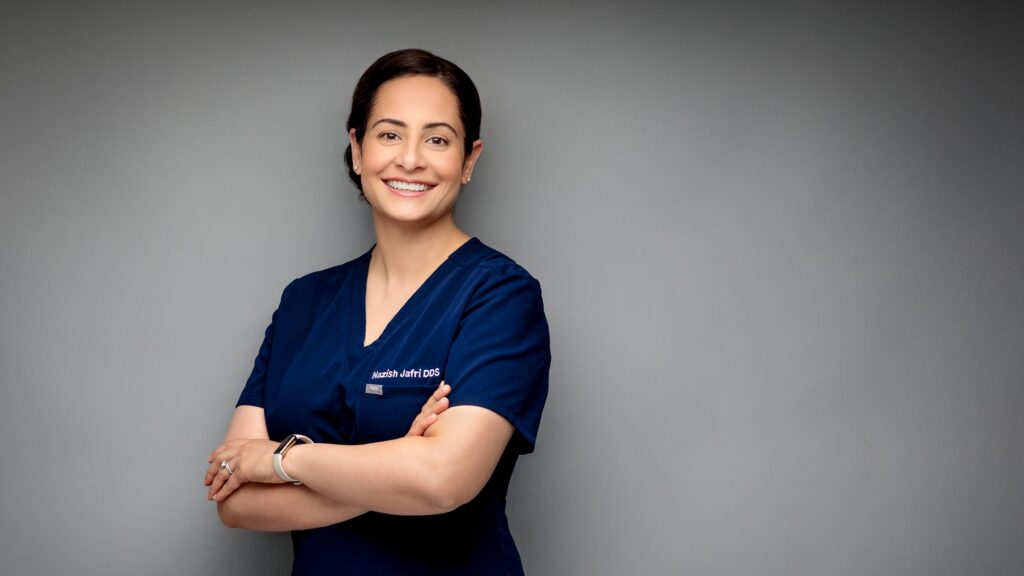
About Nazish Jafri:
Dr. Nazish Jafri, DDS, is a highly accomplished dentist, mentor, and business owner. Graduating from NYUCD in 2011, she quickly established herself as a respected leader in the dental industry. As the owner, CEO, and operator of Secure Dental, a leading dental service provider with 10 offices across state lines, Dr. Jafri has over a decade of experience in successfully managing and growing businesses. Her commitment to top-quality dental care and passion for mentoring the next generation of dental professionals have made a significant impact on the industry and inspired many. With a strong reputation for exceptional dental services, she is widely recognized and trusted by her patients across different states. Learn more about her and her dental services at www.secure-dental.com.
Social Media Handles:

About Ron Baran:
Dr. Ron Baran is the founder of Legacy Transitions and a retired dentist, multi-practice owner, and advisor who helps dental practice owners decide when and how to retire with a smoother, financially rewarding transition. Over the past five decades, he’s supported dozens of dentists by assessing practice value, strengthening operations, and guiding key business and ownership changes using a proven, step-by-step process. His work often focuses on improving productivity, lowering variable overhead, upgrading technology and office presentation, and creating practical plans that protect both the owner’s financial goals and the team’s stability. He also helps dentists navigate complex situations like sudden revenue drops, relocations, health-related reductions in chairside time, and buyer-fit concerns, sometimes using solutions like lease negotiations, patient chart transfers, associate coverage, and trial periods to ensure strong cultural and clinical alignment.
Resources:
- Follow and connect with Dr. Baran on LinkedIn.
- Explore Legacy Transitions and learn more about the site.
Secure Dental-Ron Baran: Audio automatically transcribed by Sonix
Secure Dental-Ron Baran: this mp3 audio file was automatically transcribed by Sonix with the best speech-to-text algorithms. This transcript may contain errors.
Dr. Nazish Jafri:
Hey, good morning again to the Secure Dental Podcast with me, Nazish Jafri. And I am the chief clinician at Secure Dental as well as the co-founder of DentVia. I am your host for today. And today we are talking to Dr. Ron Baron from Legacy Transitions. He has a ton of knowledge on how to maximize your dental practice values and secure your legacy. As a retired dentist and multi-practice owner himself, he's been in the trenches. He has helped dozens of dental professionals navigate the complexities of retirement over the past 50 years. So, here you go. Tons of experience, tons of knowledge, tons of stories to be heard today. Dr. Baran, thank you so much for joining us today and giving us some time. I wanted to actually start off asking how, in the beginning, you can start preparing for retirement or any transition.
Dr. Ron Baran:
Well, it's kind of interesting you asked that because most of the people I've worked with lately have been older dentists, 55-plus. And when we started talking about this in the emails, it occurred to me that it's pretty much the same for someone who's starting out. How do you maximize the value? And when you go into things like this, you want to look at, let me take a page out of nursing 101. Discharge planning begins at entry. So, as the nurses look at the situation, we have someone with maybe a heart attack or something along those lines. And the question is, when is that person going to be ready to leave? So, you work backwards. It was kind of a systems analysis that all of the nurses go through. Of course, it can change, but I think if you have some clarity at the very beginning, whether you are getting ready to retire or transition, which is basically the same thing, or build your practice up as we go along, because the same techniques to increase the value of your practice will increase the value. Even if you're starting out in week number one, you have to look at the same sort of the same sort of situations. And it's a business. It's where its healthcare is, but it is a business, and you have to use business techniques, as you well know, with your four offices now.
Dr. Nazish Jafri:
Yeah, we have eight.
Dr. Ron Baran:
You have eight, eight.
Dr. Nazish Jafri:
Yes.
Dr. Ron Baran:
That's right. Two in some of the states.
Dr. Nazish Jafri:
Correct. We are across state lines.
Dr. Ron Baran:
And I must say I'm very impressed with the situation that you come to that we get together with the fact that you have more offices than I did. I only had six.
Dr. Nazish Jafri:
Well, we had 12. We had 12 at one time because we were just like, young. And we're like, okay, we got an opportunity, and just go and put it in. Or we were kind of we realized we were kind of stretched thin, too much instead of deep. So, during COVID time, we had decided to shut some off. And those were transitions that we had to make, which initially we were not kind of prepared to do. And I feel like your experience and your thought process in making sure the steps in the beginning are there, concrete, to help you through these stages of an office in a business?
Dr. Ron Baran:
Did you sell them or did you close them?
Dr. Nazish Jafri:
So, we closed them. Yeah, we were in, like, a strip mall. So, the leases were done for some of them. We just held on for just a year or two and paid the lease off and finished it off.
Dr. Ron Baran:
Yeah. Interesting. Because oftentimes when someone is going to be closing an office like that, they'll try to transfer the patient load to a local practice.
Dr. Nazish Jafri:
In one of them, we merge them together. So, we brought our own patients. It was like 15 minutes away. And the lease was done. So, we closed that one. The other ones, we just didn't have many patients. They were already closed down for at least 2 to 3 years. The space was shown to us. We thought we would bring in patients in there, but even with, like, heavy marketing and stuff, it was very tough in those areas, in those smaller areas. So, we just like, okay, we couldn't gain any traction in it. It was very hard to put associates in there, too, because associates coming out nowadays, it's very hard to get them into smaller cities. They would like to be in a bigger city, which is so saturated.
Dr. Ron Baran:
Exactly. And as I would value different practices around, especially around the state of Illinois, what I found, I had this being a big city guy myself, I thought that, you know, we were the epitome of dentistry, only to find out that some of these practices, as I would start to value them, were fantastic values. These dentists were making a lot of money. They were having an excellent lifestyle because they were in smaller cities. And I think a lot of young dentists are missing the fact that you can move into one of these smaller towns and make a fine living and have a wonderful lifestyle. So, there was a school opened in southern Illinois because there were not a lot of dentists who wanted to operate in southern Illinois. And so, what typically happened is the graduating class went as soon as they got the diploma, would get on the train, and come to Chicago because they wanted to be in that big city. And that was their loss, I think. But as we're younger, we want the nightlife, and we want the fine restaurants, and we want all the amenities that go along with it. And from a business standpoint, that's not really good because you're going into a situation where you want to have a good lifestyle. You want to have a you know what, do what do they call it now? There's a term.
Dr. Nazish Jafri:
They call it Gen Zs and.
Dr. Ron Baran:
Yeah. Well anyway.
Dr. Nazish Jafri:
A lot of.
Dr. Ron Baran:
A lot of that. And so, starting a practice from scratch as you did, and buying a practice are very similar because you have to look at the same situations. Some things that people young dentists will, will not look at is they want to look at a growing area in the Chicago area, we have a city that's called Naperville and wealthy people, big houses, million dollar houses, and everybody wanted to, you know, that's a good place to open a dental practice, except for the 150 dentists who are already there. And so, you have to be careful. Look at the demographics of the area before you get into it. The demographics, the competition. There are a couple of outfits. One of them, I think, is doctor demographics, where you can submit a location to them, and they will tell you what. What the population looks like, what the income looks like, what the age looks like, and a whole demographic. And it will do a competitive analysis. So, if you've got a really good looking, and you've got, when you start dividing the population by the number of dentists, you want to have a certain ratio. Years ago, I had a marketing fella come in from California and from Arizona and came into the Chicago area, and we were going over some different offices I wanted to buy, and he said, there's something wrong with my technique, because when I came from California, the ratio was 1 to 2000, the ratio in Phoenix was 1 to 3000. He said, in Chicago, you're 1 to 500. How can you guys even have a practice? And so, but I already had one office, actually few offices in the Chicago area, and I wasn't about to move the whole enterprise to Phoenix because I didn't think the patients would follow me. Well, some of them would, you know, but I'm a very popular guy. Which leads me to another situation. When you're getting ready to sell a practice, you have to look, it's kind of like in dentistry, when someone comes into the office, you have to find out what the patient wants, and then you have to give it to them, or you should give it to them instead of being pontificating about what you must have. Here's my diagnosis: take it, take it, or leave it.
Dr. Nazish Jafri:
That's it.
Dr. Ron Baran:
Yeah. Take it or leave it. And asking. Asking questions to find out what people want. Well, the same thing happens when you're trying to sell a dental office. What do the buyers want? If you're trying to sell a house, what do the buyers want? What are they looking for? Open concept. Well, I'm out of luck because I have a colonial. Nothing's open here. And a lot of. I think what's happening now in that real estate market is people are getting away from the. The open concept because they want a little privacy.
Dr. Nazish Jafri:
So, things change.
Dr. Ron Baran:
Things change. So, you have. What is it that buyers want? Well, there are two classes of buyers. One class of buyer is someone who wants to have an individual. An individual is going to buy from another individual dentist. So, what are they looking for? They're different. From what? What are you guys looking for? If you're going to buy an office. Now, you started most of yours from scratch.
Dr. Nazish Jafri:
We did both. We started from scratch. And then we also did two acquisitions. And both of them were very different experiences.
Dr. Ron Baran:
As you know. Maybe you want to take over here.
Dr. Nazish Jafri:
Yeah. Because you. Well, when we started off, we did not want to come to Chicago. We started from Peoria, Illinois, which is where Caterpillar's headquarters is, and we are coming in from New York. We studied in New York, my husband and I. So, each building has like five dentists, and I don't know how those people or the patients don't, you know, lose track of going in the building. So, here we have 20-mile restrictive covenant. I don't know how they do all that because there are dentists in the building, in the next building, dentist. So, it was so saturated when we came out, we kind of knew that we didn't want to go to Chicago, otherwise we wouldn't be making money. Just like you said, Naperville has 150 - 200 dentists. And you know, you're competing with the same drill and fill dentistry that everybody else is doing. And so, we came into Peoria, and then we started off from there. We started taking Medicaid because our thought process initially was to start off somewhere, so we could start the cash flow in. And then we furnished our waiting room, and then we got our pen machine. And then, because we knew our drill and fill dentistry, we were very confident of what we could bring in initially, instead of making and putting the money into high-end equipment. In the first six months we waited, we put in a ton of money in the marketing and just getting the patients in, warming them up, getting to know the community. So, we did a lot of community outreaches when we were in Peoria, and that's how we kind of started off. And from three chairs we went into six, and now we are like eight locations. But in that, again, we had a different experience as well because some of the offices that we picked up were kind of low-hanging fruit, and we were like, okay, no, I think we can go in and we can plug in our team and we should be able to put the patient, get the patients in there. But we couldn't because the patients were already not coming into the office for a year or two years' time, because they had been shut down for so long. So, now we look for offices where there is a certain kind of patient flow already.
Dr. Ron Baran:
Yeah. Yeah. How did you develop the business acumen to do this? What generated your thought process?
Dr. Nazish Jafri:
So when we had our first location, we just had three dental chairs because nobody would give us a loan when we got three chairs. Okay, let's just start from three. My husband and I restarted it. And then we hired our associate, I think two years into the practice, and he started working on Saturdays, and that's where my husband kind of started. Dr. Lou started understanding the business aspect of it. He was a great clinician, but he liked the business part of it. How to he understood the KPIs really well? He kind of had fun with leases and contracts and things like that. So, he was the one visionary going and getting these practices while that was happening. We had really good team members whom I trained myself with, working with me. So, I have some of them with which are with me since 13 or 14 years now, and they handle like 2 or 3 locations. They're regional managers, lead managers, or lead dental assistants. So, we kind of made a team of three people, which grew to six. And that's how we kind of grew to more people who replicated ourselves.
Dr. Ron Baran:
So do you think that your associate? Well, you've got the 20-mile and non-compete.
Dr. Nazish Jafri:
I had it when we were in a DSO practice. So, we did start off from a DSO organization first, and there we had a non-compete of 26 miles, which threw us in the cornfields. If we came this way, it would bring us to Chicago, which we didn't want to go to. So, that's how we chose to bypass the cornfields and come to Peoria.
Dr. Ron Baran:
There's something nice about cornfields. They're so pretty. And, so you have a series of associates in the practice. Do you think that those associates are going to stay with you forever, or are they going to move on?
Dr. Nazish Jafri:
No, I don't think. And my expectations are not to keep them forever anyway, because they become really fully skilled in all kinds of industry. In 3 to 5 years, we do full arches as well, we do tons of mentorship, and we have a very close-knit community in our organization. So, some of them move because they got married, some of them move because their parents, you know, have issues, and they're going somewhere else, or they would like to stay with us because they don't like the management at all. And they would like to have some kind of phantom equity in it, or any kind of growth that they can do, maybe become like a super GP, help other doctors mentor. So, it's like how you say you diagnose and you talk to them about what they are looking for? What is their goal? So, I don't expect anybody to stay with me when I hired them. I'm like, he's going to go in three years.
Dr. Ron Baran:
Yeah. One of the things that I always recommend, especially for the associates, is that they avoid making the mistake of staying too long. And there was an article just recently with McGill where they were talking about the lost decade as associates. And it's so you go from dental school, and you create a background in dentistry, and you become skilled at, and you start making some money. And when you start making some money, and you can make, well, you know, what associates could make, some of them can make a couple of hundred thousand dollars from, from a rapid start, and then it becomes the, the drunken sailor syndrome where you. Oh, that's a nice Mercedes over there. I think I need one of those and so on. And when it comes time to move on, you're so committed to that lifestyle that it's difficult to back up, so they will stay for a period of time. What I recommend is that you talk about business. Dental schools really don't have much of a business program, which is good and which is bad, for it's good for you. It's bad for them. And what I recommend is forgetting you're a doctor and going back to school to take some accounting courses, to take some business courses. You don't have to announce to everybody that you're a rich dentist or anything. You just go in there and start to learn how to read the profit and loss statements and balance sheets, and so on and so forth. And do you find your associates sparking an interest in how things work?
Dr. Nazish Jafri:
Some of them do. So, they're always like, especially the new ones, like a year, once they're done with patient care in a year, and they're fast now, they're learning how insurances work, or they're starting to understand how collections is actually working, because in the initial stages, they kind of don't understand the collections. They're just working, working. But the next year, I feel like they're like, okay, where is this adjustment coming from? Why did we get adjusted? Or why is my chair not filled? I can do my crown in like half an hour. Maybe I can have another root canal patient because, you know, they're getting faster. So, now they're starting to understand how marketing is working. And they do want to know some part of the business. So, from there, I have 2 or 3 who just don't want to deal with it. And I think how you're saying that it's they're comfortable in that and they're scared of the unknown when you actually bring the business along because you're cash flow and your lifestyle changes and you have to cut back quite a bit because of the loans, the new practice, the headache, you have to have like at least 2 to 3 months of revenue to keep in place, and then it depends on where they want to open because we are in smaller areas. So, everything is different. They want to go to Chicago, or they want to go to New York, or they want to go to Florida. Things are very different and expensive when you're starting off, and then you have loans for equipment and everything. So, they get scared of their lifestyle changes.
Dr. Ron Baran:
And they should be because they can get very dangerous when older dentists are retiring or transitioning, or even in the very beginning when they have to transition their practice, not necessarily themselves, but transitioning their practice. What are the buyers looking for? They're looking for a turnkey. They're looking for a practice that they can drop either themselves or an associate into, especially if they're doing roll-ups. Roll-ups are basically where one entrepreneurial type of dentist, who I'm looking at right now, will start rolling up dental offices, and they start looking at these offices. And if the office is very successful and they're very successful because of the personality of the dentist who is in there, when that dentist goes, there's a big risk because patients will probably leave those who have been traveling, you know, who used to be in the neighborhood, they're now traveling 30 miles to come to their favorite dentist are going to come back. And the personality of the dentist may not match that of the other. And if they don't spend some time in that practice and get to know the dentist. I had a case recently where a dentist was buying a practice, and he wanted to come into the practice and work a little bit and see what was going on. Well, the broker was having a hissy fit because no, you can't do that. You're going to kill the deal. It's not going to be very good. And it worked out fantastically because that dentist knew that he could step right in and take over. Based on his experience working in the office. And that's a real problem. Sometimes you'll buy an office and then when you get there, you find out, you know, it's like dating your high school sweetheart. You know, when you finally get out of high school and face the real world, a different person is looking at you here.
Dr. Nazish Jafri:
Huge.
Dr. Ron Baran:
Yeah, yeah. So, no longer is it the, you know, the captain of the football team and the captain of the cheerleaders. It's all of a sudden two people who don't know which end is up. Mhm. And of course, you know, we were talking a little bit about KPIs and importance. And I would recommend that someone buy an office, too. Okay, let me back up a little bit. When I go into an office to evaluate it, I look at all of the KPIs, and we know what the averages are. You know, how many new patients you ought to be seeing and so on and so forth. And as you do that, some people will try to watch all of the KPIs at once, and they can't. It's difficult to do that. There are too many. I like to focus on 4 or 5, and it's not like there's a rule that you have to look at, you know, these five or these seven or these two. You have to look at what KPIs are below the average and see what the return on investment would be by upping those. For example, if the hygiene department isn't doing 30% or so of the production of the office, that's a low-hanging fruit. As we say, you go in there, and you get another hygienist, even if you can't book her the whole time or him speaking. My graduating class of 90 dentists had one female.
Dr. Nazish Jafri:
Wow.
Dr. Ron Baran:
And the one before that had two. And the one after that had zero. And now the mixture is quite different. More than 50% of the graduating dentists are female. There really was a time about 20 years ago, before the admission, before the more frequent admission of females into the profession, where there was a study from the American Dental Association. What will happen if so many women get into the field? Oh my God. Oh my God. You know.
Dr. Nazish Jafri:
And they did.
Dr. Ron Baran:
And they did. And it's for the better. I think. What do you think as a female?
Dr. Nazish Jafri:
I think I would highly suggest that if they wanted to go into a medical field, and they don't want to, and they have like a family, and it's and they're single or they don't have that much support. Dentistry can be a very, very good option because you don't have night shifts, you don't have these tough schedules to juggle. And dentistry can be really fulfilling. If you are an associate somewhere, you have a steady income that's coming in, or if you have a little bit of entrepreneurial skill, you're a little bit more courageous. You can open up an office and still make a living out of it. Instead, if you don't want to work in a hospital setting, like as a doctor, and you still want that medical degree attached to your name. So, I am from Pakistan, and when I was getting raised by my parents, there were only two things that you could do. Either you had to be an engineer if you were a boy, or females could go into engineering, but it wasn't that crazy passionate. Or you have to be a doctor, or that's about it. We did not have any other third, even though there were options. But so now when I'm here, I do feel like it is. It has respect to it, and you can make a very good living out of it and support your family with it. And the timings can be structured around really well because you're not on demand all the time in healthcare.
Dr. Ron Baran:
Yeah. And I think too, one thing that I don't see a lot of is clarity in a lot of people, especially young dentists. So, what's your goal in life? My goal in life is to be healthy, wealthy, and wise. Well, that's looking at life with your beer goggles on. Yeah. Low, a very low resolution. And one of the things that's important when people are doing the transition is to get a little clarity, and sometimes it's difficult. What do you want to do? It's kind of like going into a restaurant, and the waiter comes up and says, okay, what would you like to have? And you say, well, what's on the menu? And he said, well, there's no menu. Whatever. You tell me what you want. And all of a sudden. Not a lot of clarity, and it's difficult, I think, to do that by yourself. And I think that engaging a coach, and I don't mean a football coach or a baseball coach or something like this. And real coaches very seldom say anything in a declarative sentence. They will ask you questions, and they're hard questions. So, what we and we do is work with dentists who are, who are thinking of transitioning by saying What do you want out of the practice? Well, come up with a number, and the number is going to be twice what the practice is worth. And depending upon how long they are before they want to do their transition, they have to look at propping up their office to make it look like something someone else wants to buy. And that, and it depends on whether they want to go into like a DSO or sell to a DSO. DSO is getting a little bit picky about what kind of situation they want. They're going to give a lot of money. But the practice has to be pretty much self-sustaining, basically. You need all of the systems in place, and you know what a system is. Well, I have a hobby of amateur radio, and I was at a particular seminar one time, and this fellow was, was talking about the way to put your station together and all that kind of stuff. And one guy says, what kind of antenna should I get? And he said, well, what do you want to do with it? Do you want to talk to people around the world? Do you want to send messages back and forth? Do you want to be emergency prepared? Do you want to operate one band or all the bands? Different kinds of what do you want to do? He was a systems analyst, and as his discussion continued, people would ask questions, and he would always say, yes, but what's your outcome? What's the outcome that you want? And so, working with dentists who are getting ready to transition, what are you going to do when you retire? What are you going to do when you transition? Oh well, I'm going to play golf. Well, what else are you going to do? Lie out by the pool.
Dr. Nazish Jafri:
Okay.
Dr. Ron Baran:
It's wintertime, and you're in Chicago. You're not going to lie out by the pool. We're going to travel. I had one couple, one couple I was working with. What do you want to do? Well, we want to travel, okay? We want to travel. So, we're accepting the concept of travel. And then her concept of travel was to travel to New Jersey, to Texas, and to California to see the kids and the grandkids. The doctor's concept of travel was to go to Europe, and he wanted to see China, and he wanted to go to Pakistan. He wanted to see what was going on. What are those people up to over there? Those Pakistani people. And so, they had this, this they wanted to travel, but they were at loggerheads, and so travel. What do you want to do? Get clear about what you're going to do. What's going to happen to you as you retire? Well, different things happen to people, different people as they retire. And it has to do with their personality. Some people, the extroverts, the ones who were the center of the practice, who took care of everything, and was they were the doctors. And people would come to them with their dental problems, and they would fix it, and the staff would come to them with their ordering problems or, you know. Collection problems. And he would fix that. He's the fixer now. He goes into private life. And I don't know if you're familiar with Omer Reed from years ago, and a mentor. If you are what you do, who are you when you don't do that anymore? And so, now, the dentist who has been the center of attention suddenly is not the center of attention. And the personality who controlled his dental practice like that is the personality who tends to get depressed during the early days of retirement. And, well, there are four phases of retirement, and I don't know, do we want to get into that right now? But so clarity is important, and clarity is hard to get. I think what you have where you're at is clarity. You know where you're going, and you know how you're going to get there. Missing in a lot of practices. Okay. Question two.
Dr. Nazish Jafri:
I was, no, you. You're actually right. So, in the beginning, like how you're saying, clarity is important for how you want to retire and what you want to do. I ask my associates when I interview them. So, one of them'll be like, okay, we need this, we need this. They're interviewing me about my practice. I'm like, okay, this is this. And then I'm like, okay, what do you want to do? And they don't know. Sometimes they just don't know. They're just asking me what I can bring to the table, what I or my office is going to do, or what my hygienist can do, or how much money my office makes. But when I ask them, what are you going to do and what is your goal? They don't know. So, then I'm like, okay, what do you want to make in a year? They don't know. I'm like, okay, what are your loans? At least you know your loans, right? How much debt are you in, okay? Let's start writing it down. So, you're right. You're so right. At any stage in life, if people don't know where they are right now, it's very hard for them to understand where they're going. And sometimes with Instagram and Facebook and all these things that are showing on social media, they're living somebody else's life. They're totally living somebody else's life. They'll be like, oh, I want to do $20,000 a year. Dr. Michael Apa from New York does because he travels to Dubai, and he travels to Miami, and he has a plane. But here you have a hard time selling your treatment plan to a PPO patient, and you can't even collect a co-pay, right? And you're just living somebody else's life. You just don't even have your own goals with you. So, I think that's where they kind of get stuck, and they get burnt out. And when they are retiring, they're not retiring satisfied. They're just giving it up because, as you said, exactly like you said, the buyer knows it.
Dr. Ron Baran:
Oh. Well, you mentioned burnout, and there are a lot of dentists burned out. I did ...
Dr. Nazish Jafri:
Ton.
Dr. Ron Baran:
When I. When I was doing my graduate degree in counseling. One of the things that I was working with was personalities like the Myers-Briggs. Like the. Yeah. Have you heard of that? Yeah. Okay. So, I think it's safe for me to talk about it then, because a lot of people think it's a little woo-woo. It's so I did a study. It was 300 dentists in Illinois. And I looked at their personality. I looked at it based on the Myers-Briggs. I looked at the satisfaction survey, I looked at the burnout survey, and of course, the demographics that go along with it. And what I found out was that certain personalities are in heaven as they're practicing dentistry. They are the highest there was at the burnout level and at the satisfaction level, two different personalities. One of them dominated. I mean, out of all the percentage of burnouts that we had. 90% of them were in one personality. Of the people who were satisfied, it was the same kind of breakdown. And when I sold the last of my offices, I got bored. And so, I started as an endodontist in Illinois. We can't say we're an endodontist unless we're an endodontist in some states. In some states, you can say practice is limited to. So, I basically practiced and limited myself to endodontics, and there were associates on all of these practices, and one of them was particularly interested in endo. So, we do a, you know, an over-the-shoulder kind of thing. And, you know, Doctor Baron just came back from California, where they do things a little bit differently. Do you mind, doctor? Mr. Patient, if we do a little table talk while we're doing that. And so, he actually got kind of interested in personality. And he read about that. And one day at the office, I walked in, and he said, we have to talk. We have to talk. We have to talk right after work. So, he had to go to Starbucks and sit down, and have a cup of coffee. And he said, my personality is one of the burnouts. Does that mean I'm going to burn out? And I said, because you recognize the fact that your personality, who is tending toward burnout, has a leg up on it. So, when you start feeling like it's not Mrs. Peterson in room number three, it's the root canal. And room number three, when you find yourself saying that, you have to back off a little bit and start thinking about what am I going to do to get the balance back in it, and the happier ones. We just let them be happy.
Dr. Nazish Jafri:
Yeah, very happy, very happy.
Dr. Ron Baran:
Very happy. So, yeah. And I use that in with my staff because I don't think I want to get into the whole thing of the Myers-Briggs or personality, or the big five, or any of the others right now, but use that with the staff. And there was, yeah, with large staffs, you know, that there's always some kind of, you know, two heads butting. And each one of us thinks everybody in the world thinks the way we do. And of course, that's not true. Especially, it's not true in Minneapolis. So.
Dr. Nazish Jafri:
And I think it also these tests, I think they kind of create a little awareness. You sometimes know about it but disregard it. But when it's in the paper, after all the questions are done, you become a little bit more aware, just like how you're saying that, you know, that doctor was now aware that he can tend to burnout in certain situations. Some people just say they're burnt out, but they don't know what is happening and why are they causing it to themselves? Maybe they are not cash flowing the way they want it to because they don't have they don't know what to do, or they have too many things to pay off because they thought that it would look really nice in the office, but it is not coming in. And I have a few really close colleagues that have made beautiful offices, but they're burnt out because just few patients coming in and not getting the return out of everything in the initial phases, that can be a burnout. And they're stressed, so sometimes they're not even aware of certain decisions that they're making. These tests, I think, give you a paper reality. It becomes legal, you know.
Dr. Ron Baran:
Right, right? Well, when I work with the staff. So, we did the, we did the Myers-Briggs with them, and they read, they self-validate. So, they read their description. They go, yeah, that's me. That's well, that's kind of like me. That's more like me. And then they'll read the description of one of the people in the office with them, and they go, really? Is that how you are? I didn't know that. That's how you look at things. Some people are quite literal. If you have someone who's quite literal and someone who's on the opposite end of the scale, where they're kind of intuitive about things, they don't have to be really literal; all of a sudden, they start to acknowledge the fact that, well, if I want to communicate with you, I have to be literal. I can't use any metaphors in my conversation. Yeah. And in the same way that my wife, who is, was a hospital nurse. Well, no, actually, yeah, it was still. Well, she was, and she had one, one lady from Poland, and she would ask her to do something. And the lady said, I do it? Did she say she did it? Did she say she's doing it or that she will do it? She meant she would do it. What she said was that my wife heard that I did it. And I mean that's, that's a linguistic issue.
Dr. Nazish Jafri:
Yeah, yeah.
Dr. Ron Baran:
But that's also a personality issue because if someone says something a certain way metaphorically to them, they'll take it literally. For example, if someone asks you, could you tell me the time? Well, the correct answer to that is what? Yes, I could. As opposed to asking what time is it now? A lot of us now, a lot of this stuff. Could you tell me the time most of us would just jump in and say the time? It's 10:56. So, the communication in your office and as you're building, as you're building a staff, people who and the whole thing of this is with the personality people have. Every personality has a superpower, and every personality has a blind spot. And when you have people who have to have a superpower, you have a blind spot. You have a real opportunity to learn. But I digress. Okay. Number three.
Dr. Nazish Jafri:
Yeah.
Dr. Nazish Jafri:
So, like how in your experience, I know you have mostly dentists who are almost about to retire or starting to think at their 55 plus, but an associate, let's say, like me, who's been out of the dental school 5 to 6 years down the road, what should how what time is the best time to start thinking about? And what would be your top-most things that the KPI numbers or how we should design it now? So, it's easier when we do transition or sell, or there's a life event.
Dr. Ron Baran:
You're right. So, go back to nursing 101, and yesterday would be the correct answer. The very minimum would be 3 to 5 years, because it's going to take you that long. And a lot of dentists don't want to don't want to kick it up a notch. But the beauty of that is that as you increase the value of your practice, you're increasing your income. You have to try to match as many of the KPI averages as possible. Nobody, nobody is going to do it 100%. There may be some people who do, but I don't know; I've never met one. Because as your as you are, as the curve of your life, you know, your business life. You start slow, and you build up to a plateau, and then it starts to get a little bit easier. So, you don't, you're not as active trying to bring new patients in, or you're satisfied. It's you're satisfied the way things are. It's comfortable. And if I'm comfortable, why do I want to change? Well, if you have a motivation to change in that, here's the other thing. Not all practices that go on a market sale a sell.
Dr. Nazish Jafri:
No.
Dr. Ron Baran:
If you talk to the brokers, it's all 99%, and of course, it isn't. I've seen estimates as 60% will close in 40%. Don't. In my own experience here lately, of people with whom I was not working at the time, excellent practices from a financial standpoint. But they didn't sell. They didn't sell for various reasons. You know, one of them was curb appeal. The broker said, you know, you really have to get rid of the shag carpets. That's not, you know, the new people don't want shag carpets in their office. That was from the 80s. And you really have to get a paint job, and you have to re-upholster the dental chair. Curb appeal. You get, you get a what I was doing the, the endo. I was in 35 different offices over the period of 15 years, and I interviewed in about 2020 more, and I would walk into the practice setting. I was always 15 minutes early because, as we know, if you're not 15 minutes early, you're late. So, I would get there a half hour early and sit in the waiting room. Oh, doctors are working to pay. Oh, I'll just sit here. I would get a vibe from the practice, and when the buyers come in, they get a vibe from the practice. The vibe from the practice is that I listen to the person on the telephone. ABC Dental.
Dr. Nazish Jafri:
How are you approaching?
Dr. Ron Baran:
How appealing you are.
Dr. Ron Baran:
How appealing is that? I hear staff arguing in the background. I hear I see people waiting in the waiting room because it actually is a waiting room. It's not the reception area, it's a waiting room. They sit there in the waiting. Yeah, they're waiting, I see arguments starting up in here arguing. And as I did get into offices. I became part of the part of the office furniture because I was in this room all by myself for a few hours at a time and a few hours at a time, and listening to everything that was going on. And I made judgments about that. Probably the most significant one was if I had two staff people passing each other in the hallway, and one of them said, are you okay? Is everything going okay? Do you need help with anything? Are you drowning or anything? And it wasn't just being polite; they genuinely cared because they knew that if they could help this other person, it would make it better for the whole practice. And that's the kind of thing you want to build in the office. And that's not always easy. So, where was I going?
Dr. Nazish Jafri:
I'm sure the buyer, like buyers, would look at all these things because they want to buy something, so that they can just plug themselves in. And when you ask for that kind of money, yes, they will negotiate. But, you know, it would be like a win-win situation because they're confident that they can bring in their skills. And then you have the systems that they can bank on and, you know, move forward. But if the systems are not there, you're already burnt out. The cash flow is not there. Patients are already leaving the office because now you're cutting back a few days, so it's hard to sell it to a buyer. It's not attractive anymore.
Dr. Ron Baran:
Exactly, exactly. Well, the egotistical buyer will say that they can come in and really make things. But they can't.
Dr. Nazish Jafri:
The most times you cannot.
Dr. Ron Baran:
The most valuable asset you have in a practice is your staff.
Dr. Nazish Jafri:
Yeah.
Dr. Ron Baran:
Yeah. And if you train the staff, and if they own different areas of the practice, one of them owns supplies. One of them owns things that are not going right. Yeah, you know, the plumbing. And I got a guy, you know, in Chicago. I always got a guy, and so you have to, if you're going to transition the office, one of the things you have to do is make sure that the staff is on board with this. I know a lot of brokers will say things like, and I love brokers. Don't get me wrong, I have a no. Never mind. They don't. They don't want to let the staff know until the day before.
Dr. Ron Baran:
The Sale.
Dr. Nazish Jafri:
And yes.
Dr. Ron Baran:
And what does this have to panic? I'm not going to have a check next week. Who is this guy coming in? Is he. Is he a wonderful guy? Is he an ogre? What? What is he?
Dr. Nazish Jafri:
They don't know.
Dr. Ron Baran:
She knows. I mean, it's a 50/50 chance. It's going to be a her. Now they start looking for a job right away. They're just not confident. So, the biggest asset you have, there was one transition I did. The staff had about 5 or 6 people on it. Three of the people had been there for over 30 years. The new girl was there for 15 years. And as the buyer was coming into the practice, I was representing the seller. If the buyer is coming into the practice, I had a little, little coaching session. Okay, don't touch anything with the staff. Don't do anything. These people know everybody. They're all personable. Someone comes into the office, and the first conversation is, well, how's the grandchild? How's your grandchild? How's your grandchild, Ellis? I mean, they knew they were a family.
Dr. Nazish Jafri:
Personal level.
Dr. Ron Baran:
First thing, the buyer fired three of them. Eventually, they all left because they saw the writing on the wall. The ones who were in there 30 years didn't take them, but 5 or 6 weeks to leave. So, now this individual had a practice that was really moving along. And virtually no staff are there. So, It was. It was a real shame. It was a real shame, and it was avoidable. But mistakes like that happen, and you have to make sure you're not one of the mistakes.
Dr. Nazish Jafri:
Yeah. Sometimes people think it's old stuff, and you know, they have different habits, and we wouldn't be able to transition with them. But I think open communication and dialogue are good. Before you do that, and like you're saying, a lot of sellers don't tell their staff. So, sometimes the buyer might not have the chance to maybe talk to them, I don't know. They're scared that, you know, they'll just start leaving. If the deal doesn't go down, then they won't have anybody in the office anymore. So, both sides are in a different situation.
Dr. Ron Baran:
Yeah. Unfortunately, oftentimes the staff will get wind of things, and you can't keep this. Who's this strange guy wandering around the office, pulling on the wires? You know, who is that guy?
Dr. Nazish Jafri:
And checking underneath the table? People are asking about software.
Dr. Ron Baran:
Trying to see if there's dust on top of the ..., your colleagues have asked you to intervene in their practice?
Dr. Nazish Jafri:
The ones who have moved out? some of them.
Dr. Ron Baran:
Well, okay. Yeah. The ones who have moved out. Yeah.
Dr. Nazish Jafri:
So some of them that actually moved out, the doctor who helped them scout the location, because he really enjoyed that. We helped them out with their initial team hiring, team training, and team management. So, insurance and things like that. Because now we have our own teams that do that. So, we have helped out initially, transitioning them wherever they have been. But every now and then, we have mostly like hiring questions or issues with, again, personalities. How should we handle this? Not in cases that many. Mostly like people. How should we do this? How should we do that? Mostly those conversations. Or I get phone calls about that, and we see what the situation is like.
Dr. Ron Baran:
Yeah. So, these would be the people you've already had relationships with, as opposed to colleagues at the dental meetings when you were.
Dr. Nazish Jafri:
Yeah.
Dr. Ron Baran:
Okay. Yeah. You're the source.
Dr. Nazish Jafri:
Yeah. It can become a source a little bit. I have my own set of experiences that I'm like, okay, I don't think this is the right thing to do because it can happen this way. But I do also talk to our associates about it, and if I do like a mentorship talk with the younger guys, I'm like, you know, even though you know that you are making this much money, you should always have some kind of an exit plan. What if a situation happens in your head? Piece stops? Have you ever thought about what you are going to do at that time? And the hand gets stopped for any reason? It can be an accident. It can be a life event. It can be a transition. Maybe you're 65 now. You want to retire, maybe you're 40, and you want to retire. So, always, always think about how and where you want to end up.
Dr. Ron Baran:
Yeah.
Dr. Ron Baran:
My concern with associates is a few practices I know of where they have contracts to your contracts. One-year contract.
Dr. Nazish Jafri:
Yeah.
Dr. Ron Baran:
And so you establish your lifestyle based on your the fact that you're making a lot of money in Illinois. We are a what do they call it employment at will state, so, if you're the associate dentist, then for whatever reason, you're out of a job tomorrow. What kind of an exit plan do you have? And I think you're absolutely correct in that you have to have the finances set up so that worst-case scenario, or I fall off my bike while I'm going downhill, and.
Dr. Nazish Jafri:
Yeah, yeah, yeah.
Dr. Nazish Jafri:
Or a ski event I've heard so much about, as ski events or skating events, where things have happened, and people have had bad wrists or really bad knees or bad backs because they fell on their driveway on the snow, and they're on disability. They can't really do dentistry.
Dr. Ron Baran:
The first practice that I was in the military for two years came out of the military and found an office where the dentist was a motorcycle enthusiast, got in an accident. He was right-handed and just destroyed his wrist on his right hand. That's tragic for that guy. Tragic for that guy. Two of us?
Dr. Nazish Jafri:
Yeah.
Dr. Ron Baran:
Two. Two classmates took over the practice, doubling the practice for him. And then when he was, then he was when he. When he finally, a year or so later, when he was finally back up to snuff, and we left, he managed to get his practice back down to 50%.
Dr. Nazish Jafri:
Oh.
Dr. Ron Baran:
Which reminds me of one of the early two offices that I had. One was in Chicago, one was on the north shore of Chicago. The one in Chicago was doing twice the production that the other one was. Well, as it turns out, the one who was in charge of the Lakeshore office lived in Chicago. And the guy who was in charge of the Chicago practice lived up north. So, they came to me with this proposition. Can we switch? And I said, you guys realize what you're doing. You're leaving double here to go to 50% here, and you're leaving 50%. Can you handle this? Yeah. We could do it. We could do it. They were arrogant, so they did it. Nine months later, I think you know where this story is going. Nine months later, the guy who had twice the production in Chicago had twice the production up North, and the one who had half the production up North had half. Why is that?
Dr. Nazish Jafri:
Oh.
Dr. Ron Baran:
Personality. It's the personality.
Dr. Nazish Jafri:
It's their personality. They're just stuck here.
Dr. Ron Baran:
Yeah. They are one was not afraid to tell the patient. You need this. You need that. This is what you should do. And because at that time, that was like in the late 70s, the doctor was still in charge. You do this. This is what you do. And the other was, well, it's kind of a small cavity.
Dr. Ron Baran:
Let's wait and see, you know.
Dr. Ron Baran:
So.
Dr. Ron Baran:
I think it was because they had an individual was a little bit too shy to, he didn't want to seem like he was, you know, a money.
Dr. Nazish Jafri:
Correct.
Dr. Ron Baran:
And, money hungry.
Dr. Nazish Jafri:
They don't want to come across, like, a greedy dentist or
Dr. Ron Baran:
Something. Dentist. Yeah. And, so, yeah. And there's a, you've heard of. I've heard of him, too, and I forgot, Jordan Peterson. Jordan Peterson did a lot of early research with what they call the Big Five or the five-factor personality, and they found out that doing a study of very successful, monetarily successful people in business, there was a definite personality profile for that, which I thought was kind of interesting. And I wonder if the same thing isn't true in dentistry.
Dr. Nazish Jafri:
I think because that's how burnout can be there, too. Just like how you're saying that guy who thought that he could bring that high cash-flowing office, or he could even maintain it, he actually brought it down 50%. It's just because he couldn't come out of the mindset. The personality is just stuck in that place of not selling. And that's how burnout starts, because now he's probably burnt out. There is payroll that is going according to the two x cash flow that is standard. Obviously, we raise everybody's money. How were you saying that those team members were there for 30 years? So, obviously, they're getting benefits. They're getting a salary that is higher than somebody new. So, when a new grad or a new dentist comes in, are they able to make that much production to afford this payroll or not, or not? What are they getting into?
Dr. Ron Baran:
Good. Good point, good point. Unfortunately, the staff wasn't around long enough for us to figure that out.
Dr. Nazish Jafri:
Yeah.
Dr. Ron Baran:
Because they were just gone.
Dr. Nazish Jafri:
They were just gone. Yeah.
Dr. Ron Baran:
Well, if at the time I was in private practice, the salary was about 20% of production, I was always at 25 or 30 because I always had an extra person on staff, and everybody in the office was cross-trained. So, if the one who did the appointments and collected cash was out for any period of time, you had someone who was cross-trained to come in there.
Dr. Nazish Jafri:
Yeah.
Dr. Ron Baran:
In a smaller practice, that works really well, and a bigger practice is almost impossible. If you've got a staff of 15, you can't cross-train everybody.
Dr. Ron Baran:
It would be ideal. But if they could do that, then they would. They would quit and become consultants.
Dr. Nazish Jafri:
Yeah. That's true, that's true. Well, Dr. Baran, it was very fun talking to you, like, just very easy and very thought-provoking, provocative real-life scenarios, and your stories, especially with that nurse, how people perceive in communication things very differently. And I think buyers and sellers obviously have that. And when you're selling your practice, it's your baby. So, you want.
Dr. Ron Baran:
Exactly.
Dr. Nazish Jafri:
The best out of it. And you want to make sure that somebody comes and takes care of that. Your patients, your staff, and the reality when you come out in the market is very different, because now you're in front of the whole market and they're just analyzing your left and right, peel the banana out.
Dr. Ron Baran:
Well, you want to keep it. You want to have a legacy.
Dr. Nazish Jafri:
You want to have a legacy. Yeah.
Dr. Ron Baran:
You.
Dr. Nazish Jafri:
Absolutely.
Dr. Ron Baran:
That's why I call it legacy transitions.
Dr. Nazish Jafri:
Transitions.
Dr. Ron Baran:
Because it's you want to know that those patients are taking care of you because of your friends. After 35 years, you want to know your staff is taken care of.
Dr. Nazish Jafri:
Yeah, yeah. So, doing these things with an open mind and thinking of the future, starting now, I think, is the best way. Not when you are almost a year down into retirement and thinking you're going to change things at that time.
Dr. Ron Baran:
Yeah.
Dr. Nazish Jafri:
So, I really believe that, you know, just like you said, a true legacy is just not a payout. It's building something that survives without you because you have systems in place now, starting now. Systems take a little while. So, when you do have a life event, or you do have to walk away from that position, you walk away with strength, and you walk away with pride and satisfaction that you built something, and now somebody else can go and skyrocket it more because you've already built those systems in place.
Dr. Ron Baran:
Well said, doctor, well said.
Dr. Nazish Jafri:
Yeah.
Dr. Nazish Jafri:
Because one day, maybe we were going to be selling. So, you know, if you have systems in place, whoever is going to come in should have a good, good time taking it more to X, annexing it.
Dr. Ron Baran:
So, what are you going to buy for the next office?
Dr. Nazish Jafri:
Well, we are in the market right now. My husband wanted to get two more in 2026. We did not get anything in '24 and '25. We were kind of deepening our structures more, and we succeeded in that. And we had a goal of at least taking 1 or 2 in 2026, because we have some interest of our associates to join us. So, they're looking at a lot of different places right now. So, let's see where we go.
Dr. Ron Baran:
No grass under your feet. No grass under your feet.
Dr. Nazish Jafri:
Not yet.
Dr. Ron Baran:
That's it.
Dr. Nazish Jafri:
All right.
Dr. Ron Baran:
Yeah, yeah.
Dr. Nazish Jafri:
All right. Dr. Baran, it was really nice talking to you.
Dr. Ron Baran:
Dr. Jafri is a pleasure. Thank you so much for the invitation.
Dr. Nazish Jafri:
Thank you for accepting it and making this conversation nice and lively. So, hey, this is Secure Dental. I am Nazish Jafri. If you found this talk interesting and it hit some of your thought processes or some of your thinking that you might have since a little while, please like and subscribe to it. And until next time, have a great day. Thank you.
Dr. Ron Baran:
Thank you. Bye-bye now.
Sonix is the world’s most advanced automated transcription, translation, and subtitling platform. Fast, accurate, and affordable.
Automatically convert your mp3 files to text (txt file), Microsoft Word (docx file), and SubRip Subtitle (srt file) in minutes.
Sonix has many features that you'd love including collaboration tools, enterprise-grade admin tools, upload many different filetypes, secure transcription and file storage, and easily transcribe your Zoom meetings. Try Sonix for free today.