
The Costly Financing Mistakes That New Practice Owners Often Make
Summary:
Access to the right financing at the right time can determine whether a dental practice grows or struggles.
In this episode of the Secure Dental Podcast, Sharmeen Aqeel, Founder and CEO of Lyyvora, explains why so many dentists feel overwhelmed when navigating practice financing and how better preparation can change outcomes. Drawing from her background in product and UX design, she shares how she identified the gap between healthcare and finance and built solutions to bridge it. The conversation explores common challenges dentists face, including knowing when they are loan-ready, understanding financial documents such as P&Ls, and selecting the right loan type for acquisitions or growth. Sharmeen also outlines practical strategies such as market research, cash flow planning, maintaining liquidity, and keeping secondary income during the early stages. She highlights the differences between traditional banks and alternative lenders, and why exploring both can create opportunities when banks say no.
Tune in and learn how to fund your dental practice with clarity, confidence, and smart strategy.
Things You'll Learn:
- Many dentists struggle with financing because they don’t know when they are loan-ready or what lenders expect.
- Stable revenue, a business identity, and at least six months of operating history can make practices eligible for financing.
- Cash flow planning and liquidity play a major role in lender confidence and loan approval.
- Market research and realistic projections help new practices avoid common cash flow traps.
- Traditional banks are often conservative, while alternative lenders can offer viable paths forward when banks decline applications.
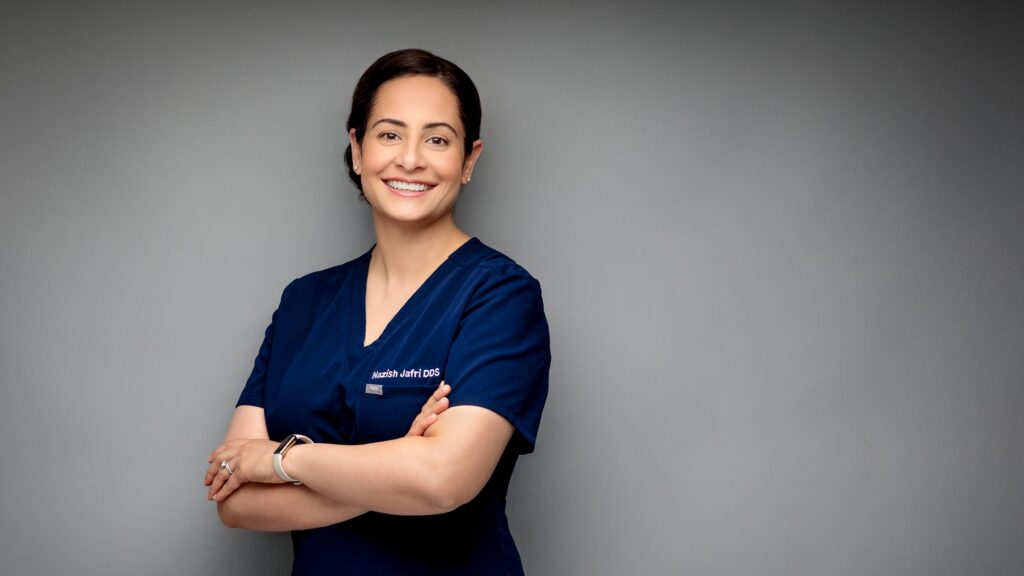
About Nazish Jafri:
Dr. Nazish Jafri, DDS, is a highly accomplished dentist, mentor, and business owner. Graduating from NYUCD in 2011, she quickly established herself as a respected leader in the dental industry. As the owner, CEO, and operator of Secure Dental, a leading dental service provider with 10 offices across state lines, Dr. Jafri has over a decade of experience in successfully managing and growing businesses. Her commitment to top-quality dental care and passion for mentoring the next generation of dental professionals have made a significant impact on the industry and inspired many. With a strong reputation for exceptional dental services, she is widely recognized and trusted by her patients across different states. Learn more about her and her dental services at www.secure-dental.com.
Social Media Handles:

About Sharmeen Aqeel:
Sharmeen Aqeel is the Founder and CEO of Lyyvora, a lending platform built specifically for healthcare clinics. She helps clinics access funding without the delays, friction, or confusion often associated with traditional banks.
With more than 13 years of experience in product and UX design, Sharmeen has led design teams at fintech and software companies across Canada and France. By interviewing dozens of clinic owners, she has gained deep insight into the financial challenges healthcare professionals face and uses those insights to connect clinics with the right lenders through a streamlined process. Her work is focused on making funding easier, faster, and more transparent for clinics that want to grow.
Resources:
Secure Dental_Sharmeen_Aqeel: Audio automatically transcribed by Sonix
Secure Dental_Sharmeen_Aqeel: this mp3 audio file was automatically transcribed by Sonix with the best speech-to-text algorithms. This transcript may contain errors.
Dr. Nazish Jafri:
Welcome to the Secure Dental Podcast. Here we bring together some of the brightest minds in dentistry and business to share practical tips you can apply right away. Our goal is simple: to help you grow your practice, build wealth, and create lasting freedom for you and your family. I am Dr. Nazish Jafri, CEO and Chief Clinician at Secure Dental and co-founder of DentVia. I'll be your host on this journey, and I'm excited you're here with us.
Dr. Nazish Jafri:
Hey guys, welcome back to our Secure Dental podcast, where we bring together some of the brightest minds in dentistry, actually growing a younger generation of business-minded people. They are going to be sharing business practical tips that we can apply right away. Our goal is simple: to help you grow your practice, build wealth, and create lasting freedom for you and your family. I am Nazish Jafri, CEO of Secure Dental and co-founder of DentVia. I'll be your host on this journey. Excited to see you today. Well, I'll tell you about my guest a little bit today. Her name is Sharmeen, and she runs Lyyvora, which is an amazing platform, especially for newer dentists or healthcare professionals who are looking for funding or any financial help. The platform helps healthcare and dental practices access fast, flexible capital from trusted lenders without the friction and delay of banks and those gruntled experiences with traditional banking. If you've ever wondered when to borrow, how to structure capital wisely, and how not to get trapped in your practice with wrong debt, this conversation is for you. Please listen on. Sharmeen, thank you for joining us today. Let's start by telling us about yourself and what Lyyvora is about.
Sharmeen Aqeel:
Yeah. Thank you so much, first of all, for the lovely introduction. It's my great pleasure to be on your podcast. Just before, we were discussing what it's all about landing for the healthcare and especially the dental clinics? I had been a product designer for more than a decade, and I had been solving human problems through software. I came to a point when I was in leadership, and I started looking at some bigger problems to solve, not only the software, but also how I, can I solve human problems in other areas of their life? Then gradually, I started working towards the finances. The biggest gap I started seeing is between the healthcare industry and the finance industry. The healthcare industry is focused on patient treatments. They have their own expertise in these healthcare areas, while finance is another domain. But the problem is that whenever there is a dental clinic, for example, they want to set up their own practice. They have to have some basic knowledge of finances. And unfortunately, those things are not as...we don't educate people along the way. It's just that yes, you have to learn by yourself everything from scratch once you get your own practice. This is where I found my sweet spot of how can I use my expertise to solve this gap between the financial industry and the healthcare industry.
Dr. Nazish Jafri:
Yeah. No. You're so right. When we are jumping into buying a practice, we're always thinking from a clinical perspective how many patients are there, what kind of dentistry I'm going to do? How am I going to do the marketing? But now, when we find this space, and now we're going to the lender to actually get it financed and get a loan, it is like a different school. It's a whole different community there that you have to go through to get the financing done. And a lot of dentists coming out of dental school do not get the knowledge of how to go and approach these banks, or even how to prepare themselves. Sharmeen, what would you say? What do you say when new practitioners come to you then? What are their struggles? What are the common struggles that you see?
Sharmeen Aqeel:
The number one struggle you just spoke about is what to prepare; am I ready to ask for a loan? Let me tell you a few things that every clinic should know. Number one: if your dental practice is more than six months, you're practicing, and you have your clinic for more than six months, you have stable revenues, and you have a business identity that everyone who has a business has, you can apply for a loan. It's as easy as anything else. Unfortunately, those things are not communicated as everything else. People don't know that you don't have to have extra preparation. If they have this, they are eligible for most of the loans. Now, the second step is what are the documents they need to submit. This is where Lyyvora helps clinics to prepare those documents. I'm actually excited to share that in a few days, we are launching a digital product where dental clinics and other healthcare practitioners put their basic information. For example, how many months they are in the practice? What are their monthly revenues? According to them, what is the profit margin they have? And just two or more questions. It will give them an idea of how ready they are to get a loan, and what is missing and what to improve. Our objective is that before the clinic applies, they know exactly what to deliver to the bank. There's a big reason for it. I'll give you a recent example. I was speaking with a clinic, and that clinic, she had been doing back and forth with the bank manager to bring out this P&L document and then this document and this. And so she said that I wish somebody told me that I'm applying for a practice acquisition, and those are the things required. But no, they have to go through an extreme generic form that they fill. It's the same for the equipment purchase to acquisition. But these are two different types of loans. That's why as they are underprepared. It takes a lot of time for bank to understand what kind of loan they can give, and also the clinic to understand what they should have prepared. I believe this is the number one hassle. The clinics I have been interviewed is to be prepared for what kind of loan they're looking for.
Dr. Nazish Jafri:
Yeah, you're right, because like I said, most dental clinic owners, when they are first getting into it, they have no idea. They don't even know what P&L is. Sharmeen, what would you say if a new practice owner who has been an associate and has been working for another company, and now they want to open up another, they want to open up their first office? What kind of preparation should that kind of dentist do now, let's say if they're willing to scout out locations, let's say next year for 2027? What kind of preparation should that dentist start doing now?
Sharmeen Aqeel:
The number one thing I believe is more of a business research that they should be doing. Because the biggest trap of whenever a dentist opens a new clinic is the cash flow. They need to prepare a projection of if they open their own practice in this particular area; how many dentists there, what is the population? The competition landscape? How much time the dentist is willing to spend in her own clinic versus being employed somewhere else? I can tell you one example. There is one dentist I was working with. She continued working with another clinic while she was opening her practice, which helped her to balance the cash flow in her account. One thing that is important to know is banks, they look most of the time if you have a license? And when you do have your license, the second thing is, do you have enough money to give back the loan? And even though they are starting a new clinic before they had been employed, they can see that this person has enough cash in her bank that if something does not work out, she will be still able to pay with this. Having enough cash in your bank is extremely important before you go towards a new practice. The third thing is, it's not a bad idea to start thinking six months before what kind of clinic to work with, but continue working as an employee somewhere else. What it helps is that every business takes time to become cash positive. I would say in my experience, dental clinics are from six months to two years, but having a secondary income helped them to continue building their business. And once it's good enough, they can be full-time in their own business. Coming back to your question. The few things that need to be prepared is, number one, make sure that they have enough cash that will be used in future. If the lender says that the clinic in six months they don't have enough patients, it can be covered. Second is thinking more of continuing something on the side while building your business. And third is or I haven't spoken it yet, is that you have banks, but you also have alternate lenders. Sometimes banks, they reject the application because they had been very conservative. And frankly saying, many banks are looking for big fishes. If they see a multi-million dollar loan, they might not be attracted to a 500K or 800K loan. They don't go further. Once they see a small red flag, which is not really a red flag, they just say, no, we are not interested. Why? There is this alternate landing site that most of the people, they don't even think about it. They have a difference of the interest rate. But if you're passionate about your business and bank is no, you have another way. I must say that go and try how much rate you are getting from the alternate lenders, and if you can be approved. These are the three things I must say that they should look for when they are thinking to open a new clinic.
Dr. Nazish Jafri:
I think that some of the points that you said are very critical, like having enough cash flow or having enough liquidity in your account to show the bank or the lender that you know you can sustain for at least six months. I would say even when we are doing something like that, we always have enough, at least 4 to 6 months, so you can sustain it, and then the bank can have some kind of trust in you that okay, you have a good mathematical head on your head. It's important. And market analysis is very important as well. Let's say if a new graduate is coming out, the reason I keep bringing new graduates is because we just don't have enough business knowledge. Banking knowledge. When I came out, I didn't realize it. I went ahead with my husband, and we were like, we wanted to open up an office which had 12 chairs, you know, plum, 12 chairs, and no bank would give us the loan. They wouldn't even entertain it because they would say, get this collateral and you're asking for too much and all that kind of stuff. By the end, we went to the major banks. We got disheartened with that. In the end, we went to Wells Fargo, and we started off with just three ops. That's how we started learning that it's a very hard market out there, and they're not looking at your dentistry. They're actually looking at how financially stable are you right now. And just like you said, if you can pay it off or not. Let's say if a new grad like when I was coming out and I wanted to open up like a four op office for, for myself and let's say Illinois, Chicago and it was coming up to 700,000 or something like that, how much should I anticipate to keep for any kind of lender, bank or you guys Lyyvora, that is substantial?
Sharmeen Aqeel:
There are a few things here. Number one is banks and alternate lenders, whenever you are a new graduate, there are a few things working in your way. Let me give you one example. It's not a dental but a pharmacy example. But this is what happens to that industry as well. A pharmacy I was working on, he graduated, and for six months, he was working in Walmart as a pharmacy manager. And then he started thinking to open up his own pharmacy. So he partnered with another pharmacy manager who was also a recent graduate, and they both applied for the loan for the pharmacy. They got 95% loan approved from a major bank in Canada. And fast forward 12 years, the person became a good businessman. He opened 17 pharmacies. What started happening is the bank is no more approving loan for more than 60 to 70%. So you see, sometimes you feel that you are a new graduate and maybe you're not the most favorite person for the bank as you don't have enough experience, but actually, no, sometimes bank the way they think risk is different than you're thinking the risk. People who are new graduates, they should know one thing. According to the data, first clinic has more chances to be a success than the second and third or fourth. So this is the data they have.
Dr. Nazish Jafri:
They're riskier.
Sharmeen Aqeel:
Exactly. For the bank. They become more...but I personally see that the pharmacy was not riskier because he was showing me nothing but positive signs but that's why he was more attractive to alternate lenders who were looking at the business health and not how risky he is. But I would say, new graduates, that you're not too risky for the bank. Second important thing you ask is that if it's 700K, for example, the cost of the acquisition of a new clinic, then how much buffer they must have in terms of cash. One thing I would say here is that in these kinds of cases, banks are looking for collateral. Having a cash buffer it's important. But also having a collateral is mandatory in few cases. Why is that is because bank needs to make sure if you can do the practice, or you can just take the money and go away. For a running business that has been established for six months to two years, they know that it's a running business. The cash is coming, and then the cycle will go on. But for a brand new practice,they don't. Collateral helps a lot to get approval of the clinic. Second is, I cannot say a number you need to have for the 700K. Why? It's because every area is different. I'll give an example between two cities. One city, the cost of acquisition is not too high, but the cost of labor is going to be higher for 2 to 3 practitioners. If you want to hire a hygienist, for example, or not. The operational cost is, it's hard to justify how much the initial acquisition cost was, how much they need a working capital. But I would say that having to calculate whatever fixed expenses you're going to have for one month and then multiply it by six, so you must have at least six months of fixed expenses you will be able to cover once you have this acquisition. Long story short, you maybe not the most favorite person, but you are not like the pharmacist who has 10 businesses if you're starting your practice, so don't worry about it. You might be the favorite person. Okay.
Dr. Nazish Jafri:
Yeah.
Sharmeen Aqeel:
Yeah. And yeah, just adding two more things. The second is having a collateral is important. And third is basic understanding of what's going to be your fixed cost per month. And if you can have at least six months of buffer cash which will cover your six month cost, it would be great as well.
Dr. Nazish Jafri:
Yeah. No. Awesome. I think those are very encouraging ideas that you are actually speaking. And it gives a lot of people, especially new business owners, a lot of hope that they can do this because like you said, dentists, obviously they need a collateral because obviously the bank needs to bank on something that at least we get our money back. But also dentists, the field is something like that, that you would generate money. It takes time, but it will generate money. I think what the new graduates should also look out for, like how you were saying for marketing and stuff. It's like a business plan. You need to understand what your business plan is, right? When you were talking about that, what kind of business you want, make sure that you know they can what community they are in. So that really helps in your startup. If you're going to be like a brand new dentist going like downtown Chicago in one of the busiest streets, obviously everything's going to be crazy, and it's going to take a long time for you to generate money. There the collateral might be really high, and they might need your house online. You might need a car online, they might need a cosigner online, right? It depends on your location.
Sharmeen Aqeel:
The one good thing about alternate lenders, well, there are many good things about this. These are the two favorite things that I really like about the lenders is that most of them, they give loan a little bit higher interest, but no collateral, but it is not valid for new practitioners. That's why I say that you must see which option is available for you. Once you open a clinic and it's six months in, you have access to alternative lenders. Okay. When you're starting off, this is also something that I'm giving you. another example, I was speaking with the Medspa and then she was the same problem as a dentist that she started looking at. Her projection was extremely optimistic, and unfortunately after four months she was not generating as much revenues as she supposed to, so she needed some loan for working capital. And so, when she went to the bank, they asked for collateral. The same condition that they wanted initially when she was starting her practice. She did not know that she had this option of alternate lenders. The alternate lenders, once they see that the clients are coming, it's that this is all seasonality in this business. And then sometimes banks have a hard time the moment the business was started was not the best season. And maybe it we need to pass a few more ones to get it up to speed. And as they are not seeing all those different angles, sometimes they don't. They are more towards no,like risk-averse. While alternate lenders are more looking at that okay she's asking for this loan in September, there will be a peak of insurance renewal in December. There will be a huge clientele in December. The summer is going to be a peak month. This person, if she has enough working capital to keep her hygienist, for example, she will be able to get to serve more patients and to generate more revenue. I would say sometimes, alternate lenders, they see things longer term in a different perspective through different lenses than a bank.
Dr. Nazish Jafri:
And you're right because they understand the business better. They understand how insurances work because it's so heavily dependent. The industry is very heavily dependent on insurances, Medicaid, government insurances, all kinds of revenue streams dentists take for them to do their services. And it's really good to know that alternate lenders would understand that part, because even though we work today, we don't sometimes get paid for 180 days, and it is coming. It's there. The claims are out there. It's just not generating enough. So sometimes we do get in situations like you said, that we needed a working capital to pay payroll, maybe to make sure that you're still paying your loans. Usually, payroll is the toughest because payroll is just skyrocketing so much. Sharmeen, what type of situations would you say is best suited for like those lenders? What kind of lenders are them? Are those how do you guys, how does your company scout them, and what do they help most in like expansion equipment acquisitions? We can ask for working capital, emergency payroll funding. Can you talk about that a little bit?
Sharmeen Aqeel:
Yeah. Where we are situated, I'm working with ten-plus lenders who can provide the capital within a week, and very critical and that people don't know about it. Why is that? According to the research, people are trying to get a loan with the bank they had always worked with. I'm giving you my example. When went I came to Canada, I was with the TD Bank. It's a Canadian bank. We had opened our account and everything. And then when we started going to the mortgage or something, we started speaking to the same advisor, and we didn't think there were other options outside of it. And so this is human nature, that you started creating this trust with the bank, and then you try to work with your bank as much as you can. While the trap in here is that the bank is risk-averse and rigid in terms of document collection. Bank also sometimes very slow to provide the capital. And what you just brought up, the payroll is one of the biggest challenges that I see. And then even though sometimes bank could give dentist a good line of credit that they can take like 25K every three years, but sometimes they don't need 25K, they need 40K, and then they have to go back to the bank and then start negotiating and do all those things. While those alternate lenders know that it's a short-term loan. It's a small amount. 40K is not very attractive for the bank to apply for the separate loan. Who would risk all this hassle for that? Alternate lenders, they say, okay, you're six months in business, you do have a good clientele, and you do have stable revenues. Everyone has peaks. If you see the six-month history, the cash is coming into your account. It's not a P&L statement, it's revenues. You are generating money. And so with all those 2 to 3 things, lenders will unlock the funding. And so at Lyyvora, we are working with all those lenders who can give funding in one week, sometimes, it also happens that they give in three days. What I would say is that whenever you are looking for the capital, I would say so far bank might give you the best interest. But if you look at the terms and conditions and how fast you want, maybe alternate lending is the best option. At Lyyvora, we worked with the alternate lenders, and most of our clients are those who need fast capital. We provide them with the capital. And what we also do is sometimes we cover up that giving you. Yesterday we spoke with the dental clinic, and they need a 400 K bank approved for only 60% of the amount to acquire a new practice. And then he, the guy came to me and said that, look, I have everything ready. What's what you say? So I said that I will not be able to match the interest rate of the 60%, but I can cover up the the 40% with other alternate lenders. The lenders I worked with, sometimes they the bank give the dentist one kind of percentage, and the lenders they cover up the other the other amount. Lyyvora is more famous for fast and flexible funding for healthcare businesses.
Dr. Nazish Jafri:
They can divide it too, so they can get some from the bank, and the rest of them, they can always get it Lyyvora's lenders.
Sharmeen Aqeel:
They can get the whole.
Dr. Nazish Jafri:
Or just get the whole.
Sharmeen Aqeel:
Yeah, yeah.
Dr. Nazish Jafri:
I think it also depends on what kind of interest they're getting. And for sure, dentists, as they work long-term, they will be able to pay it off because obviously our school loans are pretty high right now and everybody is paying those off nice and slow, so they should be able to pay it off. Is there a stark difference between the rates right now, as you see it?
Sharmeen Aqeel:
There is a difference, but sometimes it's not as pronounced as you think. It always depends on how much risk lenders or banks are taking. One thing is for sure. It's going to be always more than the banks. Give you an example, if you are getting 8% from the bank for the same file, you will never get 8% from the private lenders. It might get 9 to 10%. And other area that the bank did not secure is extremely risky. It can go up to 15%. Most of my clients are between 8 to 12% of the interest with the private lending. One thing that I really love about my lenders is that they look at the forecast of how much this, for example, the dental clinic, they want not for the working capital but for a new chair. And so they started looking at that. How many patients will this guy will add in the next five months so that he will be able to pay off the loan. They are more looking at those kind of projections as well as the history if this person was able to generate with two chairs, the third chair, it will be this much as well. So they are flexible. They can understand your business conditions, your seasonality. The interest rate is not going to be the same as the bank, but they always make sure that they will get their money back as well. It will be affordable for the dental clinic for sure.
Dr. Nazish Jafri:
Yeah. No. Right. But obviously, the fast nature of it is very attractive because like I said, a lot of times we just need it for working capital right away or we need it for payroll. Small offices sometimes struggle with payroll because of the payroll getting high or supplies getting high, and our insurance check haven't come in. So we haven't gotten our claims, our EOBs cash checks yet. So those are things that obviously the banking, even though bank is going to give you a little less rate, but the three-week or one-month waiting period is a killer.
Sharmeen Aqeel:
The killer. I have a few studies that show that you're missing out on more patients and revenues than the amount you will be paying more in interest. Also, your intent is that most of the time, they are long-term clients for you. Okay. They came for the first time, and then they're coming back. And so the loan is going to be a short-term loan to cover up expensive for a short period of time. But just because of that, if you have to let go one of your colleague or your hygienist, for example, you will lose those patients, and in the long term it will hurt your business more than a short-term interest.
Dr. Nazish Jafri:
Yeah. No you're right. In your lending environment with Lyyvora behind the scenes. What are these lenders looking for so we can once, if a person wants to approach you they already have these things in hand? Do they need like a business plan? There's like an interview process. How does that look like when we come to you with this idea?
Sharmeen Aqeel:
Thank you for asking this question, because this is also a scary question for them. What I've seen most of the time they're scared with that. They don't have time to prepare all the paperwork.
Dr. Nazish Jafri:
And yeah, sometimes they don't even have the paperwork. The CPA has it.
Sharmeen Aqeel:
Yeah, exactly. Yeah. Let me also tell you a small story. When I was building Lyvorras, I looked at all the documents that were needed, and all these small things, and I came up with 40 documents. It was too much. And then I said, okay. Then I started taking out that maybe we don't need at first glance. I came up with reducing them to 20 documents, and then I had my meetings with my lenders. Just to clarify, if that's enough for information. I was sure that they're going to say it's not enough. But you know what they did. They reduced it to 12 documents or 12 things. In the 12th when I say document is one is your business address, one is your business number. They're just so handy things that everyone has it. Whoever is it. It's not P&L statement they want. And I was surprised that even for a new practice acquisition The lease agreement is not mandatory at first glance. And I said, really? Well, this guy is just opening a new practice. You don't need the lease agreement. They said, no, we don't. So long story short, you asked me how many documents they need. It depends on what kind of loan they are asking. I would say that for the classic example of a working capital. So, working capital is the easiest one. You don't need your P&L document. All you need is your business statement of how much your company has been generated, your revenues, or for how much revenue you're getting, and finally, number of months in business. It's not a document, but it proves that this business you know how these clients. So with only these three things, they can start working on your application.
Dr. Nazish Jafri:
Okay. That's very encouraging to know that you don't have to have tons and tons of we can pick up the phone, call you, and start the conversation right away. Instead of having all those documents signed and so much stuff that we have to sometimes send, that honestly, a dentist doesn't usually have it. Our CPA has it, or the bookkeeper usually has it. Now you have to involve that person so it takes more time in it. One metric that you think every owner should track weekly for possible fundings and stuff like that. What would you say that is if there would be like mineful of one KPI in their office?
Sharmeen Aqeel:
It seems easy, but it's tricky. This question. If you see one metric, because if you say if you ask me five, I would have given you 5.
Dr. Nazish Jafri:
One main one.
Sharmeen Aqeel:
I would say you will laugh on it, but it's the easiest one. Is that how many revenues you are generating. If you want to go a little bit further I would say the second thing is how many revenues you're generating per patient. Sorry. How much profit? Sorry, not revenues. In terms of patient, what is your margin? Because sometimes the cash flow is. Just this morning, I was working on a file where the cash flow looks great on paper, but because of the fixed cost, the profits were nearly invisible. Looking at your profit margin per patient is extremely important for you to not only for the loan, but also for the health of your business to always understand. And as I have been seeing this problem again and again, it's that you just get lost in those calculations. I'm personally preparing some spreadsheets which will be interactive, which where they can just sign out how many patients they're receiving, what is the equipment lease cost every month, what is the cost of the hygienist and etc? After all those expenses, what is the amount left per patient? So I would say if they are able to track this one thing. It will help them not only to get better loans, but to also grow their business in the right direction.
Dr. Nazish Jafri:
I see a lot of times we just like review after review. You want to keep that dental assistant. You want to keep that hygienist. You want to keep that associate. You just review. You increase their pay structure. But we are at a deficit because sometimes insurance doesn't increase its part of the reimbursement. And our fees have not changed. So, year over year, our fees might not have changed. But we are just increasing our overhead, which is payroll vendors are increasing their fees. So that gets increased. And we're just so much dived into dentistry that we just don't think that even if we are generating any profit, because it's just like getting nullified or maybe equal, just like how you're saying it, they don't realize all these things. Maybe like having meetings or having some kind of conversation with their bookkeeper, who is tracking all that would be a good idea, because just in case, if they run into an issue like that, they know how to talk to lenders and Lyyvora with you.
Sharmeen Aqeel:
Yeah, and also having this basic understanding of how much profit margin you have pursued. It will really help you to focus on the right path. On the one hand, we are emphasizing tracking those numbers. At least one number, which is how profitable one patient would be. The example that I'm giving you is just before Christmas, I got a call from another clinic, and she was struggling to grow her business, and it was completely disassociated with the current expenses, with the, is because she was not getting enough clients, and because she has not doing marketing, and she did not have a marketing budget at all. She thought that she opened the clinic. People will see the sign, and they will come. Well, no, there are Google ads that sometimes you need to spend. You have to start having your own blog. Somebody is maintaining it, or if you're maintaining it, you have to spend time. Not having enough patient it means that every patient is extremely expensive because it's taking all the load off the payroll and everything on this. That's why, you know, this understanding that if you have a fewer patients and you have a higher cost, all you have to do is to increase your patient and how you do it. Maybe it's marketing, maybe it's something else. Tracking those numbers will help you to focus on the most valuable area that your business needs. The business needs your focus.
Dr. Nazish Jafri:
Yeah, and those are tiny little things that I'm sure banks, any lenders is going to see. Because that comes back to the business plan. If you are not business savvy and you don't know where you're going, you won't be able to understand what your problem is, because maybe the patient is not the problem. Maybe you are the problem because you have not understood the way the business side of these things works. Obviously, you have to put some money into marketing. That is the number one thing. I think the minute you sign the lease of the office, and you start doing construction, that is the time you start doing marketing. That you know you're going to be there because just having a dentist logo is not going to make patients come in, especially in a generation like ours, who's on TikTok and Instagram and things like that. It's like you have to be out there always. And that generates because patients see you, and that's how you make the profit. So it can be a growth. It can be a growth generator too. Let's say it's somebody has like 2 or 3 offices. They want to open up a fourth office, and it's doing okay. They have a good business plan, and they can come to you for funding as well for their fourth one.
Sharmeen Aqeel:
Yes, they absolutely. They are the favorite clients actually for beginners.
Dr. Nazish Jafri:
The growth in the growth process?
Sharmeen Aqeel:
One of the biggest differences between banks and lenders in terms of what they're looking at is, lenders, they're looking at the business. This is the right business. This person is growing, so they're betting on their business. That's why the number of months in being in the business is extremely important for lenders, maybe more than banks because bank is start going towards the security. It's the collateral and the cash in the bank, etc... While the lenders have three locations you want to open up for our fourth one, come to us, we will help you.
Dr. Nazish Jafri:
Yeah, no, that's really good because obviously you're in the growth phase. Everybody wants to invest in somebody who is in a growing phase and has a good business plan. And obviously, all those other offices is going to give you a track record that it's that you're a good investment.
Sharmeen Aqeel:
Yeah. And also, I would say, since I'm in this industry for a while, I started understanding one thing. It's that the underwriting cost for the banks are higher than the alternate lenders, and so they're always trying to get the bigger amount like bigger loans, 2 million loan. They love it. They would be they will put their whole force to understand the loan. But when you say 150 like 150, okay, that's not as attractive to us. Why would they do that if they have 414 loans waiting for multi-million dollars? Why would they go? While the alternate lenders is a different game, they know that the people who need bigger loans, they go towards the bank and the people who are looking for smaller amount, they come to us. So the whole system is designed for the smaller, smaller loan amount, fast loan approval, favorable terms for the land for the borrower, and looking at the business rather than collateral. Those are the reasons why this whole industry exists of alternate lenders.
Dr. Nazish Jafri:
Yeah. No, that's really good. What would be one of the biggest myths in financing that you think people assume that, oh, that's okay, we can overcome it? One of the myths that you probably come across.
Sharmeen Aqeel:
I would say the biggest myth is P&L statement. I think people are so scared of it. Yeah.
Dr. Nazish Jafri:
Because you can't read it. You don't know how to read it. It's so weird.
Sharmeen Aqeel:
Yeah, it's so finance jargon. Even this P&L. What is the meaning of P&L? Profit and loss? Okay, what are those? Yeah. Again, this is where we started our conversation is that finance is not as complicated as people have made it. I don't know, I think there is a reason why nobody wants people " " finance so they started making things extremely complicated. I don't have a financial background. I have a product design background, but in a few months, I got to know nearly everything. Okay? And I just started deconstructing everything into smaller pieces and understanding piece by piece. And today I would say why are you making those things super scary? I would say the biggest myth is that finance and these P&L statements, they are so complicated. Well, you know what? If you're looking for a loan or something, just forget about the P&L statement for now. Just look at your revenues. It's just how much money is coming inside your account. Give me a very basic calculation. You know that if you have 20K every month, but 20K is not a lot. Let's say you have 60K. Yeah, but let's put like to something like 60 K. It's just basic math that you will be able to give all your expenses and get some money extra in your account if you're getting that much.
Sharmeen Aqeel:
Start thinking finances in this most basic logic that you can. And don't look at these. This is what the profit and loss statement eventually if that if your revenues is less than your expenses, then you're in the lost mode or profit loss. Don't go towards those jargon. Just start thinking simply about how much you're getting, how much you're paying. And then lenders, they know that you don't have a finance or financial background. They will help you understand. Don't make things complicated. Just go for the basics. And then if you think that you need money and you have revenues, go and apply. There will be experts who will understand, who will work directly with your CPA, and then they can make things. Sometimes you don't even go to CPA. Really. You can just through your revenues and the expenses, they start understanding the story of the business. Asking loan is not a rocket science. Don't make it. We need to understand this and that. Just know your basic numbers, and you're good.
Dr. Nazish Jafri:
Yeah. At least know that. Okay. You are a bit profitable. You have a patient base coming in. You know you can pay these things off and then approach. So how would somebody approach you, Sharmeen? If somebody is looking at it and they're getting encouraging feedback from you because the way you're explaining it, it feels like very encouraging, very positive. Not like how bank loans are like big things. How would somebody come to you and approach you to get help?
Sharmeen Aqeel:
Number one thing that they can do is to contact me directly through my website. I'm available on all platforms from LinkedIn to my website. And that's why on my website, initially I set up a form that they need to fill out, but I now excluded this form. All they have to do is just write a message and even on the message I said, how can I help you? Just tell me where you are, what you are. We'll book a 30-minute call. We'll discuss how everything is going. And then we will know that it's go or no-go situation. It wouldn't cost anything to you, but at least you will understand that maybe you are not ready today. Maybe you will be ready in next three months, but at least I will be able to tell them what are the things that they need to get done in next three months so that they will be able to. You will be ready. So contact me through LinkedIn, contact me through my website, and I will be happy to help you.
Dr. Nazish Jafri:
Okay, so they can start building a relationship with you, and when they are ready, or when the interest rate is fine, or whatever is done, you can go ahead and help them get it approved for them and get the funding done.
Sharmeen Aqeel:
Yeah, exactly. Giving you two scenarios, either if you contact me, maybe you're ready right now, and you can just get things done as quickly as possible, and you don't know it. But we will see together. You're ready. Now let's get things started. Second scenario. You're not ready today. I will help you how to get ready in next few weeks. Few months. And then once you're ready, let's do it. Let's start it.
Dr. Nazish Jafri:
Yeah. Okay. That sounds very encouraging. Like I said, you have made it pretty easy for somebody who is in limbo and getting like disheartened from the banks and stuff like that. You've made it very encouraging for them to approach, because it feels like it shouldn't be that big of an issue. It should be easy because there are all, like you said, alternative options besides the bank.
Sharmeen Aqeel:
Exactly. Yes. According to some studies, people look at the website of their own bank. What kind of options are available? I cannot stop them to do that. But if they can just go a little bit outside of their bank and see what other things exist, they will get more options.
Dr. Nazish Jafri:
I think mostly when people think of alternative lending, the interest rate is something that haunts them a little bit. But I would say think outside the box, think of your own business, you can generate it back, but the thing is that it can help you right away with fewer constraints.
Sharmeen Aqeel:
And if you know what, if you have time, like, you can wait for six months, and you think that you have collateral. I would say bank is the best approach because bank will give you the best interest rate. But if you cannot wait for six months, you don't have a collateral. And even if you don't want it to be used. Because one of my customer, she had her house, but she didn't want her personal life to be at the stake of her business, so she didn't want to use her personal collateral. You know that you get a lot of flexibility with the price of interest, and the interest rate is people directly think about the highest interest rate exist. It's not that. If you have a less risky profile, it would be a little bit more than bank, but not dramatically changed. You look at the pros and cons, how much time you have, you don't have enough time. Go with the alternate lending, and maybe it would be the best option for you.
Dr. Nazish Jafri:
That totally makes sense. Sharmeen, it has been a very powerful conversation. And it's also making me think that sometimes not looking at the rate is fine in situations where you need the funding really fast. And like you said, if you can wait, try the bank. If you cannot wait, you have options. It's not the end of the world, but look outside the bank's profile. Look outside the bank's website. Sometimes you just have relationships, and we just want to stick to them because we're scared to go somewhere. But thank you for so much for such a good, powerful, encouraging conversation. Because capital, when we use it correctly, it's a tool for freedom. It's not to stress you out. You're already stressed out. Patients already are very emotionally draining for a dentist, and there are ways to like your company that can help not get financially stressed.
Sharmeen Aqeel:
Yeah, that's what my end goal is, that I make these things extremely easy, that they will focus on what is the most important for them, their patients, and not the other paperwork.
Dr. Nazish Jafri:
Yeah. And then the dentist can actually focus on making the money, which is going to help the rest of the staff. If you're not stressed out about that, somebody else is taking care of it. I think that interest rate is not that of a big deal. Then, because you should have confidence you can pay it back.
Sharmeen Aqeel:
Exactly. I want to add one small thing here. In my experience, the client I have served are the clients who are more focused on the patients. I can see really how much the clinic is growing. If they are extremely focused on the interest rate, they started being conservative and start holding them back then no. Well, the clinics were more focused on the amount of patient amount of people they will serve in this community, so that if I get this capital today, I can double the amount or I can do this much more than that. This is where I see where the clinic is growing and where it's going. It's going to be next two years. Look at the growth. Look at that. How much revenue you will be able to generate, how much people you will be able to help. And of course, you cannot ignore the interest rate. But it comes to the secondary thing, not the primary.
Dr. Nazish Jafri:
Correct. Very correct. Well, Sharmeen, it was a very good conversation, I liked it, I really enjoyed it, especially. I like the positive attitude that you have and the encouraging way that you're putting this taboo thing in perspective. It's very encouraging. What I hope for my listeners to take away from this today is smart growth isn't about just borrowing more. You borrow, and you use it for a tool to make you free, or you borrow it, and you do marketing with it so you can get more patients. Right. And so borrowing is better because that is going to help you in your business to set you free so you can be a better dentist and you can treat more patients. You can help more patients, that is going to internally generate more revenue. Thank you, Sharmeen and Lyyvora, for breaking down the strategic capital. It really looks like it is set for new grads. They can think of things in the future. And somebody who is looking to add more offices, or somebody who is looking to get some more capital for different things in the office. Thank you again. I highly appreciate you giving your time today and talking with us. And we have all of that information right after the podcast. It's going to be there. If you want to get in touch with Sharmeen, she made it so easy. You can go to her LinkedIn profile. Just send her a message. She doesn't have a form to fill out like banks, so she's going to be right there, replying back to you. And again, if this episode brought you value, share it with another practice owner who thinks about expansion and equipment, and acquisition shouldn't be this hard to do. And make sure you are subscribed to our channel so you don't miss out on what's next. And until next time. My name is Nazish Jafri, and I was loving this conversation to the end.
Dr. Nazish Jafri:
Thank you for tuning in to the Secure Dental Podcast, where we talk all things dentistry, business, and growth. We hope today's episode gave you valuable insights you can take back to your practice and your life. If you enjoyed this episode, don't forget to subscribe! Leave us a review and share it with your friends or colleagues who could benefit from the conversation we had today. You can follow us on social media at Secure Dental or visit our website at SecureDentalGroup.com For more resources, updates, and upcoming episodes. I am your host, Nazish Jafri. Thanks for listening, and we'll see you next time on the Secure Dental Podcast.
Sonix is the world’s most advanced automated transcription, translation, and subtitling platform. Fast, accurate, and affordable.
Automatically convert your mp3 files to text (txt file), Microsoft Word (docx file), and SubRip Subtitle (srt file) in minutes.
Sonix has many features that you'd love including upload many different filetypes, advanced search, enterprise-grade admin tools, automated translation, and easily transcribe your Zoom meetings. Try Sonix for free today.