
The Secret To Scaling A Dental Office Without Losing Your Mind
Summary:
The future of dental practice success lies in mastering operations, not just clinical care.
In the first episode of this new season, Bryan Greene, CEO of Dental Mastery Dynamics, discusses how artificial intelligence is transforming dental practice management by bridging the gap between large DSOs and smaller private practices. Drawing on a decade of leadership experience at Aspen Dental, he explains that many private practitioners struggle with analytics, overhead, and operational efficiency due to a lack of business training. His AI-driven platform democratizes access to business intelligence, enabling practices to monitor key metrics, enhance profitability, manage staffing effectively, and make informed, data-driven decisions while automating tasks such as patient follow-ups and complaint handling. Bryan emphasizes that success starts with knowing your “scoreboard,” understanding the numbers behind performance, and making small daily improvements that compound over time.
Tune in and learn how operational AI can help dentists boost their profits, reduce stress, and finally focus on what they love most: caring for patients.
Things You'll Learn:
- Most dentists receive zero business training in school, leaving them unprepared to manage operations, finances, and teams effectively. AI tools can now bridge that gap by automating analytics, coaching, and decision-making support.
- Large DSOs have access to costly operational expertise, but smaller private practices can now compete using affordable AI-driven systems. This levels the playing field by providing real-time insights and recommendations.
- Dental Mastery Dynamics integrates with major PMS systems to generate unified dashboards and communicate directly with clinicians through chat, text, or phone. This keeps teams aligned while allowing dentists to focus on patient care.
- The AI platform continuously learns from each practice’s operations, offering tailored coaching, identifying inefficiencies, and even managing patient complaints. It ensures consistent follow-up and prevents revenue loss from neglect or miscommunication.
- Knowing your “scoreboard” is the foundation of sustainable growth. Regularly tracking metrics and acting on insights leads to higher profitability and lower overhead.
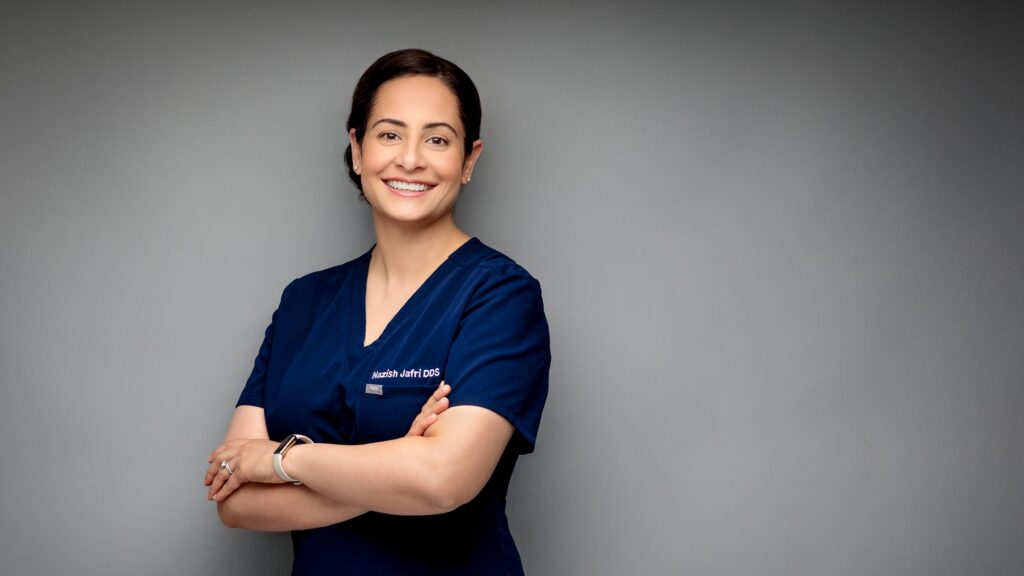
About Nazish Jafri:
Dr. Nazish Jafri, DDS, is a highly accomplished dentist, mentor, and business owner. Graduating from NYUCD in 2011, she quickly established herself as a respected leader in the dental industry. As the owner, CEO, and operator of Secure Dental, a leading dental service provider with 10 offices across state lines, Dr. Jafri has over a decade of experience in successfully managing and growing businesses. Her commitment to top-quality dental care and passion for mentoring the next generation of dental professionals have made a significant impact on the industry and inspired many. With a strong reputation for exceptional dental services, she is widely recognized and trusted by her patients across different states. Learn more about her and her dental services at www.secure-dental.com.
Social Media Handles:
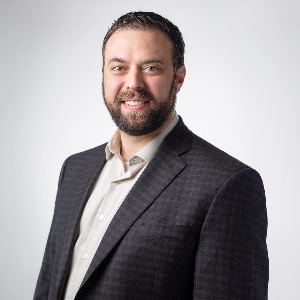
About Bryan Greene:
Bryan Greene, MBA, is the Founder and CEO of Dental Mastery Dynamics, an AI-powered consulting platform designed to bring DSO-level operational insights to private practices and small groups.
With over a decade of leadership experience at Aspen Dental, including roles as Territory Director of Operations and Senior Regional Manager, and later as VP of Operations at Splex Dental Partners, Bryan has built his career on helping practices turn data into measurable growth. His work today focuses on developing AI systems that act as a “virtual director of operations,” providing real-time coaching, performance analysis, and decision support to dentists who want to unlock their practice’s full potential.
Outside of his professional endeavors, Bryan is a dedicated father of two young boys. Much of his free time is spent in the rewarding chaos of parenthood, and occasionally channeling that energy into building elaborate saltwater reef aquariums at home, a passion project he shares with his children.
Resources:
Secure Dental - Bryan Greene: Audio automatically transcribed by Sonix
Secure Dental - Bryan Greene: this mp3 audio file was automatically transcribed by Sonix with the best speech-to-text algorithms. This transcript may contain errors.
Dr. Nazish Jafri:
Hey, good morning, guys. Today's episode, I'm joined by Bryan Greene, CEO of Dental Mastery Dynamics, a powerhouse in dental practice, operations, and leadership. With years of experience with leading large dental chairs, Bryan knows how to drive revenue, optimize EBITDA, and build teams that thrive. Get ready for practical strategies and big picture insights to scale your practice. Bryan, welcome to our show today.
Bryan Greene:
Thanks, Dr. Jafri. I appreciate it.
Dr. Nazish Jafri:
Yeah. So, Bryan, my first question would be what inspired you for this Dental Mastery Dynamics that you have started just, you know, like some years ago. So, tell me about it a little bit.
Bryan Greene:
Sure. Thank you. Yeah. So, basically, I had a lot of experience at Aspen Dental, one of the largest DSOS, potentially the largest de novo DSO in the world. Had ten years of experience with them, growing through from the front desk, kind of seeing the operations from the ground level, working my way up through a regional manager position. At one point in time, I managed 29 practices at Aspen. Over the course of my career there, I managed about 10% of their total practices. And when I left Aspen, I wanted to really try to help a smaller group do the same thing. So, I was hired by a different group, and I was their vice president of operations of about three practices. And seeing the disparity and the difference between the operational analysis, the operational acumen, the how things are actually driven in the company between a large organization and a smaller mom-and-pop private practice, it was absolutely mind-blowing. So, when I saw that, and then I started thinking about what are some ways I can really help equalize and democratize the dental industry? And I started feeling like the big difference between where these big DSOS have an opportunity and advantage versus where these private practices are maybe struggling a little bit more is twofold. First, the people who are trained experts on the operations, on the analytics, on the different ways of driving your business, they're not cheap, right? You're talking about multiple six-figure salaries to be able to cover a wide range of support from HR, legal, risk management, talking about the actual analytics piece. It's price exorbitant and it's prohibitive to a private practice who really can't get there, right? And if you look at it, that's why healthcare in the past 20 years has evolved the way it has is because the same reason in medical, where there was a lot less support for the individual mom-and-pop private practice, but joined that hospital group, and they have all this extra protection here. On the flip side, the problem is that if you wanted to hire a private consultant, even that for 2 or 3 days of work, I know I worked with a doctor a long time ago that paid $25,000 for this guy to come down and spend two days actually working with this practice and helping them. Two days of work for $25,000? Yes, please. I'll do that. All day. I think most dentists would quit their jobs and do something like that for that kind of money. So, what I realized coming in here was that there was a major gap. And how do we cover that gap? How do we minimize our overhead as an organization while being able to still provide that same support to dentists? And that's where AI comes in. This is the 2020s. This is the future right now. How do we emphasize AI? There is AI all over dentistry and the diagnostics and the x-rays, and the treatment planning; that's all there right now, even in some front-desk assistants. But what's not there is the analytics. You have lots of suites, like a practice by numbers or dental intelligence. Are they able to come in and say, Hey, here are your numbers? And that's great. They're great solutions. The problem is that they still don't help you figure out what do the numbers actually mean and how do I fix that. So, that's where Dental Mastery Dynamics came in, was I'm building a product to really help give those practices that same operational advantage that these big companies have for a fraction of the cost of what you pay for a consultant, or to have to hire somebody yourself.
Dr. Nazish Jafri:
Wow. That is really amazing. So, like a practice with 1 or 2 dentists or 1 or 2 locations, they would be able to see their numbers and EBITDA in 1 area? Is that like a software that they can imagine?
Bryan Greene:
Yeah, yeah. So, what it would do is it's going to actually be able to create a metrics page. So, I have metrics we pulled out, and it can work with any of the major dental softwares right now. So, it works with Eaglesoft, Dentrix, Open Dental. You name it. The majority of them, I believe about 70 different dental practices that we're able to work with right now, like dental practice management softwares. So, a lot of different platforms. It creates a unified metrics page, and then it's going to be able to send a text message and communicate with the doctor in the office leadership about what the numbers are, some highlights the numbers and recommendations to correct some of the negative numbers to help improve. On the back end, it'll continue to follow up. You can actually reach the AI versus just like a ChatGPT. There's going to be a chat window within the metrics page, or you can text it, or you can give it a phone call, and it'll actually have a verbal communication with you. So, there's a lot of special ways to communicate. And it'll not only give you those recommendations, but you can bounce ideas and questions off of it, such as, Hey, doc, or hey, I got a question: my front desk has called out of work for the past week and a half. I think they're looking for another job. What can we do? And it will be able to give you coaching and suggestions, and feedback based on historical. And we have over 25 years of dental practice and data that we've now uploaded into this AI that we're going to be able to use, use historical patterns and trends to give you future behavior predictions.
Dr. Nazish Jafri:
Oh, wow. So, it can actually, you can ask questions, and it's going to help the clinician with all these things?
Bryan Greene:
It's literally like a directed operations, except an AI instead.
Dr. Nazish Jafri:
Okay. Because I know many dentists, especially if they're not working with the DSO or big like Aspen ... style, the clinicians are just clinicians. They have no business sense because they're so type A, and they're always getting into the fitness of how they can treat the patient right. But then, they have a hard time with the business numbers. They probably don't even know what their overhead is. They don't even know what their dental assistant is ordering. You know? How much it is? Where the salary is going? So, for those reluctant business leaders, you think it's going to work really well? And they can still be chairside?
Bryan Greene:
That's the idea, is that they don't have to focus on any of the business; this will do it for them, and it'll help them get through, so they can just focus on doing what they love and what they went to school for, which is being a dentist. Like, I'm going to play a little game with you, doc. What dental school did you go to?
Dr. Nazish Jafri:
NYU.
Bryan Greene:
NYU. I know a lot of NYU grads. Tell me, how many business classes did you have in your dental school? Zero. Yep?
Dr. Nazish Jafri:
Zero.
Bryan Greene:
Every doctor I've ever asked that question, the answer is zero. The most I ever heard was two. But the qualifier was, the person told me two was the only two pass-fail classes they had in dental school. It's like, what was it, your midterm was flipping your assigned for your door from closed to open. And then the final was a little harder: you got to lock the door first and flip it back to closed again. So, like there's not any of that business acumen. And what I find very funny about AI in dentistry right now is, like I mentioned before, there are so many AI solutions in dentistry, but they're all focused on clinical. That's the one thing that the doctors, more than anything else, understand and know is the clinical side. So, why is AI on that end versus the area that really, let's face it, dentists need the help, they need the support in the operational? Because there are opportunities. I mean, look, let's be real; when you go to these DSO practices, these practices are considered mildly successful when they're breaking $200,000 a month in revenue. Is that with a private practice? They're happy to hit 75 to 80, like it's a completely massive disparity between the DSO mindset and the private practice mindset. And what I want to do is help create that same success and that same ability to really be able to never worry about anything except for the clinical side of dentistry from a private practice perspective. You don't need to join a DSO; you don't need to feel like you have to sell out to the big group to do that. You can get that support without joining them.
Dr. Nazish Jafri:
Yeah, yeah. No, that's really good. And I think it's gonna help them scale as well, right? If they're looking to get another associate, let's say it's one doctor working, and they're getting burnt out. What do you think it's going to help them get the numbers so they can understand if they can afford another associate in the practice, or even if, you know, things like that? So, can you shine some light on that part? So, let's say if it's a dentist thinking about getting in, they're like, We don't have the overhead for another payroll, how would this help them?
Bryan Greene:
Sure. So, as far as that goes, again, it's going to have a lot of benchmarks based on our historical data for dental practices. Where they were able to continue to be profitable? At what revenue level? At what case acceptance level? You know, what schedule maximization utilization you're doing? And from there, it can actually tell you, Okay, so this is where you need to be to be able to afford that next FTE, that next associate, you're going to be putting in, that based on the connections we're making, you're going to be able to pull reporting about anything you want within your system. So, if you say, Hey, I want to get a second doctor, but based on what we've talked about before, I feel like I need to be at 180,000 in collections. My collections are a little off. Can you help review some patients that maybe I'm still missing out some collections on? Sure. Here's a list of your last six-month patients that still owe you money. Here's your AI report. So, it'll pull customized reports for you as well. I know my business partner, my chief operations officer, Kristen Millican, she's wonderful, also has 13 years of experience with Aspen. So, we both combined have about a quarter-century with them. And she's working with a couple other groups since she left Aspen. And what we're noticing also is how fragmented all the different solutions are. Like there's an AI solution. Like we said, we have hours for operations. Maybe you have a solution that helps you with your collections, maybe a solution that helps you with your insurance submissions. Maybe you have even like a current AI that's like an AI receptionist for after-hours. What we want to do is combine all of that long-term into one platform so you can go to one group, do it one time, and we are integrating everything for you. So, it becomes a one-stop solution operationally. Turnkey; start to finish; can do everything you want.
Dr. Nazish Jafri:
Okay. So, a dentist can choose to get the whole program? Or they can also choose to get if they need help in something else, and then they can build it up?
Bryan Greene:
Absolutely. Yes. There's different levels of subscription for us. The top-level subscription will actually have a little bonus in that myself or my chief operations officer or future, as we start growing as well, we'll actually do a quarterly site visit as well to input more information into the data. So, we're essentially offering our own consultative services, doing the same office visits and things that you'd get from a consultant. But again, you're paying a fraction of the price. And we're able to code that into the AI. And the AI can then do follow-ups for us based on what we're finding to continue to reinforce and give you the continued practice behaviors that will help maximize your profitability and efficiency in the practice.
Dr. Nazish Jafri:
And you said it is easily attached to, the APIs are easily attached to any of the major PMS systems that dentists use?
Bryan Greene:
Exactly. Yeah.
Dr. Nazish Jafri:
Is it also attached to any of the financial softwares that people use, like Sage Intacct, Outlook, and stuff like that?
Bryan Greene:
It's not attached there yet, but the nice thing is that because the PMS systems are almost always integrated with those systems already, I'm pulling data from what the PMSs are putting in. So, in other words, if you're posting a payment through Dentrix, but you're using, you know, Square or something to take that payment, as long as it's posted in your PMS, my system is tracking that and able to see where we're actually at.
Dr. Nazish Jafri:
Okay, okay. Yeah, that's very interesting. I think it's really helpful and mind-blowing that the number crunching is done already, while we as clinicians are still working with the patient, and we don't have to pull like a ton of reports and stuff like that. You can ask simple questions, and it's going to spit it out. So, it would also do treatment plans?
Bryan Greene:
Yeah. So, it won't actually review treatment plans. We're trying to avoid the clinical side of things right now because I don't want to touch that at this point. We're going to eventually potentially grow into that role. But for now, it's more focused on the execution on the back end. So, it might tell you, Hey, you're presented, like dollar value is very low right now; let's talk a little bit what that looks like. Is that because the fact that you're having patients at a patient choice thing? Are we offering a lot of options? Is it an acceptance issue? Maybe your consulters are not getting the? You're talking about implants at one moment, and you come back and say, Oh, but also we can just pull that tooth, and maybe the consulters are not executing on that exactly. So, it'll give you those kinds of pieces because it'll track what's being presented versus accepted and things like that as well. But because it's not a doctor, it's not a medical-licensed individual; obviously, it's an AI. So, I'm not having it touch any kind of treatment planning or anything with the clinical at this point. Eventually, I might integrate something similar to what some of the other AI programs have, like an X-ray helper tool or something like that. But that's long down the road. Right now, we're really focused on the operations side because that's where we're lacking.
Dr. Nazish Jafri:
Yeah, you're right. It can't really talk about the clinical treatment, but at least, the graveyard treatment plans that are sitting inside a PMS system, we can at least pull it and show where we're losing revenue or help the front desk call be more.
Bryan Greene:
Well, and there's some pretty exciting stuff happening, too, for us. I know you know our next version, which I'm kind of keeping somewhat under wraps, but I'll say a little bit here, we're also looking at it, not only taking a receptionist position, but handling all patient satisfaction complaints. So, an angry patient calls, it will be able to be forwarded on to the AI, and it will handle everything for you; give notifications to the doctor and the leadership, saying, Hey, here's the problems that we found. Here's what to work on. Here's what I resolved as a resolution. If it's a refund, do you approve? Yes or no? It will handle everything. How much time do you think a practice could save by not dealing with angry patients all day?
Dr. Nazish Jafri:
Yeah, absolutely. You're right. Because it's just not one person involved in it. It's the front desk taking the call, putting the people on the hold, then going to the manager, manager waiting for an approval from the dentist. And then it's like a lot of touch points. By the time you get to that angry patient, he's more mad.
Bryan Greene:
I mean, if you've heard some of these AI advertisements now. When you listen to some of these things going on and someone calling at two in the morning or putting in a request, they get a call back in three seconds, and it's an AI, and you have no idea it's an AI. The technology there and the technology we're using right now, you can't tell you're talking to an AI unless you ask it directly, and it will tell you. So, it's very, very personable. It's very much something that when you're talking through with it, it can handle these things, and the patient will never be upset by it because it's getting its questions. And in fact, what I like even more about it and this idea is that the biggest issue I have in my experience, working at DSOS and everything, when you have these major issues with patients that get really upset and it even goes into, God forbid, like a small claims lawsuit or something like that, I will tell you, 90% of the time, in my experience, like it gets that to that point of severity due to lack of follow-up. Somebody forgets to respond to a call. Somebody takes a note and never gets to the manager, like you said. Or the doctor never gets around to approving the refund. And because of that, the patient feels unheard and unaddressed, and escalates more and more and more until they feel like their last option is to get the doctor and the manager bogged down in some terrible court date they have to now go to and represent, and now they can't see patients then either. So, an AI will never forget or drop the ball on a follow-up or follow-through. It's committing to a patient.
Dr. Nazish Jafri:
Yeah, I really like that. And I can understand it because we go through it in our practices as well. By the time they get an answer, it takes them long, and the patient's more mad, upset. Because as human beings, as a consumer and a customer, we want the answer right away. And we don't want to be waiting. So, if the AI can help that and is coming out with intelligent answers to give it to the patient to satisfy them, I think it's good. So, is the AI learning with our software every day?
Bryan Greene:
Yep. Yeah. As with any other AI, the more it sees the practice and the more it sees how the operations are going, the more it's going to learn and be able to fine-tune its coaching more to that specific practice. So, if you know, let's say that it knows after some HR complaints and things that there's a front desk person that just really isn't cutting it. At the future, you know, you might say, Hey, my new patients aren't showing up the way they're supposed to be. What's going on? Well, you know, we talked about your front desk. Have you done any coaching with that person recently? Because it seems like maybe they could be the. So, it's going to remember what you're talking about, and it'll retain that information to follow through and follow up on, and use as extra indicators for how does it coach that behavior and evolve.
Dr. Nazish Jafri:
So we can use in reviews, team reviews. Okay. So, that's an added benefit that's coming.
Bryan Greene:
... with it.
Dr. Nazish Jafri:
Yeah. So, what would you say. How if the dentist is interested and then listen to it. How what what does it look like when they call you? And do they get a training? Do they get a demo?
Bryan Greene:
Yeah. So, we're currently in beta testing right now. We're actually finalizing. We had a quick shift over from our middleware vendor that we had before, which was working with some of the VMs, to one that has a little bit of a better solution for us. We're finalizing that this week. We have a couple beta testers. Frankly, right now we're still looking for additional beta testers. So, free of charge for 90 days, after that, I mean, really, if you go onto website, DentalMasteryDynamics.com, which I was told, I got feedback it wasn't the best company name, but if you're a dentist, you get it, since the initials are DMD. That's why I did it. I've always been known to be kind of a jokester, a little bit, so I wanted to do something kind of fun. But if you go to DentalMasteryDynamics.com, it tells a little more about the system, what we're doing. We're gonna have some demos on there very shortly, but happy to give any demos for anyone that's interested in that, go through kind of what that product looks like, and walk through what the different levels of support would be as well.
Dr. Nazish Jafri:
Yeah. And I think if you're offering that 90-day demo, that's really beta testing. That's really interesting because anybody can try, see how it works, and the way it sounds like it's going to take a lot from my plate. You know, team building, constant team reviews, constant, what would you say, consulting with the team. Because as a clinician who's always with the patient, it's very hard, and we want somebody else to take care of it. And with a high demand in like salaries and per hours, and stuff like that, if this can help, I think it would be a really beneficial addition in any dental practice, small or large.
Bryan Greene:
This covers everything operationally that you are looking for in a practice for a fraction of the cost of one of your front-desk employees.
Dr. Nazish Jafri:
And then we can choose the AI models, like the sounds and stuff like that?
Bryan Greene:
That, I haven't established yet. I can definitely look into that. Like I said, we're still early in kind of our product. So, I'm happy to take feedback as part of the beta test as well is if we want different options. Right now, we just picked one of the most natural-sounding voices. I do foresee that the majority of the communication with the AI from the doctor side would probably be through the metrics page, so via the chat bubble. But that being said, there's still going to be that option that we have available. So, the idea behind it, and of course, all those different ways of communicating, are all in the same knowledge base. So, that means that if you call it about something and talk to it, it's going to remember what you talked about and incorporate that into your text conversation the next day. So, it'll be able to continue that conversation. It's not like there are three different individuals; you're talking to that all follow-up on itself.
Dr. Nazish Jafri:
Okay. It's the one. And then the dentist or the team manager is talking to them through the text, the chat?
Bryan Greene:
Text, chat, or phone call. Any of the three.
Dr. Nazish Jafri:
Or phone call, okay. And then you guys are behind it just in case if we?
Bryan Greene:
So we're redoing it. That's the other cool thing about what we do, too, that's a little different than either a consultant or a intelligence software, like a dental intelligence, or perhaps by numbers, is that we have a human hybrid escalation. So, it's not just a computer, and it's not just people. It's going to be starting with the AI and with the metrics that we've taught it, and how that kind of works and how they correlate what they mean. But if that's not the answer you're looking for, there's going to be a way to immediately escalate to myself or another operator that can give you that human follow-through as well. So, you're always going to have a quick touchpoint to somebody who has the live experience, who's done it successfully for many, many years.
Dr. Nazish Jafri:
Okay. Yeah, that's satisfying; that, you know, we have somebody that, like you, who can reach right away to follow through or have any questions, because obviously, it's learning with the practice.
Bryan Greene:
And just like with patient satisfaction cases, I know for myself, being accessible is very important to doctors.
Dr. Nazish Jafri:
Yeah. Absolutely. One last question also. How would you recommend balancing like production growth, overhead control with the AI being established in an office?
Bryan Greene:
I'm sorry, can you rephrase the question? I don't think I quite understand.
Dr. Nazish Jafri:
Let's say a dentist is thinking of getting into it, and they're like, I don't know if it's going to be worthwhile or whatever. So, what would you tell them? How would their production and their overhead be better having this?
Bryan Greene:
Okay, so I think at the end of the day, when it comes to a product like this, knowing your business is the most important aspect, and that's how you're more successful. One of the best books that I've read in a long time, and it's one of my operations bibles I use; it's called The Four Disciplines of Execution by Sean Covey, which, if you know Stephen Covey, Stephen Covey's son is Sean Covey. This amazing book, one of my favorite parts of it is talking about keeping a consistent scoreboard, right? And the fact that if you think about like a basketball game, if you're watching an NBA game and there's no scoreboard, how hard are those players actually playing? They're not. I mean, they're playing. They're having fun. They're gonna do what they want to do. But they can't see what that is, and they don't get the analytics afterwards. If you look at sports evolution and how that's happened over the past 30 years, the more analytics there were, now you've got these high-flying offenses, you've got all these things that are working so differently, and people can fine-tune very specific parts of their game that they had no idea were ever missing. When you're talking about business, it's the exact same thing: if you don't have a scoreboard and understand the analytics behind the score and what those little things mean, you're never going to understand the levers you can pull to make that huge impact and that huge difference. So, you can have a practice that's 90% case acceptance, which is wonderful. Everyone thinks you're the best practice in the world, but you're only at $80,000 in revenue. Why is that? Well, it gets to a point where you have to make a decision. Are you going to look at something that's going to be an option that will help coach you from now on forever, or are you going to hire somebody that's going to come in for a weekend, give you some feedback, give you a little bit of something, and say Godspeed, good luck, let me follow up with you in six months and see what happens? And really, what it comes down to is that minute, day-to-day adjustments and assessments are what's going to make the biggest lift. I don't have numbers yet. That's why we're doing beta testing, is to get those success numbers. Because also I know, let's be real, this is 2025. What have you done for me lately, and where's the proof? That's a big deal right now. And that's what I'm looking for, is I want to get that uplift. But what I will say is every practice that I went in in any kind of capacity with my knowledge, which I've coded into the AI, we were like, with Aspen Dental, I was number one in the company in EBITDA margin at over 25% every single month in my last market, I was there for. And it was significantly below that when I got there. So, when you're talking about what you can do with the margins, what you can do with the numbers, and how this can help you, I mean, really, it depends on how much you adhere to it and how much you're going to utilize it for your day-to-day operations. But I can tell you that you will be very significantly improved in your profit and extreme cuts on your overhead. Especially long-term, we another development project coming up in our next version, which will also be able to upload profit and loss statements and analyze those for you as well to give you where you're overspending, where you're looking at things. Maybe you don't need to spend this much on something. How do we identify those behaviors in the back end to further streamline your profitability? But right now, it's all about knowing that scoreboard, getting those specific analytics, and understanding where you can pull the levers to make the biggest impact. And that's where it comes from.
Dr. Nazish Jafri:
Yeah. That is very huge. That is really, really huge because it's going to give you the pulse or the heartbeat of your office, the: where is it going? And if you are in a transition phase that you want to sell or give it to another practice, at least you have all the numbers right, so you're not undersold or you're just not, you know, being lowballed for your office. And you yourself know how things are going.
Bryan Greene:
Well. And yeah, and to your point before, and to finish my example from earlier, is that if you're at that 90% acceptance and $70,000 in revenue, you may not know where to go from there, because that's the first thing you see. Like, this is great, I don't understand. But then my system might come in and say, Okay, well, let's talk about your consulter because you're recommending these treatment plans that are, you know, implants and SRPs and things like that. And then your consultant feels so bad for the patient that they're letting them walk out with chief complaint, single simple extraction. So, they're accepting. But what are they accepting? They're accepting nothing that you're recommending; the chief complaint, and that's it. That's a consulter issue. Now let's talk through your steps of action to attack this. Let's review some consults. Let's look at what those look like. It'll let you upload videos of consultations to review those for you, too. So, there's lots of different ways that I'll be able to really analyze and help you figure out how do we get from here to there, because this is where we know we should be, and this is where we're currently at?
Dr. Nazish Jafri:
Okay, okay. Well, Bryan, this was very, very, very insightful. I really liked it. My mind is also thinking how it can be utilized in our offices. So, what would be the next step for a dentist? Right now, I know you said it's in a beta phase. You're looking for some more dentists to join in?
Bryan Greene:
Yeah. So, really, I mean, we have our contact page on DentalMasteryDynamics.com, or you can find us on LinkedIn or Facebook. I have business pages on both to ask about that. Also, I mean my bio, that will be attached to this, has a little more about the company. I'll make sure I also attach an addendum with my contact information. You can call me directly, send me a WhatsApp, email, text message, phone call, however you want; happy to talk about what that looks like, and how we can continue to grow that partnership, and potentially see where this can go.
Dr. Nazish Jafri:
Yeah, I think that's really great. Well, thank you so much. So, like Bryan said, it is in their developing stages. It's going pretty well. And he is also, you know, he can have a lot of input from if somebody else wants to do the beta testing, because there's so many different PMS softwares. If you can make it robust as a clinician, I think it would be really helpful for one doctor office or multiple doctor practices. It can give you the pulse, the insight of your office. So, hey, let's get in touch with Bryan Greene. We will have his information at the end of our podcast. And that was a great conversation. I really enjoyed it. My mind is thinking.
Bryan Greene:
Well, give us a call, doc.
Dr. Nazish Jafri:
Yeah, absolutely. Yeah. Well, thank you so much.
Bryan Greene:
Thank you. Appreciate it. Have a good day.
Dr. Nazish Jafri:
Yeah. Good day. Great day.
Sonix is the world’s most advanced automated transcription, translation, and subtitling platform. Fast, accurate, and affordable.
Automatically convert your mp3 files to text (txt file), Microsoft Word (docx file), and SubRip Subtitle (srt file) in minutes.
Sonix has many features that you'd love including automatic transcription software, automated translation, generate automated summaries powered by AI, collaboration tools, and easily transcribe your Zoom meetings. Try Sonix for free today.